Grover's Algorithm Deep Dive
Introduction to Quantum Computing
Beyond Bits and Bytes
Classical computers, from your phone to the most powerful supercomputers, process information using bits. A bit is the smallest unit of data, and it can only be in one of two states: 0 or 1. Think of it like a light switch, it's either on or off. All the amazing things classical computers do are built on this simple, binary foundation.
Quantum computing takes a completely different approach. It uses a new kind of bit, called a qubit. A qubit can also be a 0 or a 1, but thanks to the principles of quantum mechanics, it can be much more.
Qubit
noun
The basic unit of quantum information. It is the quantum analogue of the classical bit.
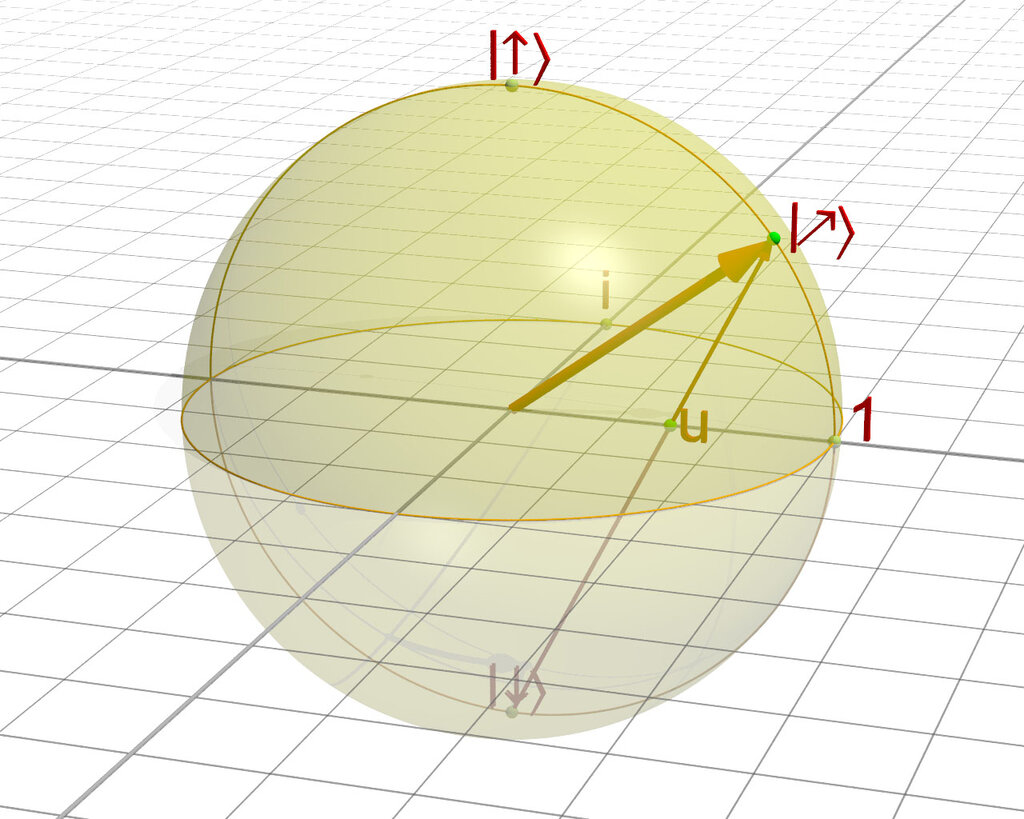
The Power of Superposition
The first major difference is a concept called superposition. Instead of being just a 0 or just a 1, a qubit can exist in a combination of both states at the same time. It's not 0 or 1; it's some of 0 and some of 1.
We can represent the state of a qubit, often written as $ |\psi\rangle $ (pronounced "ket psi"), with this equation:
This ability to be in multiple states at once is what gives quantum computers their immense potential power. While a classical computer with 3 bits can only represent one of 8 possible combinations (like 001 or 110) at any given moment, a quantum computer with 3 qubits can represent all 8 combinations simultaneously.
However, there's a catch. When you measure a qubit, its superposition collapses. It is forced to choose a single classical state, either 0 or 1. The probabilities of which state it picks are determined by its amplitudes, and .
A Spooky Connection
The second key principle is entanglement. This is a counterintuitive quantum phenomenon where two or more qubits become linked in a way that their fates are intertwined, no matter how far apart they are. Albert Einstein famously called it "spooky action at a distance."
Imagine you have two entangled qubits. If you measure one and find it is in the state , you instantly know the other one is also in the state (or , depending on how they were entangled). This connection is instantaneous, seemingly faster than the speed of light. This doesn't allow for faster-than-light communication, but it creates powerful correlations that are essential for quantum algorithms.
Quantum Gates and Circuits
Just as classical computers use logic gates like AND, OR, and NOT to manipulate bits, quantum computers use quantum gates to manipulate qubits. A sequence of quantum gates is called a quantum circuit.
These gates are operations that rotate the qubit's state on the Bloch sphere or perform operations on multiple qubits at once. For example:
- Hadamard Gate (H): This is one of the most important gates. It takes a qubit that is in a definite state (like or ) and puts it into a perfect superposition, with an equal probability of being measured as 0 or 1.
- Controlled-NOT Gate (CNOT): This gate acts on two qubits. It flips the state of the second qubit (the target) only if the first qubit (the control) is in the state . This is a key gate for creating entanglement.
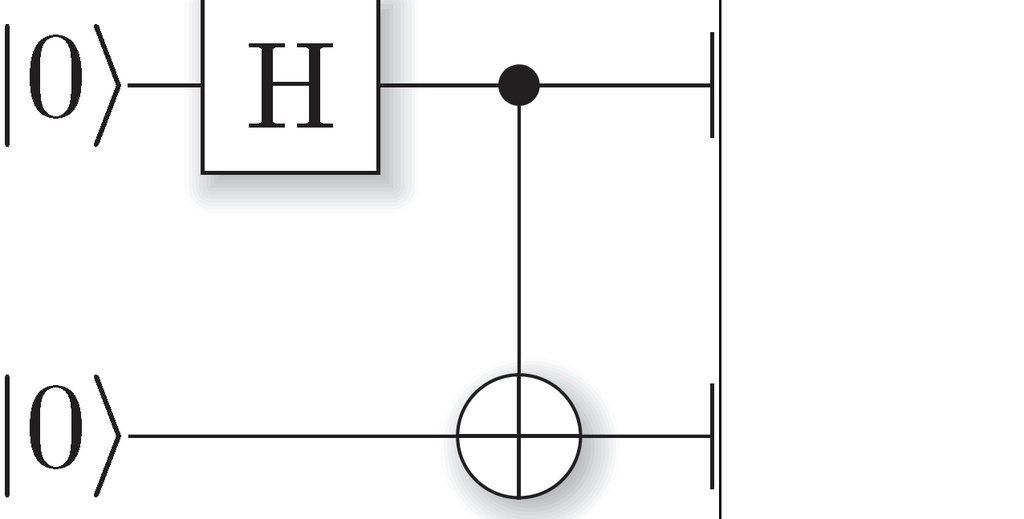
By carefully arranging these gates in a circuit, quantum programmers can design algorithms that exploit superposition and entanglement to solve specific problems much faster than any known classical algorithm.
| Feature | Classical Computing | Quantum Computing |
|---|---|---|
| Basic Unit | Bit (0 or 1) | Qubit (0, 1, or both) |
| State | Definite (On or Off) | Superposition & Entanglement |
| Processing | Sequential | Highly Parallel |
| Core Logic | Boolean Logic Gates | Quantum Gates |
| Error Rate | Very Low | High (prone to decoherence) |
Now that you understand the basic building blocks, let's test your knowledge.
What is the fundamental unit of information in a quantum computer?
The principle of superposition states that a qubit must be either a 0 or a 1 at any given time, but not both.
Understanding these core concepts—qubits, superposition, and entanglement—is the first step into the fascinating world of quantum computation.