Group Selection in Evolution
Introduction to Natural Selection
The Engine of Evolution
Natural selection is the main process that drives evolution. It's a simple idea with powerful results. In any group of living things, there are small differences between individuals. Some of these differences might help an individual survive longer and have more offspring. If those helpful traits can be passed down, they'll become more common over generations. It's not about what an organism wants or needs; it's about what works best in a specific environment.
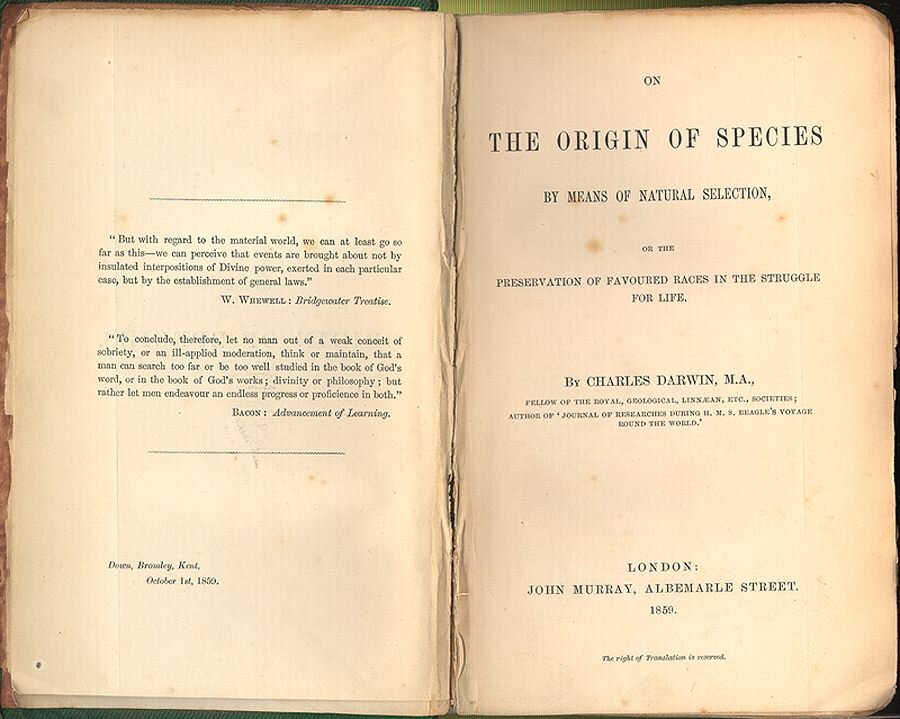
The idea was most famously explained by Charles Darwin. As a young naturalist aboard the HMS Beagle, he traveled the world for five years, observing and collecting specimens. He saw incredible diversity, from the finches of the Galápagos Islands with their differently shaped beaks to the fossils of giant, extinct mammals. He began to wonder how this variety came to be. After decades of careful study, he proposed that all life was connected and had changed over vast stretches of time through natural selection.
The Key Ingredients
For natural selection to occur, three conditions are necessary. Think of them as ingredients in a recipe for change.
- Variation: Individuals within a population are different from one another.
Look at any group of organisms, including people. We have different heights, hair colors, and thousands of other subtle distinctions. The same is true for plants and animals. A population of beetles might have slight variations in color, with some being a bit greener and others a bit browner.
- Inheritance: These different traits can be passed from parents to offspring.
Children inherit traits from their parents. While Darwin didn't know about genes or DNA, he knew this was a fundamental fact of life. Brown beetles tend to have brown offspring, and green beetles tend to have green offspring. For a trait to be shaped by natural selection, it must be heritable.
- Differential Survival and Reproduction: Some traits give individuals an advantage in surviving and reproducing.
Life is a struggle. Organisms compete for resources, avoid predators, and cope with their environment. Individuals with traits that make them better at these tasks are more likely to survive and have more offspring than their peers. This is often called “survival of the fittest,” but it's more about reproduction than just survival. A trait that helps an organism have more babies is the one that will be passed on.
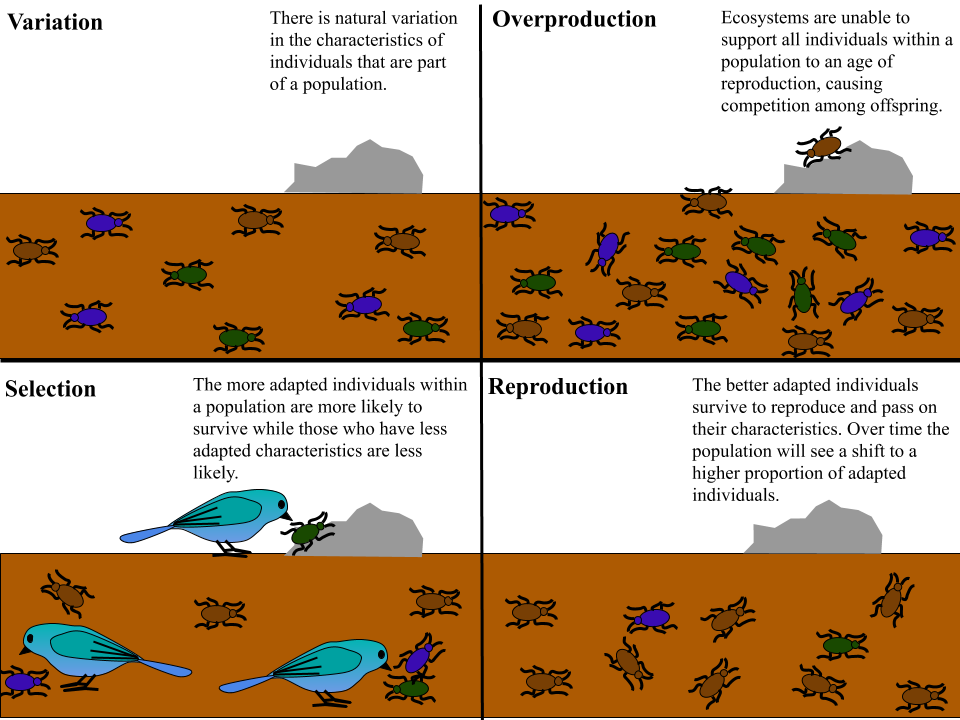
Let's return to our beetles. Imagine they live on the brown bark of a tree, and their main predator is a bird that hunts by sight. The brown beetles are better camouflaged than the green ones. Because of this, birds are more likely to eat the green beetles. The surviving brown beetles reproduce, passing their brown coloration to the next generation. Over time, the beetle population becomes more and more brown. The environment “selected” for the brown trait.
Branching Out
This simple process, repeated over millions of years, can lead to incredible changes. It can cause one species to split into two or more, as different populations adapt to different environments. Darwin sketched this idea as a great branching tree, where all life is connected back to a common ancestor.
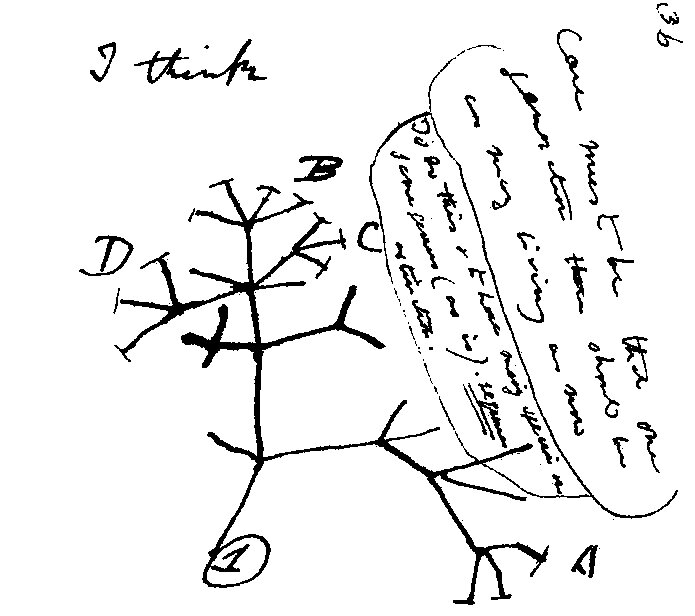
Darwin's theory was revolutionary because it provided a natural explanation for the diversity and complexity of life. It didn't rely on purpose or design. Instead, it showed how simple, observable processes could produce the intricate adaptations we see all around us, from the wings of a bird to the human eye.
Today, the theory of evolution by natural selection is the unifying principle of all biology. The discovery of genetics filled in the details of inheritance that were missing for Darwin, but his core idea remains as powerful and relevant as ever.
Now, let's test your understanding of these core principles.
Which of the following is NOT a necessary condition for natural selection to occur?
Imagine a population of fish where some individuals have slightly larger fins, a trait they can pass on to their offspring. In a new, fast-flowing river environment, fish with larger fins are better able to swim and catch food. What is the most likely long-term outcome for this population?
Natural selection explains how populations adapt to their environments, a fundamental process that has shaped all life on Earth.