Grid Systems and Cloud Computing Fundamentals
Evolution of Distributed Computing
From One to Many
In the early days of computing, the world was centralized. A single, massive computer, called a mainframe, lived in a special room and did all the heavy lifting. People accessed it through simple terminals that were little more than a screen and a keyboard. Think of it like a central brain with many nerve endings that could only receive and display information.
This setup worked, but it had its limits. If the mainframe went down, everyone was stuck. And there was only so much processing power one machine could offer.
The first big change was networking. Projects like ARPANET, the forerunner to the internet, connected these isolated computers. At first, the goal was mainly to share files and send messages, not to share computing tasks. But it planted a crucial seed: what if computers could do more than just talk? What if they could work together?
Sharing the Load
The idea of connecting computers evolved into a new way of thinking: distributed computing. Instead of one machine doing all the work, a distributed system uses multiple computers to tackle a single problem. To the outside world, this network of machines acts like one powerful, unified system.
It's like a team of builders working on a house. One person lays the foundation, another frames the walls, and a third works on the roof. They're all separate, but their combined effort creates a single, complete structure much faster than one person could alone.
This shift didn't happen overnight. It was driven by key technological milestones. The rise of affordable personal computers and local area networks (LANs) in the 1980s meant that organizations suddenly had dozens of computers that could be linked together. At the same time, faster and more reliable networking made it possible for these machines to communicate effectively.
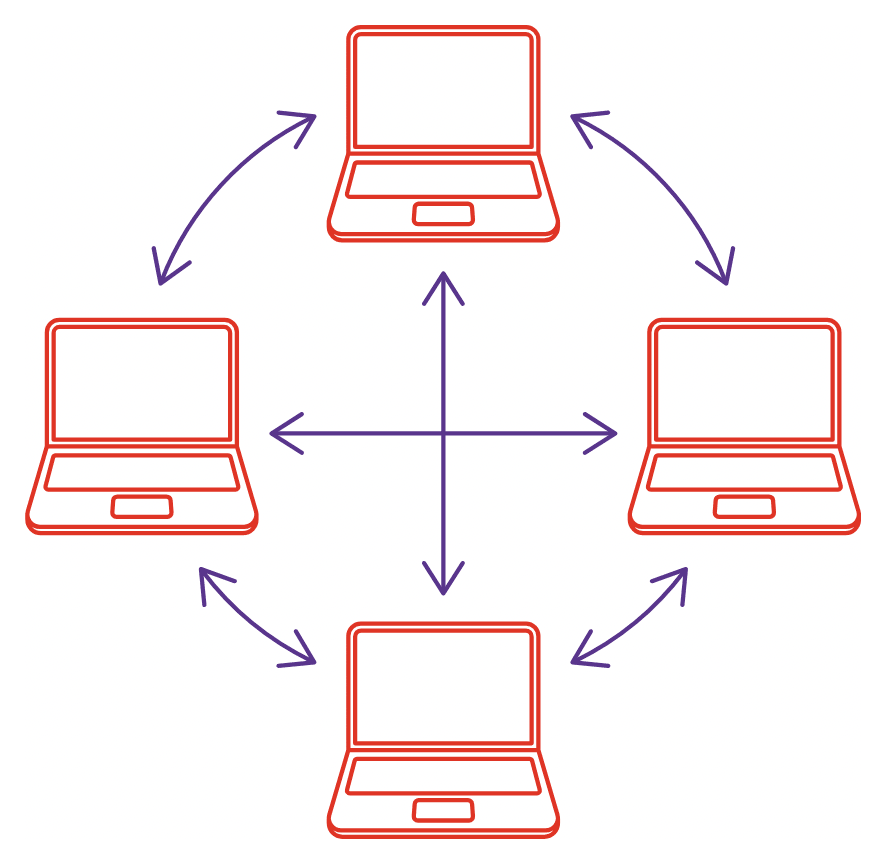
Engineers developed new software and protocols to manage these systems. They had to figure out how to break down large tasks into smaller pieces, send them to different computers, and then reassemble the results. They also had to solve the difficult problem of fault tolerance: what happens if one computer in the network fails? The system needed to be smart enough to recover without bringing everything to a halt.
Grid and Cloud
As the internet grew, distributed computing scaled up dramatically. This led to two major paradigms we use today: grid computing and cloud computing.
grid computing
noun
A system that coordinates resources from many different computers and locations to solve a single, massive computational problem.
Grid computing is often used for huge scientific projects, like searching for extraterrestrial intelligence (SETI@home) or modeling climate change. It pools the unused processing power of thousands of computers across the globe, creating a virtual supercomputer. These systems are typically specialized and focused on one type of complex, long-running task.
Cloud computing takes the concept of shared resources and makes it more flexible and accessible. Instead of just sharing processing power, the cloud provides a wide range of on-demand services over the internet, including storage, databases, networking, and software. Companies like Amazon, Google, and Microsoft manage massive data centers, and users can rent as much or as little computing resource as they need, paying only for what they use.
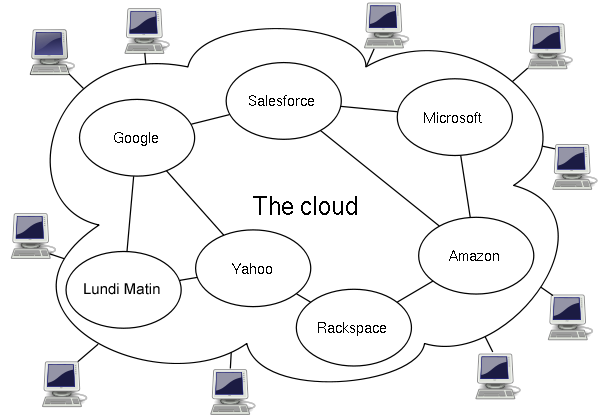
The evolution from a single mainframe to a global cloud represents a fundamental shift in how we approach computing. By connecting machines and making them work together, we've unlocked a level of power and scalability that was once unimaginable.
What was a primary limitation of the early, centralized mainframe computing model described in the text?
According to the text, what is the fundamental concept of a distributed system?
This journey from isolated machines to interconnected systems powers nearly every aspect of our modern digital world.