Gravity and Time Dilation
Introduction to Relativity
A New Look at Space and Time
For a long time, we thought of space and time as a fixed, unchanging backdrop for the universe. Space was a rigid stage, and time was a universal clock, ticking at the same rate for everyone, everywhere. Isaac Newton's laws of motion were built on this foundation. But in 1905, a young Albert Einstein published a paper that turned these ideas upside down. This was his theory of special relativity.
Special relativity is built on two simple but powerful ideas. First, the laws of physics are the same for everyone who is moving at a constant velocity. Whether you're standing still or cruising in a spaceship at a steady speed, the rules of physics work the same way. Second, the speed of light in a vacuum is constant for all observers. This is the strange part.
No matter how fast you move towards or away from a beam of light, it will always race past you at the same speed: about 299,792 kilometers per second.
If the speed of light is always the same, then something else has to give. That something else is space and time. To keep the speed of light constant for everyone, space and time must become flexible. They can stretch and shrink depending on your motion.
Stretching Time and Shrinking Space
One of the most mind-bending consequences of special relativity is time dilation. It means that time can pass at different rates for different people. If a clock is moving relative to you, you will see its time ticking more slowly than yours. This isn't a mechanical trick or an illusion; time itself is slowing down for the moving clock from your perspective.
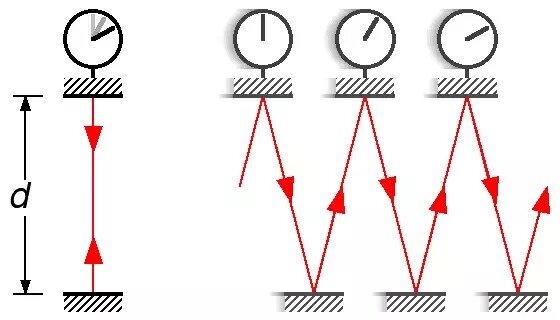
The amount of time dilation depends on the speed. The effect is tiny at everyday speeds but becomes dramatic as an object approaches the speed of light. The relationship is described by the Lorentz factor, represented by the Greek letter gamma ().
Here, is the relative velocity and is the speed of light. As gets closer to , the denominator gets smaller, and grows larger, stretching time more and more.
Just as motion affects time, it also affects space. Length contraction means that an object moving relative to an observer will appear shorter in its direction of motion than it does when it's at rest. The faster it moves, the shorter it appears.
Gravity's Grand Redesign
Special relativity was a breakthrough, but it was incomplete. It didn't account for acceleration or gravity. For ten years, Einstein worked to expand his theory. The result, in 1915, was the theory of general relativity.
The General Theory of Relativity, proposed by Albert Einstein in 1915, revolutionized our understanding of gravity by extending his earlier Special Theory of Relativity.
General relativity offers a completely new description of gravity. Instead of a force pulling objects together, Einstein described gravity as a consequence of the way mass and energy warp the fabric of the universe. He unified the three dimensions of space and the one dimension of time into a single, four-dimensional continuum called spacetime.
Imagine spacetime as a stretched rubber sheet. Placing a heavy object, like the Sun, onto this sheet causes it to curve and create a dip. Other objects, like planets, don't feel a pull from the Sun. Instead, they follow the straightest possible path through this curved spacetime. To us, this movement looks like an orbit.
This idea that gravity is the curvature of spacetime is the heart of general relativity. It explains why planets orbit stars and why you stay on the ground. You're simply following the contours of the spacetime that's being warped by the Earth's mass.
What are the two foundational postulates of Einstein's theory of special relativity?
According to special relativity, if you observe a friend's clock moving at a very high speed relative to you, you will see their clock ticking more slowly than your own.