Graphic Design and Animation for Storytelling
Storyboarding
From Words to Worlds
A script is just the beginning. It holds the dialogue, the action, and the heart of a story, but it doesn't show you what the story looks like. That's where storyboarding comes in. It’s the bridge between the written word and the final animated product.
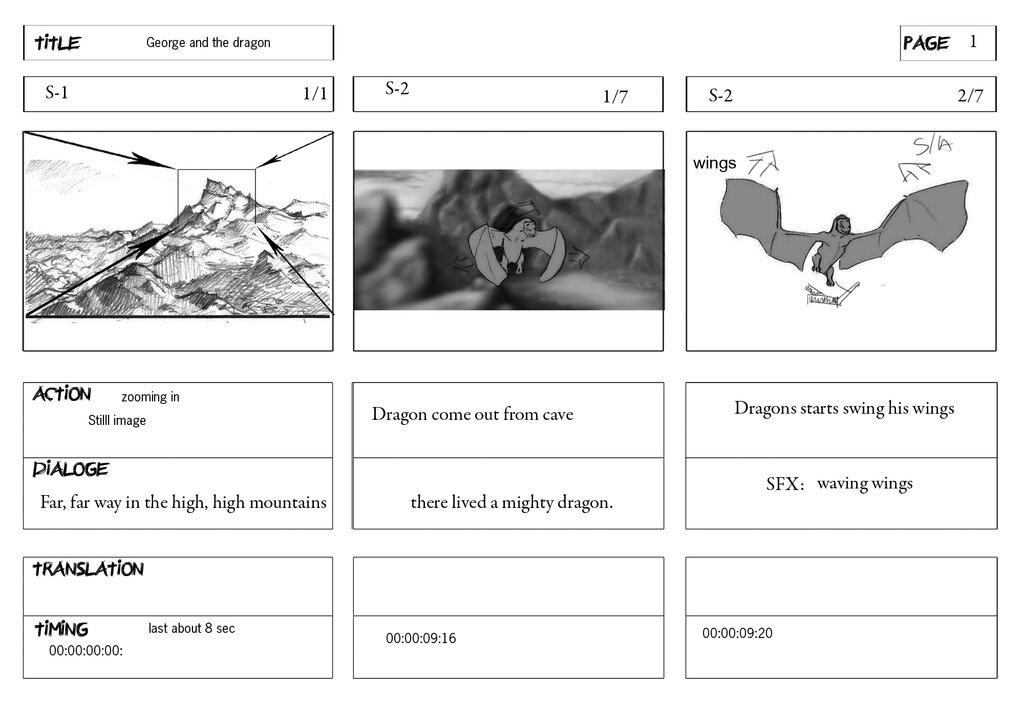
Think of a storyboard as a comic book version of your animation. It's a sequence of drawings, panel by panel, that maps out exactly what will happen on screen. Each drawing represents a key moment or a change in action, helping everyone on the team visualize the final cut before a single frame is animated.
Think of a storyboard as a comic strip of your video, with illustrations or sketches that represent key scenes, along with accompanying notes on camera angles, actions, and dialogue.
This visual blueprint saves an immense amount of time and money. It's far easier to redraw a panel than it is to re-animate an entire sequence. Storyboarding allows you to solve visual problems early, experiment with different shots, and perfect the pacing before committing to the labor-intensive process of animation.
Composing the Shot
Each panel in a storyboard is a carefully composed shot. Just like in live-action filmmaking, how you frame a scene has a huge impact on the story. You need to think like a director and a cinematographer.
Key questions to ask for each panel include:
- Shot Type: Is this a wide shot to establish the scene? A medium shot for conversation? Or a close-up to show a crucial emotion?
- Camera Angle: Are we looking up at a character to make them seem powerful (a low angle), or down on them to make them seem vulnerable (a high angle)?
- Movement: Does the camera pan to follow a character? Does it zoom in to create tension? Arrows and notes within the panels are used to indicate these movements.
Good composition guides the viewer's eye. It tells them what's important in the frame and creates a specific mood or feeling.
Keeping the Story Flowing
A storyboard isn't just a collection of individual shots; it's about how those shots connect to create a seamless experience. This is where continuity and pacing come into play.
Continuity ensures that details remain consistent from one shot to the next. If a character is holding a cup in their left hand in one shot, they should be holding it in the same hand in the next, unless the action dictates otherwise. These small details, if wrong, can pull a viewer out of the story.
Pacing is the rhythm of the story, the speed at which information is revealed and events unfold. A rapid succession of quick shots can create excitement and tension. In contrast, letting a shot linger can create a moment of reflection or emphasize a character's emotion.
To get a real sense of the timing and flow, storyboards are often turned into an animatic.
Animatic
noun
A preliminary version of an animation, produced by shooting successive sections of a storyboard and adding a soundtrack.
An animatic is essentially the storyboard set to time. The panels are edited together and synced with dialogue, sound effects, and music. This simple video provides the first real glimpse of how the final animation will look and feel, making it an invaluable tool for refining the pace and ensuring every scene serves the story.
Ready to test your knowledge? This quiz will cover the essential role of storyboarding in animation.
What is the primary function of a storyboard in the animation process?
If a storyboard artist wants to make a character appear small and vulnerable, which camera angle would be most effective?
By mastering storyboarding, you build a solid foundation, ensuring your story is visually clear, emotionally resonant, and perfectly paced before the real animation work begins.