Graph Network Properties and Centrality
Nodes and Edges
The Building Blocks of Networks
Think about your group of friends. Some people know each other, and some don't. You could draw this out. Each person is a dot, and you draw a line between any two dots if those people are friends. Congratulations, you've just created a graph. It's a simple but powerful way to visualize connections.
Within a graph, things are modelled as nodes, and relationships are modelled as edges.
In graph theory, the dots are called nodes. A node represents a single entity. It could be a person, a city, a webpage, or even a concept. Think of it as an individual item you want to track. Mathematicians and computer scientists often use the word vertices as a synonym for nodes.
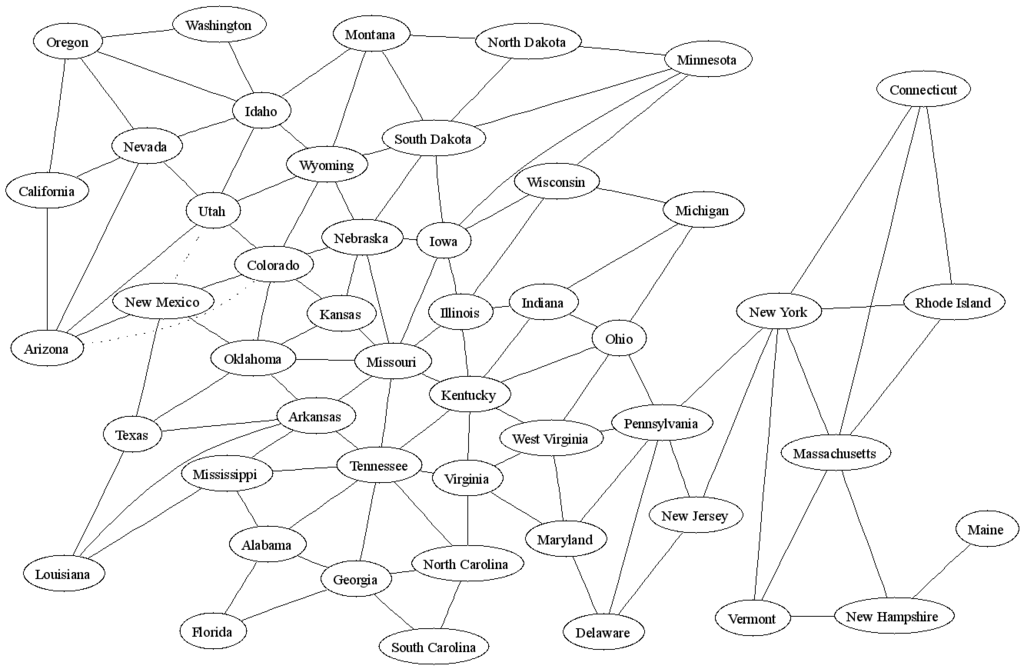
The lines connecting the nodes are called edges. An edge represents the relationship or connection between two nodes. If a node is the 'thing', the edge is the 'link' between things. In our friends example, the edge represents the friendship. In a map of airline routes, an edge is the direct flight between two cities (the nodes).
A Map of Connections
An easy way to understand this is to think of a city map. Every intersection where streets meet can be considered a node. Each street that connects two intersections is an edge. By looking at the map, you can see how the entire city is laid out, which intersections are major hubs, and how to get from one point to another by traveling along the edges.
This simple structure of nodes and edges is the foundation for all graphs, no matter how large or complicated. A social network with millions of users is built from the same basic parts as our simple map of four intersections. It just has many, many more nodes (people) and edges (connections). The rules are the same.
Understanding these two core components, nodes and edges, is the first step into the world of network analysis. They provide a universal language to describe everything from the internet's structure to the spread of ideas.