Granular Synthesis Techniques
Introduction to Sound Synthesis
The Building Blocks of Sound
At its core, sound is simple: it's a vibration. When an object vibrates, it creates pressure waves in the air around it. These waves travel to our ears, which interpret them as sound. Think of it like dropping a pebble in a pond. The pebble creates ripples that spread outwards. Sound waves are similar, but they travel through the air.
A pure, simple sound wave looks like a smooth, repeating S-curve. This basic wave is called a sine wave. While few sounds in nature are perfect sine waves, they are the fundamental components of all other sounds.
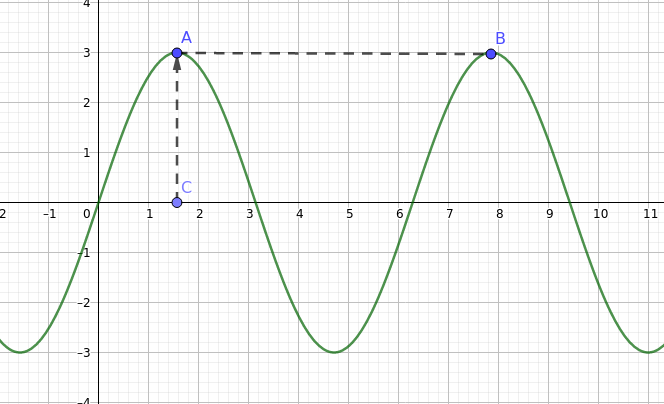
Every sound we hear has three fundamental properties that distinguish it from others: frequency, amplitude, and timbre. Understanding these three qualities is the key to understanding how we can create sounds from scratch, a process known as sound synthesis.
Frequency and Pitch
Frequency refers to how fast a sound wave vibrates. We measure it in Hertz (Hz), which simply means cycles per second. If a wave completes ten full up-and-down cycles in one second, its frequency is 10 Hz.
In music and audio, we perceive frequency as pitch. A sound with a high frequency has a high pitch, like a bird's chirp. A sound with a low frequency has a low pitch, like the rumble of thunder. When a guitarist tightens a string, it vibrates faster, increasing the frequency and raising the pitch of the note.
Frequency determines a sound's pitch. The higher the frequency, the higher the pitch.
Amplitude and Loudness
Amplitude is the size or intensity of the vibrations. Going back to the pond analogy, a bigger splash creates larger ripples. Similarly, a more forceful vibration creates a sound wave with a higher amplitude.
We perceive a sound wave's amplitude as its loudness. A high-amplitude wave sounds loud, while a low-amplitude wave sounds quiet. Loudness is often measured in decibels (dB). A quiet whisper has a very low amplitude, while a jet engine has an extremely high one.
Timbre and Harmonic Content
If a piano and a violin play the same note at the same loudness, they have the same frequency and amplitude. So why do they sound so different? The answer is timbre (pronounced TAM-ber). Timbre is the quality or character of a sound. It's the sonic texture that helps us distinguish between different instruments, voices, or any other sound source.
Timbre is determined by a sound's harmonic content. Almost no real-world sounds consist of a single, pure sine wave. Instead, they are complex waves made of a main frequency, called the fundamental, plus a whole series of quieter, higher-frequency waves called overtones or harmonics. The specific combination and loudness of these harmonics give a sound its unique timbre. A flute has a simple harmonic structure, giving it a pure, clear tone. A distorted electric guitar has a very rich and complex harmonic structure, making it sound gritty and full.
The unique blend of a fundamental frequency and its harmonics creates a sound's timbre, or sonic fingerprint.
Sound synthesis is the art and science of building sounds from the ground up by manipulating these three properties. By controlling the frequency, amplitude, and timbre of waves, we can create any sound imaginable. Here are a few foundational approaches:
| Synthesis Method | How It Works |
|---|---|
| Subtractive | Starts with a harmonically rich waveform (like a sawtooth or square wave) and carves away frequencies with filters to shape the timbre. |
| Additive | Builds a complex sound by layering multiple simple sine waves, each with its own frequency and amplitude. |
| Wavetable | Uses a collection of pre-recorded single-cycle waveforms (a 'wavetable') and moves between them to create evolving sounds. |
These methods are just the starting point. Each one provides a different toolkit for shaping sound, allowing musicians and sound designers to craft everything from the warm pads of a vintage synthesizer to the futuristic sounds of a sci-fi movie.
What is sound at its most fundamental level?
In music and audio, the frequency of a sound wave is perceived as its ______.
By understanding these basic building blocks, you're ready to explore how different synthesis techniques put them to use.