Gram Panchayats in Bihar
Introduction to Panchayati Raj System
Governing from the Ground Up
Imagine a country trying to manage all its local affairs from a single, central office. Every village road, every local school, every community water pump would be the responsibility of a distant government. It wouldn't work very well. That's why India uses a system of local self-government called Panchayati Raj.
The term comes from panch (five) and ayat (assembly), referring to the traditional councils of five respected village elders who settled disputes. The modern Panchayati Raj system is a formal structure designed to build democracy from the grassroots, ensuring that people have a say in their own local development.
An Idea with Deep Roots
Village councils have been a part of Indian life for centuries. These informal bodies managed community resources, mediated conflicts, and maintained social order. Mahatma Gandhi was a strong advocate for this kind of decentralized power. He envisioned a future of Gram Swaraj, or village self-rule, where each village would be a self-sufficient republic, managing its own affairs.
After India gained independence, this idea was enshrined in the Constitution as a guiding principle. However, it wasn't a mandatory system. It was left to the states to decide how, or if, they would implement it. The result was a patchwork of different systems with varying degrees of power and effectiveness.
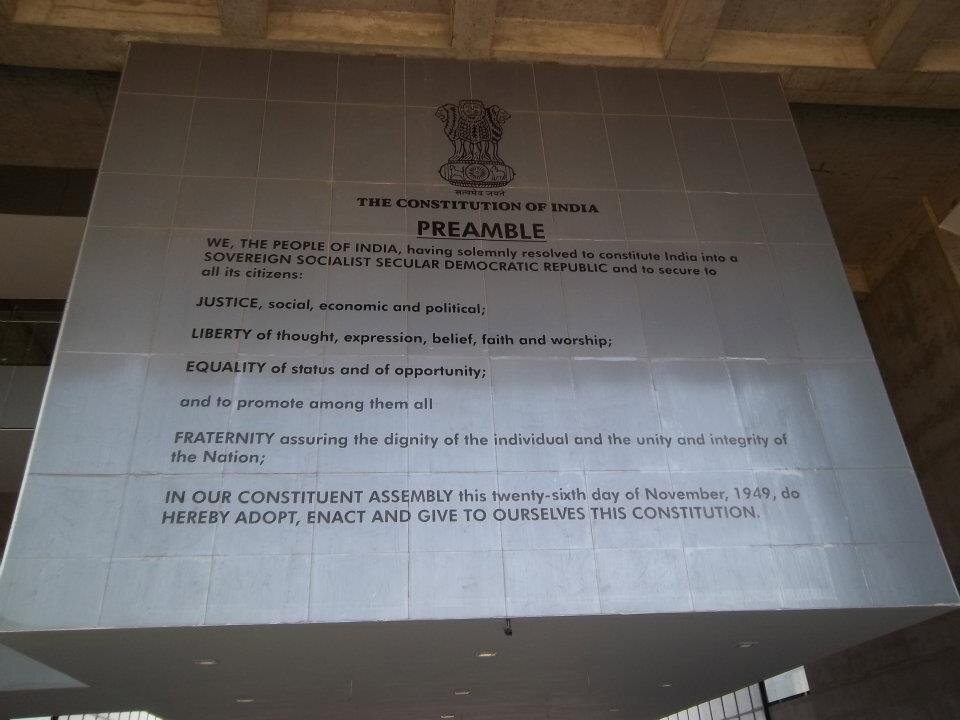
A major turning point came in 1992 with the 73rd Constitutional Amendment Act. This landmark law gave Panchayati Raj institutions constitutional status, making it mandatory for all states to create a uniform, three-tiered system of local governance. This amendment was a massive step toward realizing the vision of democratic decentralization.
The Three-Tier Structure
The Panchayati Raj system operates on three interconnected levels, creating a pyramid of governance from the village all the way up to the district. Each level has its own specific roles and responsibilities.
Let's look at each tier, starting from the foundation.
1. Gram Panchayat (Village Level) This is the base of the pyramid. A Gram Panchayat is formed for a single village or a group of small villages. Its members are elected directly by the people. The head of the Panchayat is often called a Sarpanch or Pradhan. Their main job is to handle local needs like clean drinking water, sanitation, maintaining local roads, and running village schools.
The real power at this level lies with the Gram Sabha, which consists of all registered voters in the village. The Gram Sabha meets to discuss local development plans and approve the Panchayat's budget, making it a powerful instrument of direct democracy.
2. Panchayat Samiti (Block Level) This is the intermediate tier that links the Gram Panchayats to the district administration. It’s also known as a Mandal Parishad or Block Samiti. It covers a block, which is a collection of several Gram Panchayats. Its members are elected by the people of that block, and the heads of the Gram Panchayats within it are also usually members.
The Panchayat Samiti's role is to coordinate the activities of the Gram Panchayats under its authority. It oversees development schemes related to agriculture, health, and education at the block level.
3. Zila Parishad (District Level) The Zila Parishad is the highest tier in the Panchayati Raj system. It operates at the district level and is responsible for the overall development of the entire district. Its members include the heads of the Panchayat Samitis, as well as the Members of Parliament (MPs) and Members of the Legislative Assembly (MLAs) representing that district.
This body prepares the development plans for the district, allocates funds to the lower tiers, and supervises the activities of the Panchayat Samitis and Gram Panchayats. It acts as the crucial link between the state government and the local governing bodies.
Now that we've covered the structure and history of this system, let's review with a few questions.
What was the most significant impact of the 73rd Constitutional Amendment Act of 1992 on the Panchayati Raj system?
In the Panchayati Raj structure, which body is responsible for coordinating the activities of multiple Gram Panchayats at the block level?
This system of decentralized governance is fundamental to India's democracy, empowering communities to participate directly in their own progress.