Grade 8 Math Term 1 CAPS
Whole Numbers
The Rules of the Road
Whole numbers are the numbers we use every day for counting: 0, 1, 2, 3, and so on. They might seem simple, but they follow a few basic rules, or properties, that make all kinds of math possible. Understanding these rules helps you calculate faster and more easily in your head.
Commutative Property
adjective
This property states that when you add or multiply numbers, the order doesn't change the result.
Think of it this way: if you have 3 apples and you get 5 more, you have 8 apples. If you start with 5 and get 3 more, you still have 8. The order you add them in doesn't matter. The same is true for multiplication. A rectangle that is 4 inches wide and 6 inches long has the same area as one that is 6 inches wide and 4 inches long.
This property does not work for subtraction or division. For example, 5 - 3 is not the same as 3 - 5.
Associative Property
adjective
This property says that when you add or multiply three or more numbers, how you group them doesn't change the result.
Imagine you're adding 7 + 3 + 5. You could add 7 and 3 first to get 10, then add 5 to get 15. Or, you could add 3 and 5 first to get 8, then add 7 to get 15. The parentheses in the formulas below just show which pair of numbers you work with first.
This property is incredibly useful for mental math. If you need to calculate , it's much easier to multiply first to get 10, and then multiply by 9 to get 90.
Distributive Property
adjective
This property links multiplication and addition. It lets you multiply a number by a sum by multiplying the number by each part of the sum separately.
This one sounds more complicated, but it's a powerful shortcut. Let's say you want to calculate . You can break 13 into . The distributive property says you can multiply 6 by 10 and 6 by 3, and then add the results.
This gives you $60 + 18$, which is 78. You've just turned a tricky multiplication problem into two simple ones. This is the secret behind a lot of mental math.
Mental Calculations
Using these properties, you can solve problems in your head without a calculator. Let's try another one using the distributive property. What is ?
First, break 15 into . Now multiply each part by 8:
Finally, add the two products together:
So, .
You can also use subtraction. To find , you could think of 19 as . So, calculate , which is .
These tricks aren't just for show. They build a deeper understanding of how numbers relate to each other. The more you practice, the more natural it becomes.
Mastering Multiplication
The foundation of quick mental math is knowing your multiplication facts. Being able to instantly recall the product of any two numbers up to 12 is a skill that pays off in all areas of math. It makes division, fractions, and even algebra much easier down the road.
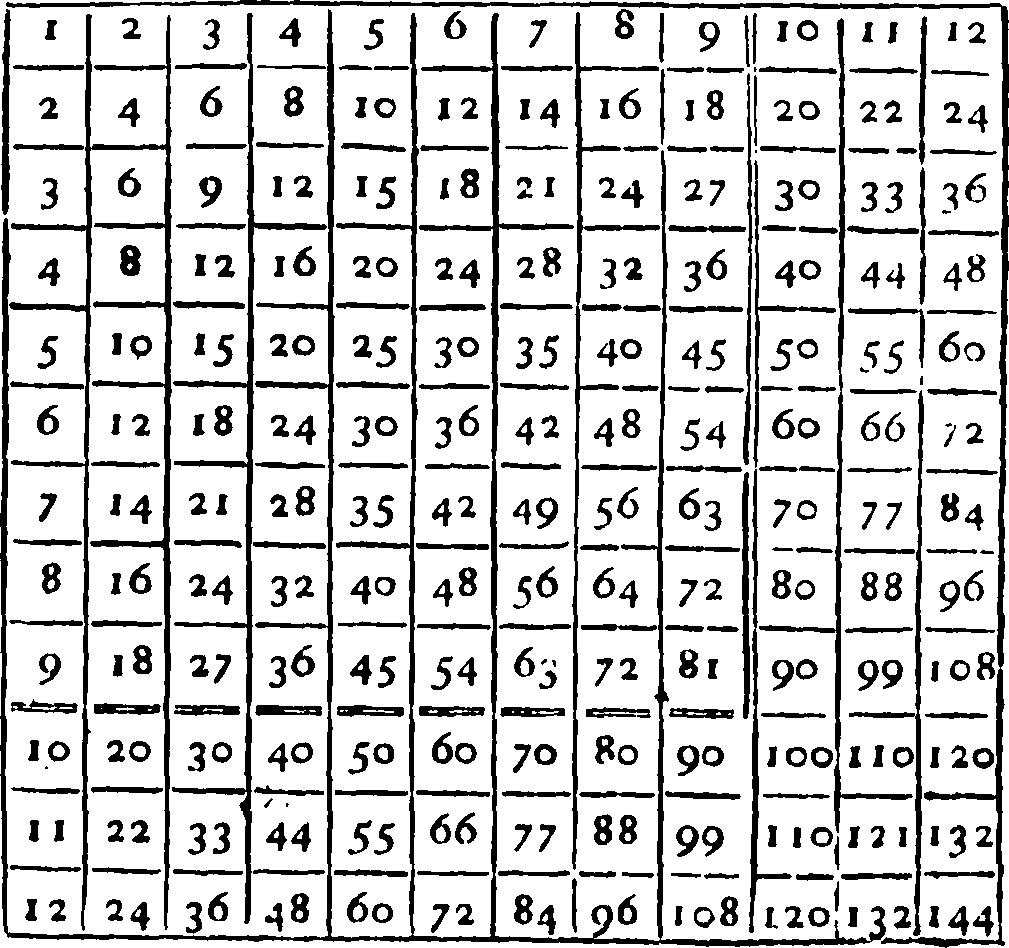
When you know that without having to think about it, you free up your mental energy to focus on the more complex parts of a problem. Consistent practice is the key to memorizing these facts.
Which property of whole numbers states that the order in which you add or multiply two numbers does not change the result?
Using the distributive property, how can you break down the problem to make it easier to solve mentally?
Knowing these properties and practicing your multiplication facts will make you a faster, more confident problem-solver.