Grade 11 Chemistry Essentials
Atomic Structure
The Building Blocks of Everything
The idea of atoms is ancient. Over 2,000 years ago, the Greek philosopher Democritus proposed that if you kept cutting a piece of matter in half, you would eventually reach a tiny, indivisible particle. He called it atomos, which means "uncuttable."
For centuries, this was just a philosophical idea. It wasn't until the early 1800s that English chemist John Dalton brought the concept into the realm of science. Dalton's atomic theory proposed that all matter is made of atoms, which he imagined as tiny, solid spheres. He suggested that atoms of a specific element are identical, and that chemical reactions are just rearrangements of these atoms.
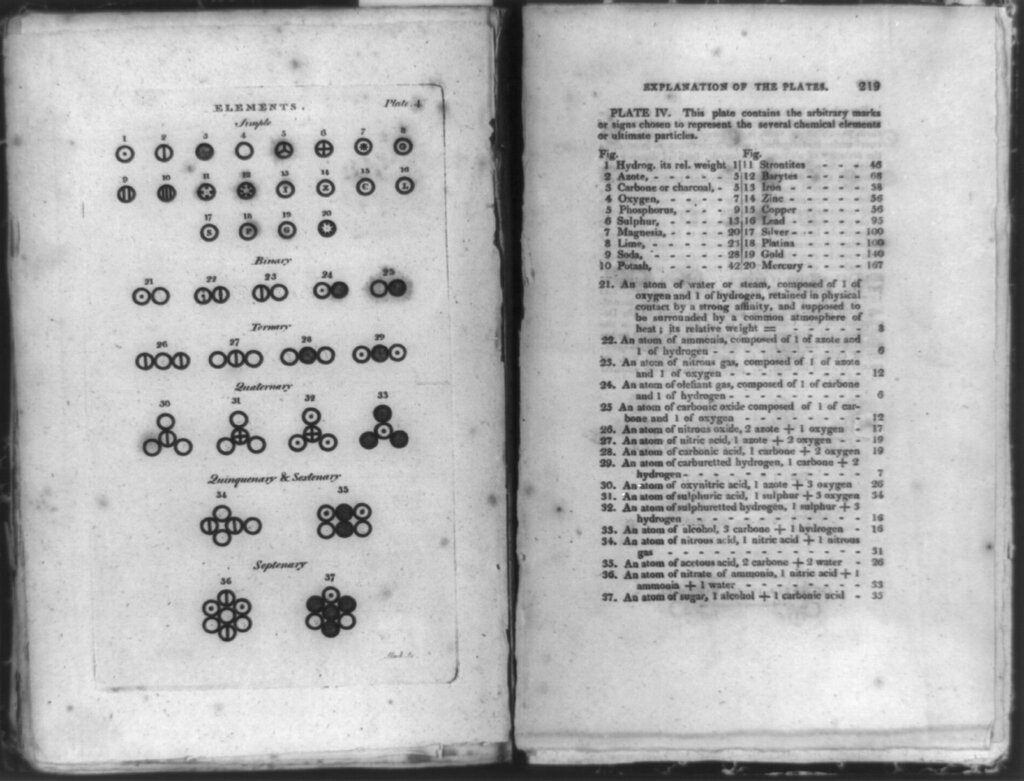
Dalton's model was a huge step forward, but it turned out that atoms weren't so indivisible after all.
A Look Inside the Atom
In 1897, J.J. Thomson discovered the electron, a tiny, negatively charged particle. Since atoms are electrically neutral overall, he reasoned there must also be a positive charge. This led to his "plum pudding" model, which pictured the atom as a sphere of positive charge with negative electrons dotted throughout, like plums in a pudding.
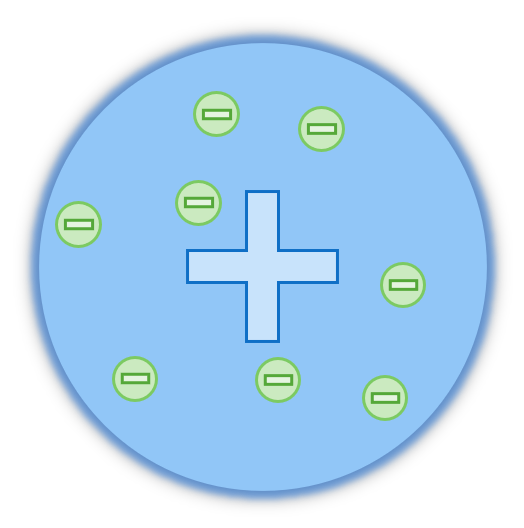
This idea was tested by Ernest Rutherford in 1909. In his famous gold foil experiment, he fired tiny, positively charged alpha particles at a very thin sheet of gold. According to the plum pudding model, the particles should have passed straight through. Most did, but some were deflected at large angles, and a few even bounced straight back.
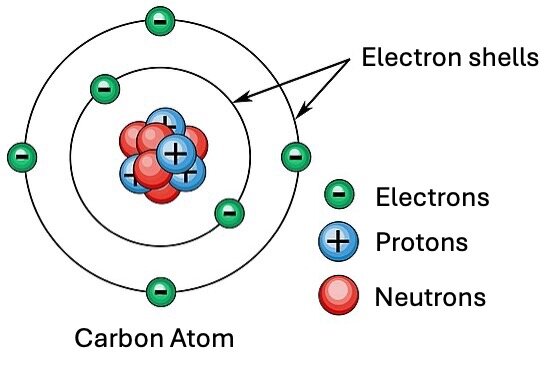
Rutherford concluded that the atom's positive charge must be concentrated in a tiny, dense center, which he called the nucleus. The electrons, he proposed, orbited this nucleus, making the atom mostly empty space. This discovery completely changed our picture of the atom.
Today, we know the nucleus itself is made of two types of particles: protons and neutrons. Together with electrons, these three particles form the atoms of every element.
proton
noun
A subatomic particle with a positive electric charge, found in the nucleus of an atom.
neutron
noun
A subatomic particle with no electric charge (it is neutral), found in the nucleus of an atom.
electron
noun
A subatomic particle with a negative electric charge that moves in the space around the nucleus.
Protons and neutrons have about the same mass and are packed together in the nucleus, while electrons are much, much lighter and exist in a cloud-like region surrounding it.
| Particle | Charge | Relative Mass |
|---|---|---|
| Proton | +1 | ~1 |
| Neutron | 0 | ~1 |
| Electron | -1 | ~1/1836 |
Where the Electrons Live
Rutherford's model was a good start, but it didn't explain why the negative electrons weren't pulled into the positive nucleus, causing the atom to collapse. Danish physicist Niels Bohr refined the model in 1913, proposing that electrons travel in specific orbits, or energy levels, around the nucleus, much like planets orbiting the sun.
In the Bohr model, each energy level can hold a certain number of electrons. Electrons in levels closer to the nucleus have less energy than those farther away. An electron must stay in its designated level unless it absorbs or releases a specific amount of energy, allowing it to "jump" to another level.
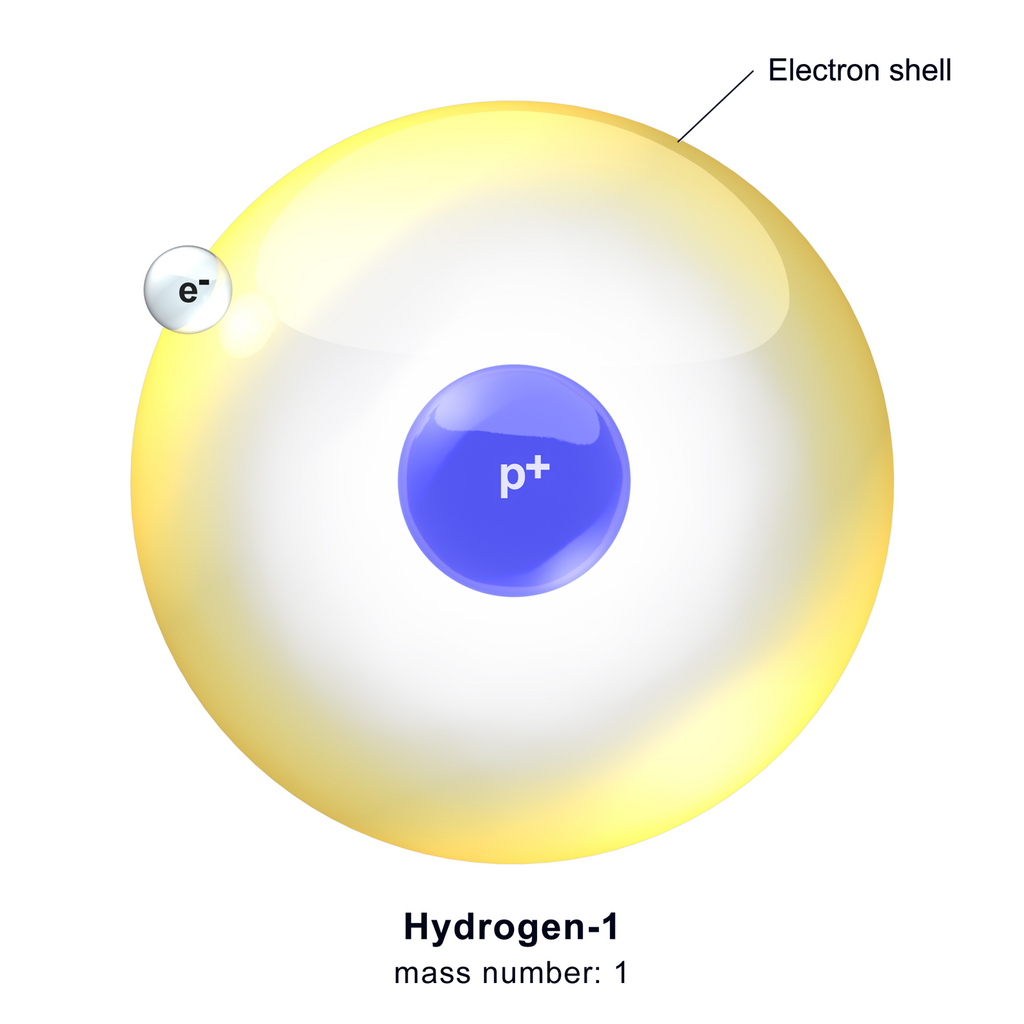
Bohr's model was a key step, but modern physics gives us an even stranger picture. The quantum mechanical model describes electrons not as tiny particles in neat orbits, but as existing in regions of probability called orbitals. We can't know an electron's exact location, only the area where it's most likely to be found.
These orbitals have distinct shapes and are organized within the energy levels. The first energy level has one spherical 's' orbital. Higher energy levels contain 's' orbitals as well as more complex 'p', 'd', and 'f' orbitals.
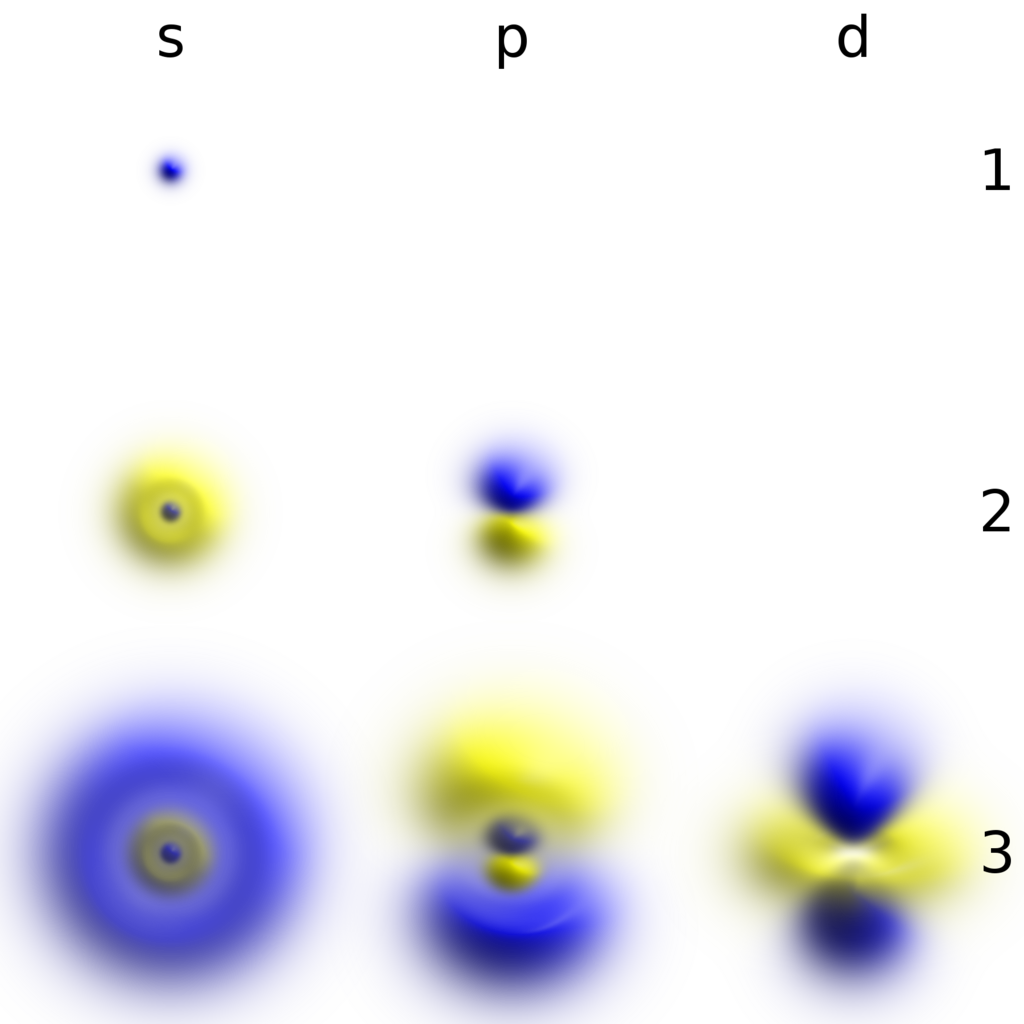
The arrangement of electrons in these orbitals is called the atom's electron configuration. Electrons fill the lowest energy orbitals available first, following a specific pattern. This configuration is fundamental to an atom's identity and dictates how it will interact with other atoms.
The structure of an atom—its protons and neutrons in a tiny nucleus, and its electrons arranged in specific energy levels—is the foundation of all chemistry.
Ready to test your knowledge? Let's see what you've learned about the atom.