GPUs vs TPUs
Introduction to Machine Learning Hardware
The Brains of the Operation
At its heart, machine learning runs on math. Lots and lots of it. Models process vast amounts of data by performing countless calculations. To do this heavy lifting, they need powerful hardware. Think of this hardware as the brain that powers the intelligence we're trying to create.
Just as different parts of a human brain handle different tasks, different types of computer processors are suited for different aspects of machine learning. The three main players are the CPU, the GPU, and the TPU. Each has a unique role and history.
The All-Purpose CPU
Every modern computer, from your phone to a massive server, has a Central Processing Unit (CPU). It's the original, all-purpose brain of a computer, designed to handle a wide variety of tasks one after another, very quickly. It manages the operating system, runs your web browser, and executes the code that holds everything together.
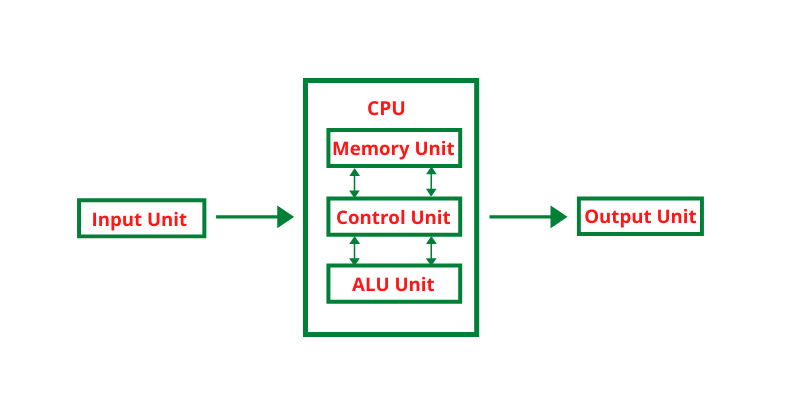
Think of a CPU as a master chef in a kitchen. This chef is incredibly skilled and can prepare any dish you ask for, from a complex sauce to a delicate pastry. However, the chef can only focus on one or two complex tasks at a time. This method of handling tasks sequentially is called serial processing.
serial processing
noun
A method of computation where a processor executes one instruction at a time, in a sequential order.
In machine learning, the CPU often acts as the project manager. It prepares the data, sends instructions to other specialized hardware, and handles parts of the workflow that can't be easily broken down. While it's not the fastest for the core calculations of training a large model, it's essential for orchestrating the entire process.
The Parallel Powerhouse GPU
Graphics Processing Units (GPUs) were originally created for a very different purpose: rendering graphics for video games. This required performing the same simple calculation—like figuring out the color of a single pixel—thousands or millions of times at once. This ability to handle many tasks simultaneously is called parallel processing.
It turned out this was exactly what machine learning needed. Training a deep learning model involves performing millions of simple matrix multiplications. A CPU would tackle these one by one, which would take ages. A GPU, on the other hand, can handle thousands of them at the same time.
Returning to our kitchen analogy, a GPU is like an army of sous-chefs. They might not have the master chef's wide range of skills, but you can give them a single, repetitive task—like chopping 10,000 onions—and they'll get it done in a fraction of the time. This massive parallelism dramatically speeds up the model training process.
The Specialist TPU
As machine learning models grew larger and more complex, even GPUs started to show their limits. Seeing this, Google developed its own custom chip called a Tensor Processing Unit (TPU). It's a type of Application-Specific Integrated Circuit (ASIC), meaning it was built from the ground up for one specific job: running machine learning models.
If the CPU is a master chef and the GPU is an army of sous-chefs, the TPU is a custom-built, industrial pizza oven. It can't make a salad or a dessert, but it can bake thousands of pizzas to perfection with incredible speed and energy efficiency. TPUs are designed to excel at the core mathematical operation of neural networks: matrix multiplication. By focusing only on this, they can perform these calculations faster and more efficiently than even a GPU.
This specialization makes TPUs ideal for large-scale, production-level machine learning, where speed and efficiency are critical.
So, which one is best? It depends on the job. The versatile CPU manages the show, the powerful GPU handles the parallel heavy lifting of training, and the hyper-specialized TPU offers maximum efficiency for running large models at scale. Each plays a crucial part in the world of AI.
Now, let's test your knowledge.