GPU Infrastructure Essentials
Introduction to GPUs
What is a GPU?
A Graphics Processing Unit, or GPU, is a specialized processor originally designed to render images, animations, and videos for a computer's screen. Think of it as a highly focused co-processor that sits alongside your computer's main brain, the Central Processing Unit (CPU).
While a CPU is a jack-of-all-trades, built to handle a wide variety of tasks one after another, a GPU is a master of one: performing many simple calculations at the same time. This ability is called parallel processing.
GPU
noun
A specialized electronic circuit designed to rapidly manipulate and alter memory to accelerate the creation of images in a frame buffer intended for output to a display device.
From Gaming to General Purpose
In the 1990s, GPUs were primarily add-in cards that accelerated the creation of 3D graphics for video games. Their job was to take the load off the CPU, allowing for smoother, more complex visuals. For years, this was their main purpose.
Over time, developers realized that the GPU's knack for parallel processing could be applied to more than just graphics. This led to the concept of General-Purpose computing on GPUs (GPGPU). Instead of just calculating pixels, GPUs began tackling complex problems in science, finance, and eventually, artificial intelligence. The development of programming platforms like NVIDIA's CUDA in 2007 was a major turning point, making it easier for programmers to unlock this power for non-graphical tasks.
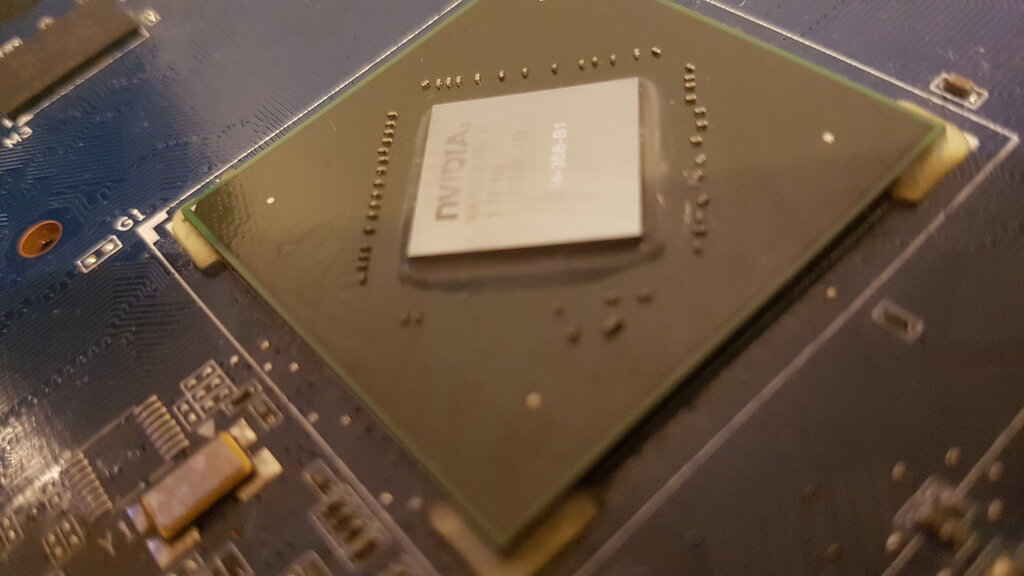
CPU vs GPU
The fundamental difference between a CPU and a GPU lies in their architecture and how they handle tasks.
A CPU is designed for serial processing. It has a few powerful cores optimized to execute a single thread of instructions as fast as possible. It's great for general-purpose tasks like running your operating system or a web browser, which require quick, complex decision-making.
A GPU, on the other hand, is built for parallel processing. It has thousands of smaller, more efficient cores designed to handle multiple tasks simultaneously. It excels at problems that can be broken down into many repetitive, independent operations.
Think of it this way: A CPU is like a master chef who can prepare a complex, multi-course meal from start to finish. A GPU is like an army of line cooks, each chopping a single vegetable. The chef is more versatile, but the army of cooks can chop a mountain of vegetables far faster than the single chef could.
| Feature | CPU (Central Processing Unit) | GPU (Graphics Processing Unit) |
|---|---|---|
| Architecture | A few powerful, complex cores | Thousands of simpler, efficient cores |
| Processing Type | Serial (one task at a time) | Parallel (many tasks at once) |
| Best For | General computing, complex decisions | Repetitive tasks, large-scale math |
| Primary Goal | Low latency (fast response time) | High throughput (doing lots of work) |
The Power of Parallelism
The ability to work in parallel is what makes GPUs so transformative. By breaking a huge problem into thousands of smaller pieces and solving them all at once, a GPU can find a solution in a fraction of the time it would take a CPU.
GPU Parallel computing enables GPUs to break complex problems into thousands or millions of separate tasks and work them out all at once instead of one-by-one like a CPU needs to.
This capability has revolutionized several fields:
- Graphics: GPUs render realistic game worlds by calculating the color, lighting, and position of millions of pixels simultaneously.
- Scientific Simulation: Researchers can model complex systems like climate change, drug interactions, and astrophysical events with greater accuracy and speed.
- Artificial Intelligence: Training AI models, especially large language models, involves performing trillions of simple mathematical operations. GPUs are perfectly suited for this, making them the engine of the modern AI boom.
Today, GPUs are integrated into nearly every type of computing system. They are standard in personal computers and game consoles, essential in workstations for creative professionals, and form the backbone of the massive data centers that power cloud computing and AI services.
Ready to check your understanding?
What is the primary architectural difference that allows a GPU to excel at parallel processing?
The development of platforms like NVIDIA's CUDA enabled the use of GPUs for tasks beyond their original purpose. This concept is known as __________.
From a niche component for gamers, the GPU has evolved into a fundamental pillar of modern computing, accelerating scientific discovery and powering the artificial intelligence that is reshaping our world.