GPU Fundamentals
Introduction to GPUs
What Is a GPU?
A Graphics Processing Unit, or GPU, is a specialized processor originally designed to handle the complex task of rendering images, videos, and animations for display on a screen. Think of it as a dedicated artist inside your computer, rapidly drawing every pixel you see.
A Graphics Processing Unit (GPU) is a specialized electronic circuit or chip designed to render graphics for display on computers and other electronic devices.
Initially, their main job was to offload the heavy work of 3D graphics from the Central Processing Unit (CPU), making video games and visual effects run smoothly. Early GPUs were single-minded, focusing only on graphics-related calculations.
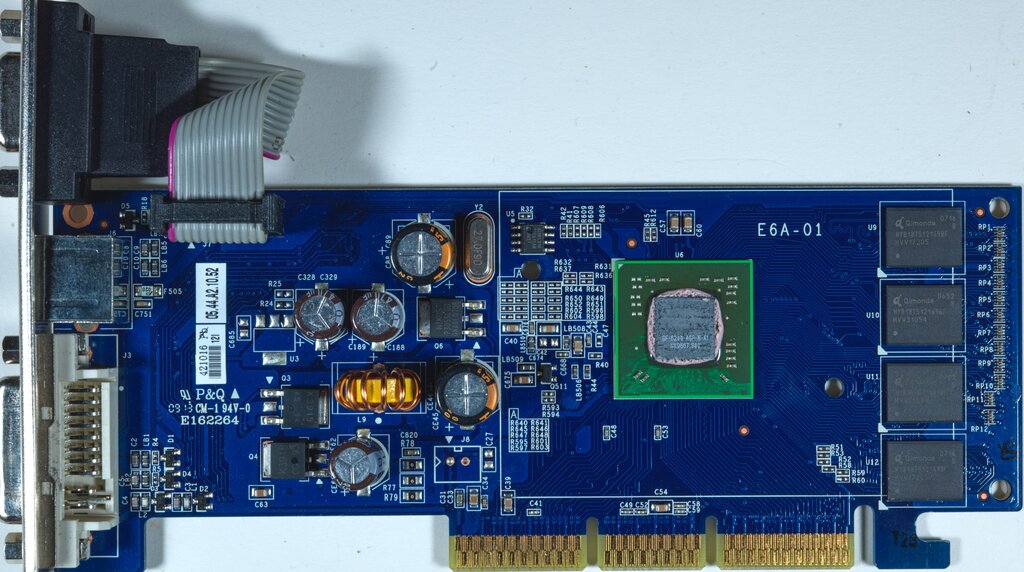
However, developers soon realized that the unique way GPUs processed information could be applied to other fields. The same architecture that made them great at drawing millions of pixels at once also made them perfect for any task that could be broken down into many smaller, simultaneous problems. This led to a major evolution, transforming the GPU from a graphics card into a general-purpose parallel processor.
Built for Parallelism
The key difference between a CPU and a GPU lies in their core architecture. A CPU is like a team of a few highly skilled specialists. Each specialist can handle very complex, sequential tasks one after another with incredible speed. It's optimized for latency, meaning it's designed to complete a single task as fast as possible.
A GPU, on the other hand, is like an army of thousands of workers. Each worker is less powerful than a CPU specialist and can only handle simple instructions. But because there are so many of them working at the same time, they can complete massive, repetitive jobs in a fraction of the time. This is called parallel processing, and it's what makes GPUs so powerful. They are optimized for throughput, or the total amount of work done in a given time.
CPUs excel at sequential tasks, while GPUs are masters of parallel tasks.
Here's a simple breakdown of their differences:
| Feature | CPU (Central Processing Unit) | GPU (Graphics Processing Unit) |
|---|---|---|
| Core Design | A few powerful, complex cores | Thousands of simpler, efficient cores |
| Best For | Sequential tasks, latency-sensitive work | Parallel tasks, high-throughput work |
| Primary Role | General-purpose computing | Specialized, parallel computation |
| Analogy | A few master chefs | An army of line cooks |
More Than Just Games
The parallel processing power of GPUs has unlocked breakthroughs in many fields far beyond gaming. Any problem that involves performing the same calculation on large sets of data is a perfect fit for a GPU.
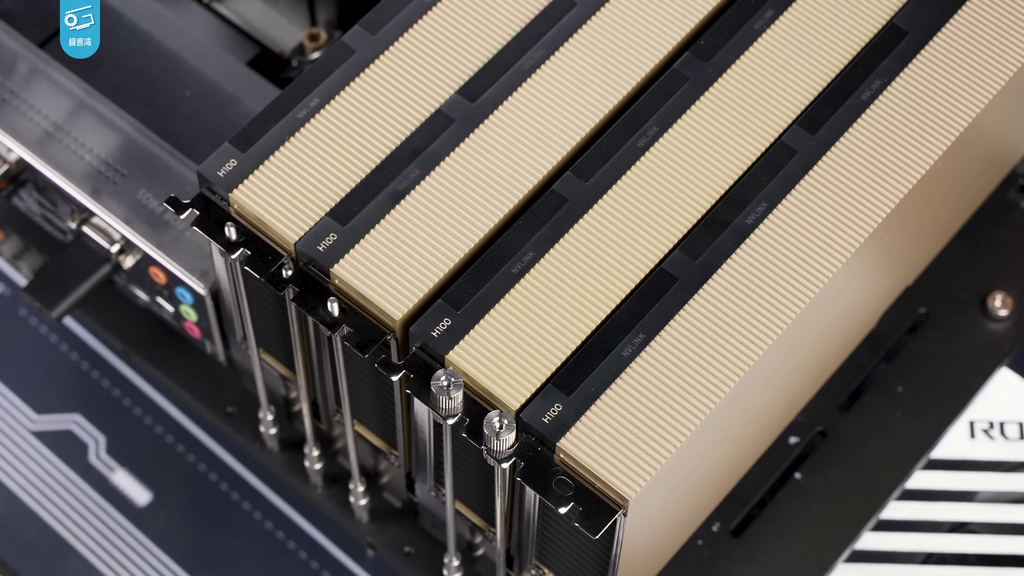
Some of the most significant applications include:
-
Artificial Intelligence (AI): Training deep learning models involves massive matrix calculations. GPUs can perform these calculations in parallel, dramatically reducing the time it takes to train complex AI systems.
-
Scientific Research: Scientists use GPUs to run complex simulations. This includes everything from modeling climate change and protein folding to simulating cosmic events like black hole collisions.
-
Data Analysis: GPUs can quickly sift through enormous datasets to find patterns, making them invaluable for financial modeling, market analysis, and big data processing.
-
Cryptocurrency Mining: The process of mining cryptocurrencies involves solving complex mathematical problems, a task well-suited to the parallel architecture of GPUs.
This expansion of their role has made GPUs one of the most important pieces of hardware in modern computing, driving innovation across countless industries.
Now, let's test what you've learned about the fundamentals of GPUs.
What was the primary, original function of a GPU?
Which analogy best describes the architectural difference between a CPU and a GPU?