GPU Architecture and AI Performance
Hardware's Role in AI
The Engine of Intelligence
Artificial intelligence feels like magic, but it isn't powered by software alone. Powerful hardware is the engine that drives AI, turning complex algorithms into practical results. Without the right physical components, even the most brilliant AI model is just dormant code.
Think of a standard computer's brain, the Central Processing Unit (CPU). It's a master of sequential tasks, tackling problems one step at a time with incredible speed. For everyday computing like browsing the web or writing an email, this is perfect. However, training an AI model is a different beast entirely. It involves performing millions or even billions of simple calculations simultaneously.
A CPU tackling an AI workload is like a single, highly-skilled chef trying to prepare a banquet for ten thousand people. No matter how fast they are, it's an inefficient way to handle a massive, parallel task.
GPUs Take the Stage
This is where Graphics Processing Units (GPUs) come in. Originally designed to render the complex graphics in video games, GPUs are built for parallel processing. Instead of one or a few powerful cores like a CPU, a GPU has thousands of smaller cores that can all work on a small piece of a larger problem at the same time.
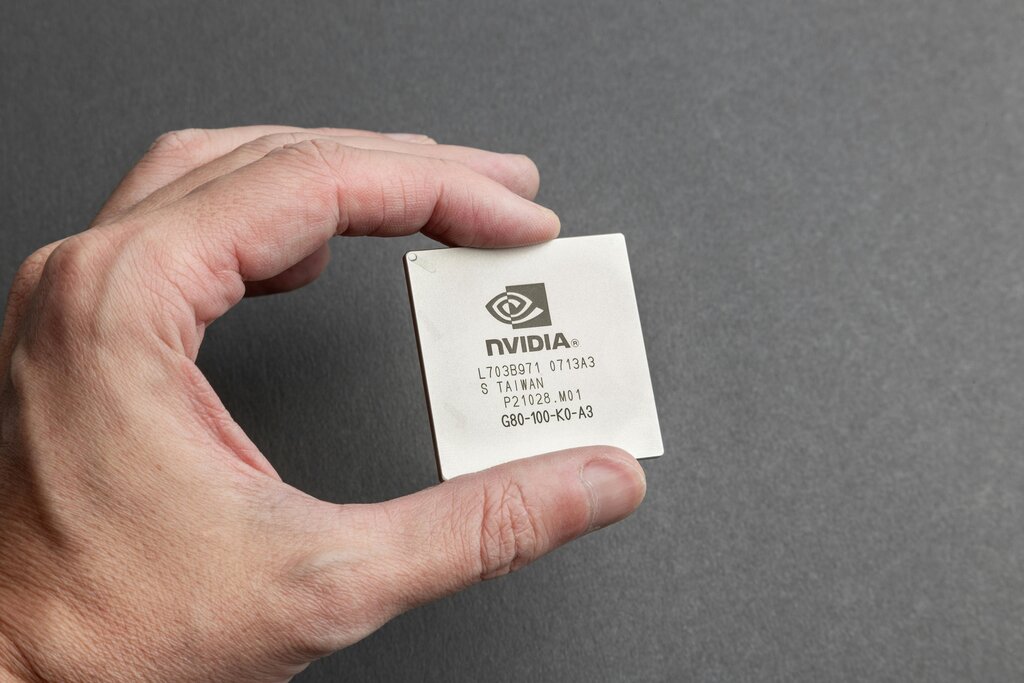
This architecture is perfectly suited for the mathematical operations at the heart of AI, especially deep learning. Training a neural network involves adjusting countless parameters based on huge datasets, a task that can be split into thousands of simultaneous calculations. Using a GPU is like having an army of chefs for that banquet, with each one chopping a single vegetable. Together, they get the job done exponentially faster.
Specialized Accelerators
While GPUs are a huge leap forward from CPUs, the demand for even greater performance has led to the creation of specialized hardware known as AI accelerators. These are chips designed from the ground up for one purpose: to run AI workloads as fast and efficiently as possible.
This hardware directly impacts two key phases of AI:
- Training: The process of teaching an AI model by feeding it vast amounts of data. More powerful hardware dramatically reduces training time, from months to days or even hours.
- Inference: The process of the trained AI making a prediction or decision. Faster hardware allows for real-time responses, which is critical for applications like self-driving cars or instant language translation.
Let's check your understanding of these core hardware concepts.
Why are GPUs generally more effective than CPUs for training large AI models?
The process where a trained AI model makes a prediction or a decision is known as ________.
Ultimately, the hardware is just as important as the software. The incredible advancements we see in AI are the direct result of a partnership between brilliant algorithms and the powerful, specialized hardware built to run them.