Government and Industrialization
Industrialization Overview
The Age of Engines
Before the late 19th century, most of human life was dictated by the sun and the seasons. People worked on farms, made goods by hand, and traveled at the speed of a horse. Then, everything changed. A wave of new technology and ideas swept across the globe, fundamentally altering how societies worked, lived, and grew.
Industrialization
noun
The process by which an economy is transformed from a primarily agricultural one to one based on the manufacturing of goods. Individual manual labor is often replaced by mechanized mass production, and craftsmen are replaced by assembly lines.
This shift didn't just mean new machines; it meant new cities, new jobs, and new sources of power, both literal and political. But as nations raced to build factories and railways, they faced a critical question: Who should lead this transformation? Should the government step back and let business run its course, or should it take the reins and steer the country toward an industrial future? Different countries gave very different answers.
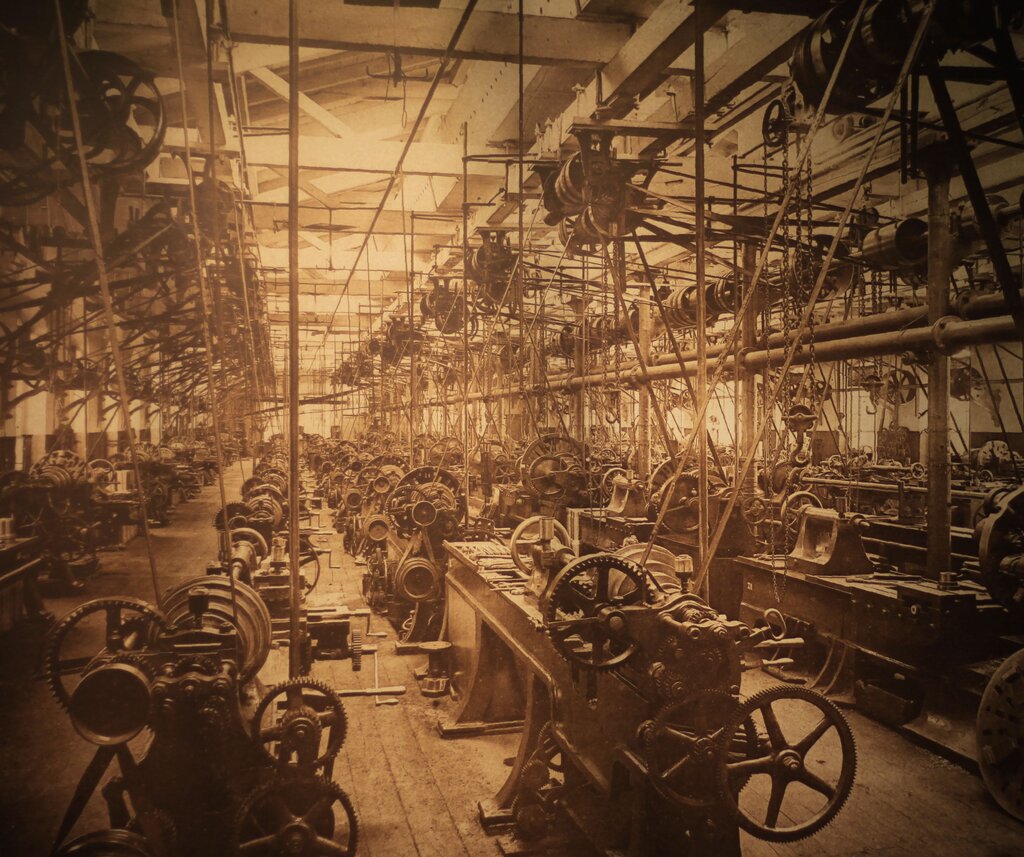
Britain's Hands-Off Approach
Great Britain was the first nation to industrialize, and its government largely adopted a hands-off policy. The thinking was that the economy worked best when left alone. Entrepreneurs, inventors, and investors were free to take risks, build factories, and chase profits without much government interference. This idea is known as laissez-faire capitalism.
Laissez-faire
noun
An economic system in which transactions between private parties are free from government intervention such as regulation, privileges, tariffs, and subsidies. The phrase is French for "let do" or "let it be."
Imagine a race where the organizers just fire the starting pistol and then step aside. They don't help any of the runners or clear obstacles from the path. That was the British model. The government's main role was to protect private property and enforce contracts, creating a stable environment where industry could flourish on its own.
The State Steps In
Other nations looked at Britain's success and wanted to catch up. But they were starting from behind. Countries like Japan, Russia, and Egypt felt they couldn't afford to wait for industrialization to happen organically. Their answer was state-directed industrialization, where the government became the primary engine of change.
Instead of letting the market lead, these governments took an active role, building railways, funding factories, and creating policies to shield their new industries from foreign competition.
The motivations were often defensive. Japan, for example, saw what was happening to its neighbors who couldn't stand up to Western industrial powers. Industrializing quickly was a matter of national survival. In Russia, the tsars wanted to modernize their military and economy to maintain their status as a major European power. For these nations, industrialization wasn't just about profit; it was about power and independence on the world stage.
Ultimately, both paths led to industrialization, but the journey and the results looked very different. The laissez-faire approach fostered innovation and immense wealth, but often at the cost of harsh working conditions and social inequality. State-directed models achieved rapid modernization but sometimes created inefficient industries that depended on government support to survive. These contrasting strategies set the stage for the economic competitions and conflicts of the 20th century.