Google's Perch System for Biological Sequences
Introduction to Perch
Listening to Nature with AI
Imagine trying to listen to every conversation happening in a bustling city at once. It would be an overwhelming flood of noise. Scientists who study animal sounds, a field called bioacoustics, face a similar challenge. They collect thousands of hours of audio from forests, oceans, and savannas, all filled with a complex chorus of animal calls. Finding a specific bird's song in this massive dataset is like finding a needle in a haystack.
To tackle this problem, researchers at Google developed Perch, a powerful machine learning framework. Think of it as a highly skilled assistant for bioacoustics. Its main job is to help scientists automatically identify and classify animal sounds from vast amounts of audio data. This allows researchers to study biodiversity, track animal populations, and understand animal communication on a scale that was previously impossible.
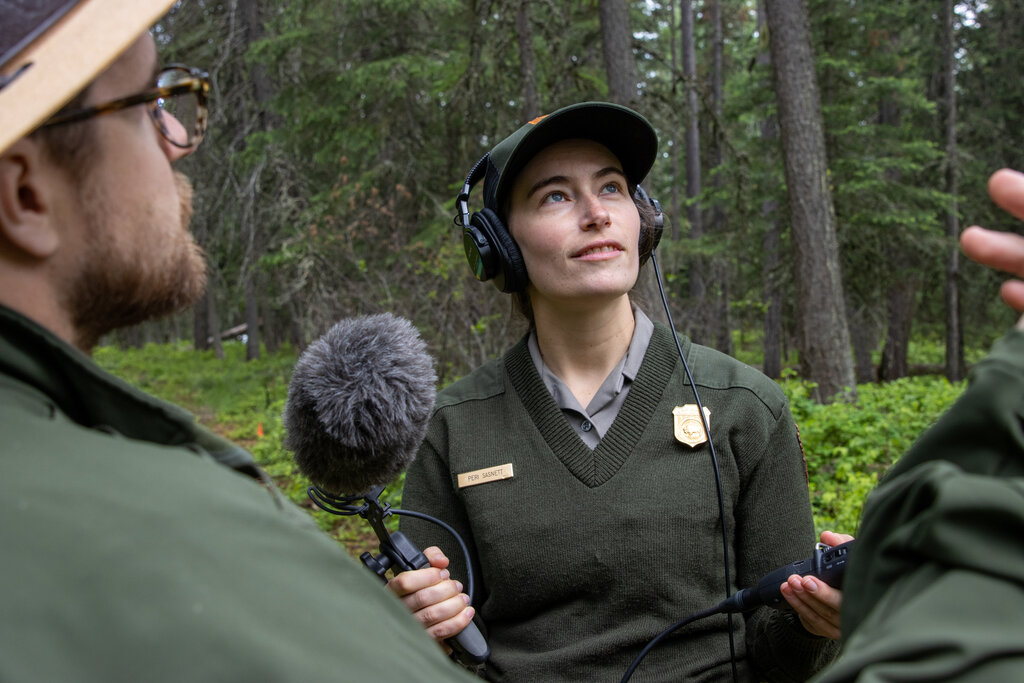
From Raw Sound to Insight
Perch starts with raw, unprocessed audio files. The first step is to clean up this audio and break it into manageable pieces. The system can automatically detect segments that contain interesting sounds, like bird calls, and separate them from background noise like wind or rain. This preprocessing step is crucial for ensuring the machine learning models have clear, high-quality data to work with.
Once the audio is prepared, it's time for model training. A machine learning model is essentially a program that has been trained to recognize patterns. Perch provides powerful, pre-trained models that already know how to identify thousands of bird species. Researchers can use these models right away or fine-tune them with their own labeled data to create custom models for specific animals or regions.
The Power of Embeddings
One of the key features of Perch is its ability to create 'embeddings.' An embedding is a compact, numerical representation of a sound, like a unique digital fingerprint. Instead of working with a complex audio waveform, the system converts each call into a series of numbers, or a vector.
Think of it this way: the song of a robin gets one fingerprint, the hoot of an owl gets another. Songs that sound similar will have mathematically similar fingerprints.
This is incredibly useful. It allows scientists to quickly search through huge audio libraries to find all instances of a specific call. They can also use embeddings to discover new, unclassified sounds or to visualize the relationships between different vocalizations. This process transforms messy audio data into a structured format that a computer can easily search, sort, and analyze.
With a trained model and a way to create embeddings, the final step is inference. This is where the system puts its knowledge to the test on new, unlabeled audio. When you feed a new recording into the model, it generates an embedding for each sound it detects and compares it to the patterns it learned during training. It then outputs a classification, such as 'Northern Cardinal' or 'American Robin,' along with a confidence score.
Let's check your understanding of these core concepts.
What is the main challenge in bioacoustics that the Perch framework helps scientists overcome?
In the context of Perch, what is an 'embedding'?
Perch is a great example of how AI can be a powerful tool for scientific discovery, helping us listen to and understand the natural world in entirely new ways.