Google's Gemini AI Models Explained
Introduction to Large Language Models
What Are Large Language Models?
A Large Language Model (LLM) is a type of artificial intelligence program designed to understand, generate, and work with human language.
Think of a large language model, or LLM, as a highly advanced autocomplete. But instead of just suggesting the next word in your text message, it can write entire essays, compose emails, translate languages, and even generate computer code. Its main purpose is to process and produce text that is coherent, relevant, and sounds like it was written by a human.
These models are called "large" for a reason. They are trained on enormous amounts of text data, like books, articles, and websites. By analyzing the patterns, grammar, and facts within this data, the LLM learns the intricate rules of language. It's not just memorizing sentences; it's learning the relationships between words and concepts.
A Brief History
The journey to today's LLMs started decades ago. Early attempts at language AI in the 1960s were based on rigid rules. A program might have a rule like, "If a user says 'I feel X,' respond with 'Why do you feel X?'" These systems were clever but brittle. They couldn't handle the vast and unpredictable nature of real conversation.
Later, statistical methods took over. Instead of hardcoded rules, models started learning probabilities from text. They could predict the next word in a sentence based on which words were most likely to follow. This was a big step forward, but these models had a limited memory and struggled with long-term context.
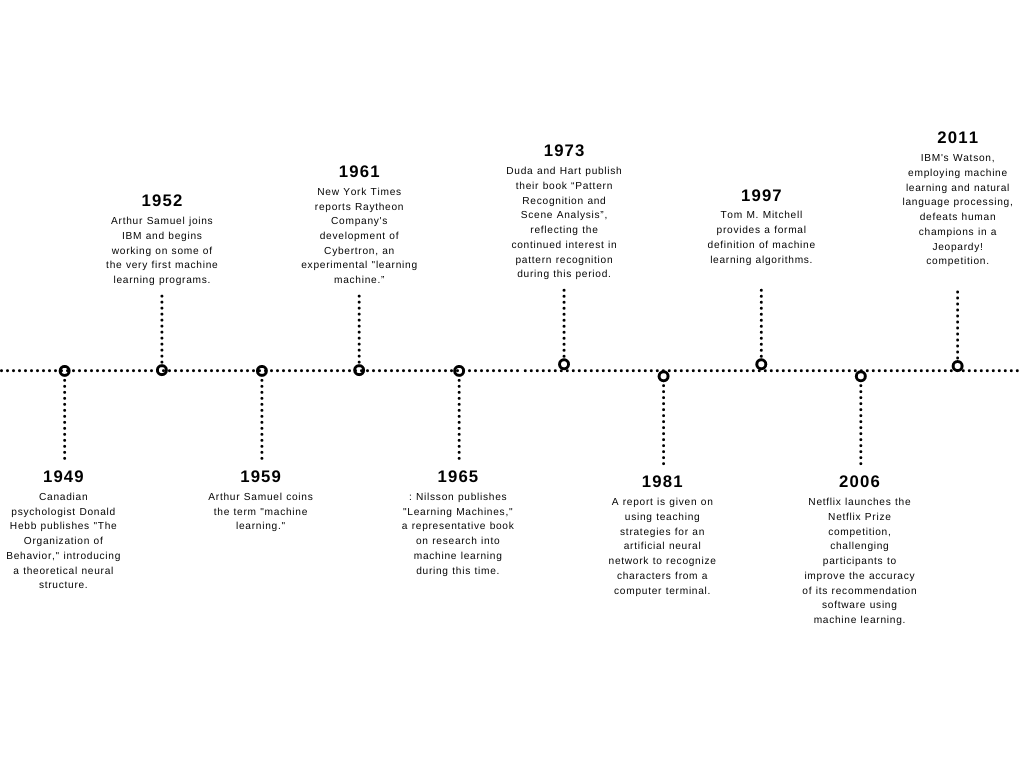
The real breakthrough came with a new architecture introduced in 2017: the transformer. This design allowed models to weigh the importance of different words in the input text, no matter how far apart they were. This ability to handle long-range dependencies was the key that unlocked the power of modern LLMs.
How an LLM Works
At its core, an LLM is a neural network, a type of computing system inspired by the human brain. The transformer architecture is the specific blueprint for this network. When you give an LLM a prompt, it goes through a few key steps.
First, the input text is broken down into smaller pieces called tokens. These tokens can be words, parts of words, or even just characters. The model then converts these tokens into numbers, creating a mathematical representation of your prompt.
This numerical representation is fed into the transformer network. The model processes the information, paying close attention to which words relate to others. Finally, it starts generating new tokens one by one, each time predicting the most probable next token based on the input and what it has already written. This process continues until it has formed a complete response.
Common Applications
LLMs are not just for chatbots. Their ability to understand and generate language makes them incredibly versatile. They are being used in a wide range of fields to automate tasks and create new possibilities.
| Application | Description |
|---|---|
| Content Creation | Drafting articles, emails, marketing copy, and social media posts. |
| Summarization | Condensing long documents, articles, or meetings into key points. |
| Code Generation | Writing and debugging computer code based on natural language descriptions. |
| Translation | Translating text between different languages with improved accuracy and nuance. |
| Customer Support | Powering chatbots that can answer questions and resolve customer issues. |
| Data Analysis | Extracting insights and trends from unstructured text data like reviews or reports. |
These models act as a powerful interface between humans and computers, allowing us to interact with complex systems using our own language.
Let's check your understanding of these fundamental concepts.
What is the primary function of a Large Language Model (LLM)?
What architectural innovation, introduced in 2017, was the key breakthrough for modern LLMs by allowing them to handle long-range dependencies in text?