Google's AI Creation
Introduction to Artificial Intelligence
What is Artificial Intelligence?
Artificial Intelligence, or AI, is a broad field of computer science focused on creating machines that can perform tasks that typically require human intelligence. This includes things like learning from experience, solving problems, understanding language, and recognizing patterns.
Think of it as teaching a computer not just to follow instructions, but to think and adapt on its own.
Instead of writing a specific set of rules for every possible situation, we build systems that can analyze vast amounts of information and figure out the best course of action. This ability to learn and reason is what makes AI so powerful and versatile.
A Brief History
The idea of intelligent machines has been around for centuries, but the formal field of AI research began in the summer of 1956 at a workshop at Dartmouth College. It was here that the term "artificial intelligence" was coined. Early researchers were optimistic, believing that a machine as intelligent as a human being was only a generation away.
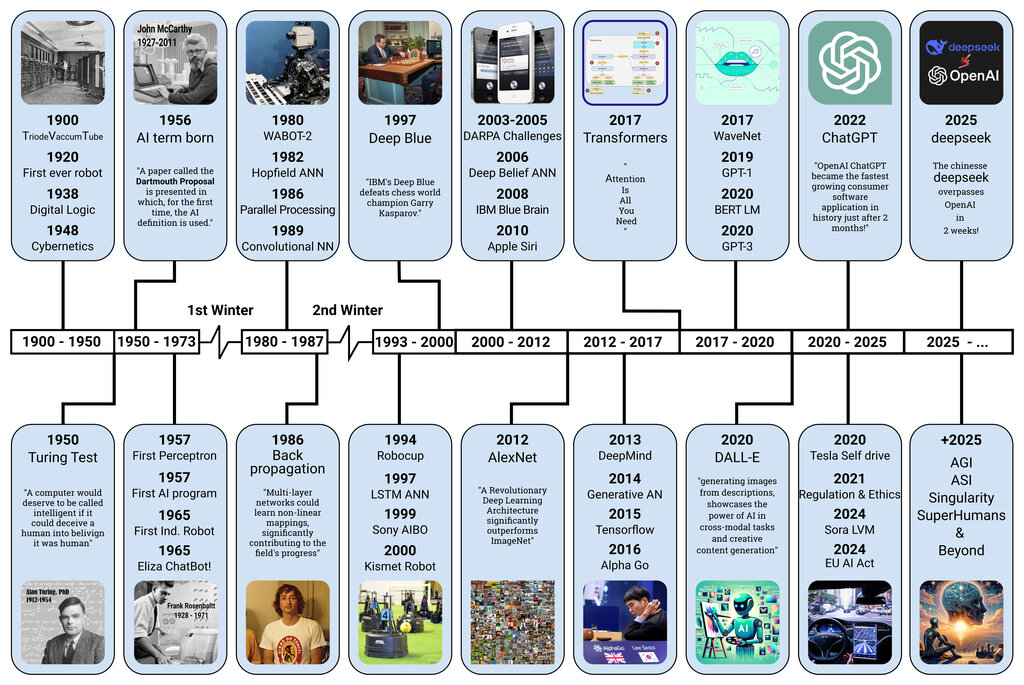
Progress turned out to be much harder than expected. The journey of AI has seen periods of great excitement followed by "AI winters," when funding dried up and interest waned due to a failure to meet expectations. However, in recent decades, two key ingredients have changed everything: massive increases in computing power and the availability of enormous datasets. These advancements have fueled the rapid progress we see today.
The Many Faces of AI
AI isn't a single technology. It’s an umbrella term that covers many different subfields and techniques. Some of the most important areas within AI are Machine Learning, Neural Networks, and Natural Language Processing. They are often related, with one building upon the concepts of another.
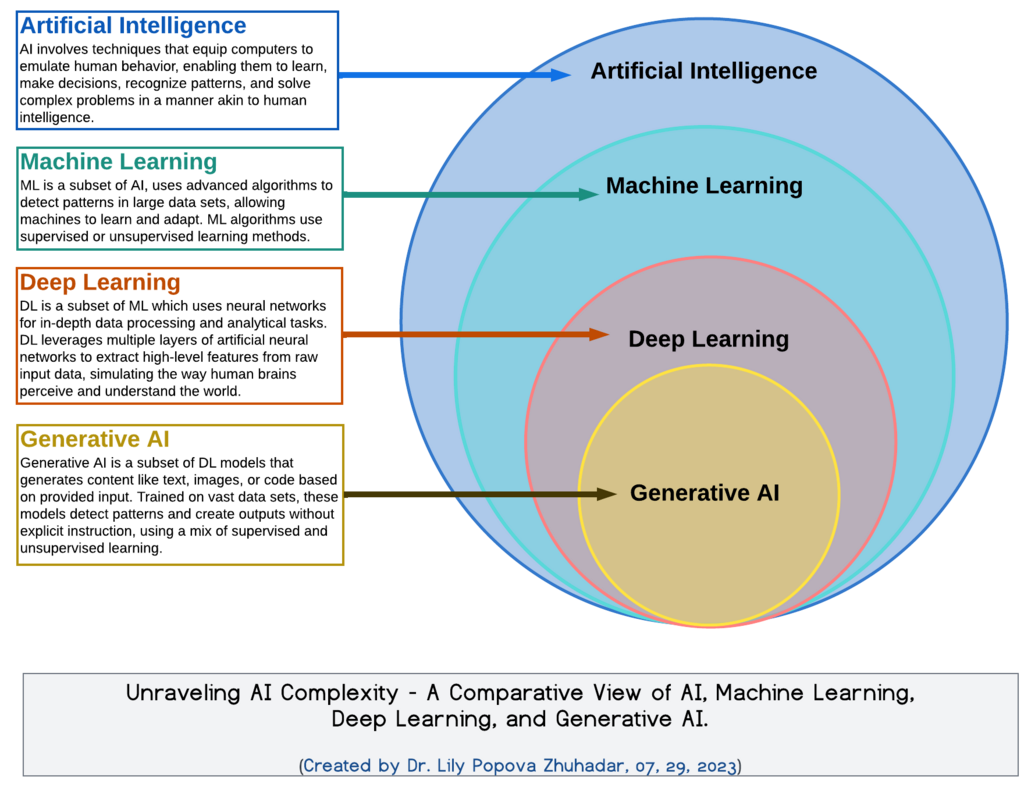
Let's break down what each of these core areas means.
Machine Learning
noun
A subfield of AI that gives computers the ability to learn from data without being explicitly programmed.
With Machine Learning (ML), a system is trained on a large dataset. It learns to recognize patterns and relationships within that data. Once trained, it can make predictions or decisions about new, unseen data. For example, by analyzing thousands of pictures of cats, an ML model can learn to identify a cat in a photo it has never seen before. It learns the idea of a cat, not just memorizes specific images.
Neural Network
noun
A type of machine learning model inspired by the structure and function of the human brain.
Neural networks are a key part of a more advanced area of ML called Deep Learning. They are made up of layers of interconnected nodes, or "neurons." Each neuron receives input, processes it, and passes its output to other neurons. By adjusting the connections between these neurons during training, the network learns to perform complex tasks. The "deep" in deep learning refers to networks with many layers, allowing them to learn very intricate patterns.
Natural Language Processing
noun
A subfield of AI that enables computers to understand, interpret, and generate human language.
Natural Language Processing, or NLP, bridges the gap between human communication and computer understanding. It's the technology behind virtual assistants like Siri and Alexa, language translation services, and sentiment analysis tools that can determine the emotional tone of a piece of writing. NLP involves teaching machines the rules of grammar, context, and nuance that we use effortlessly.
Now that you've got the basics down, let's test your knowledge.
What is the primary goal of Artificial Intelligence?
The term "artificial intelligence" was first coined at a workshop in what location?
These foundational concepts are the building blocks of the AI systems that are becoming an increasingly important part of our world.