Google Unveiled
Origins of Google
A Stanford Project
In the mid-1990s, the World Wide Web was a chaotic, sprawling new frontier. Finding anything was a challenge. Existing search engines like AltaVista or Lycos often returned a jumble of irrelevant results because they ranked pages based on how many times a search term appeared on them.
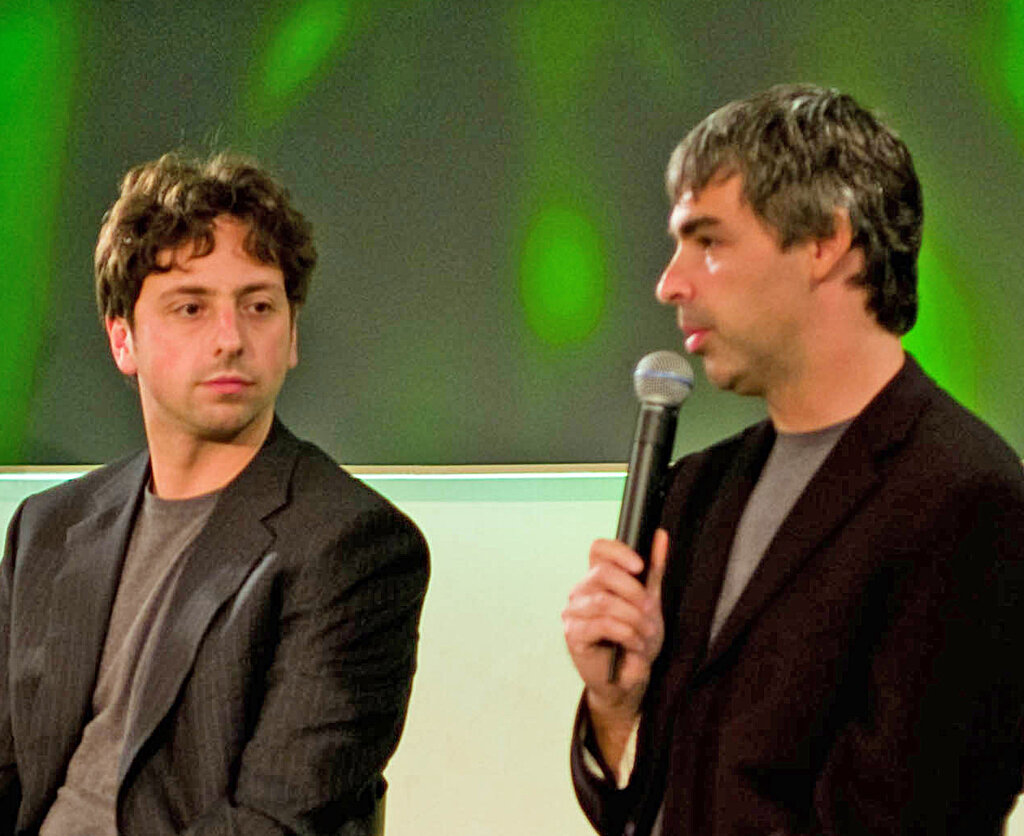
Two Stanford University PhD students, Larry Page and Sergey Brin, thought there had to be a better way. They met in 1995 and soon discovered a shared interest in the mathematical properties of the web. They saw the web not just as a collection of documents, but as a massive graph of interconnected nodes. The key, they believed, was in the links.
The BackRub Idea
Their research project, initially nicknamed "BackRub," was built on a simple but powerful idea. Instead of analyzing the content on a page, they analyzed the links pointing to it. They reasoned that a link from one page to another was a kind of vote or recommendation.
Think of it like an academic paper. A paper cited by many other well-regarded papers is probably more important than one with few citations. BackRub applied this same logic to the web. It didn't just count the number of incoming links (or "backlinks"); it evaluated their quality. A link from a major news site would be worth far more than a link from a random personal blog. This system for ranking pages was the core of their breakthrough.
PageRank
noun
An algorithm used by the Google search engine to rank web pages in their search engine results. It works by counting the number and quality of links to a page to determine a rough estimate of how important the website is.
This innovative algorithm was named PageRank, a clever play on Larry Page's last name and the concept of a web page. It gave search a way to understand authority and trust, a massive leap forward in sorting the web's signal from its noise.
Becoming Google
The name "BackRub" didn't last long. By 1997, Page and Brin were looking for a new name that could capture the scale of their ambition.
Page and Brin eventually renamed the search engine Google, as a play on the word “googol,” a mathematical term represented by the numeral one followed by 100 zeros–a reflection of their mission to organize the seemingly infinite amount of information on the internet.
With their powerful new search technology gaining attention, they secured funding from investors. In September 1998, they officially incorporated Google Inc. and set up shop in a friend's garage in Menlo Park, California.
From a university research project to a fledgling company in a suburban garage, the foundation was laid. The core idea of PageRank was so effective that it would soon propel Google past all its competitors, fundamentally changing how we access information.