Google Cloud Professional Architect Certification Prep
Google Cloud Overview
What is Google Cloud?
Google Cloud Platform (GCP) is a suite of cloud computing services that runs on the same infrastructure that Google uses for its own products, like Google Search and YouTube. Instead of buying and managing your own physical servers and data centers, you can rent these resources from Google. This allows you to build and run applications, store data, and perform complex analyses on a global scale.
A Global Network
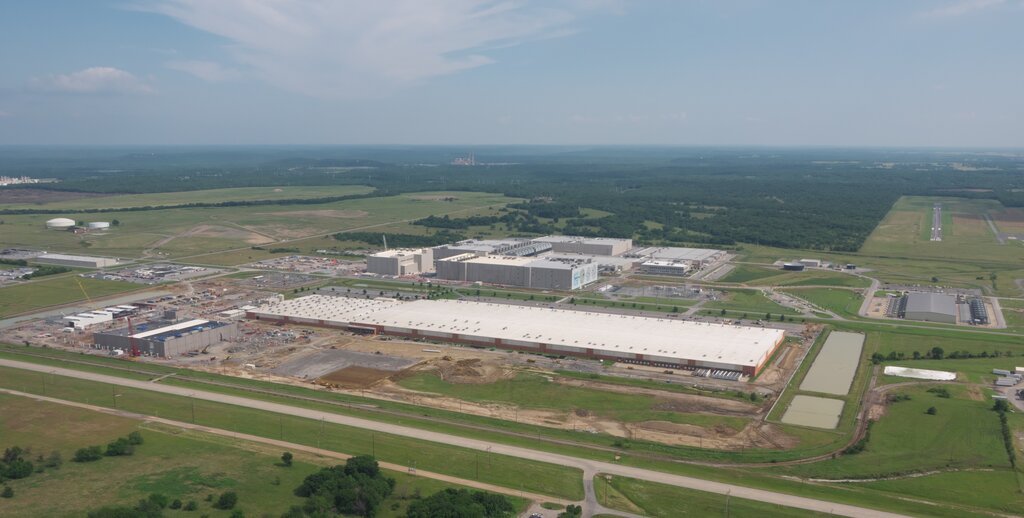
Google's infrastructure is spread across the globe to provide fast and reliable service. This network is organized into regions and zones.
A region is a specific geographical location, like Northern Virginia or Tokyo. Each region is a collection of zones.
A zone is an isolated location within a region. Think of a zone as a single data center. Each zone has its own power, cooling, and networking to protect against single points of failure. By deploying applications across multiple zones in a region, you can protect them from unexpected outages.
This structure provides a key benefit: high availability. If one zone experiences an issue, your application can continue running in other zones within the same region, ensuring your users are not affected.
Core Services
Google Cloud offers hundreds of services, but they generally fall into a few main categories. Let's look at the foundational building blocks you'll use most often.
Compute: The Brains of the Operation
Compute services provide the processing power for your applications. The main options offer different levels of control and management.
- Compute Engine: This is Google's Infrastructure as a Service (IaaS) offering. You get virtual machines (VMs) that you can configure and manage completely. You choose the operating system, memory, and CPU. It's like renting a raw server in the cloud.
- App Engine: This is a Platform as a Service (PaaS). You just upload your code, and Google handles the underlying infrastructure, scaling, and server management for you. It's ideal for web applications and mobile backends when you don't want to worry about servers.
- Google Kubernetes Engine (GKE): GKE is a managed environment for deploying and scaling containerized applications using Kubernetes. Containers package your application and its dependencies together, ensuring it runs reliably in any environment. GKE automates the deployment and management of these containers.
Storage: Where Everything Lives
All that compute power needs data to work with. GCP provides several ways to store it.
- Cloud Storage: This is an object storage service. It's perfect for storing unstructured data like images, videos, backups, and large datasets. You store files in containers called "buckets."
- Persistent Disks: These are network-attached storage devices for your Compute Engine VMs. Think of them as the hard drives for your virtual machines. They can be standard hard drives (HDD) or faster solid-state drives (SSD).
Networking: Connecting It All
Your cloud resources need to communicate with each other and the internet securely.
- Virtual Private Cloud (VPC): A VPC is your own private, isolated network within Google Cloud. It's a global resource, meaning you can have resources in different regions connected to the same VPC without traversing the public internet.
- Subnets: Within a VPC, you create subnets (or subnetworks) to segment your network. Each subnet is associated with a specific region, allowing you to group resources logically and geographically.
- Firewall Rules: These control the traffic that is allowed to and from your VMs. By default, all incoming traffic is blocked, providing a secure starting point. You create rules to explicitly allow the traffic you need.
Databases: Organized Data
For structured data, GCP offers a variety of managed database services.
- Cloud SQL: A fully managed service for relational databases like MySQL, PostgreSQL, and SQL Server. Google handles patches, backups, and replication, so you can focus on your application.
- Cloud Spanner: A globally distributed relational database that offers horizontal scalability and strong consistency. It's designed for applications that need to handle massive amounts of data and transactions across the globe.
- Firestore: A flexible, scalable NoSQL document database for mobile, web, and server development. It offers features like live synchronization and offline support, making it great for building responsive, collaborative applications.
- BigQuery: This is a serverless, highly scalable data warehouse. It's designed for analyzing petabytes of data using SQL. It’s incredibly fast and cost-effective for running large analytical queries.
These are the fundamental pieces of Google Cloud. Understanding how they fit together is the first step in designing powerful and scalable cloud solutions.
What is the primary relationship between regions and zones in Google Cloud's infrastructure?
A developer wants to deploy a new web application and wants to focus only on writing code, letting Google manage the underlying servers, scaling, and infrastructure. Which GCP service is the best fit for this requirement?
With these building blocks, you can construct nearly any application or system. Mastering them is the key to preparing for more advanced topics and the Google Cloud Professional Cloud Architect certification.