Golf Fundamentals Explained
Introduction to Golf
What Is Golf?
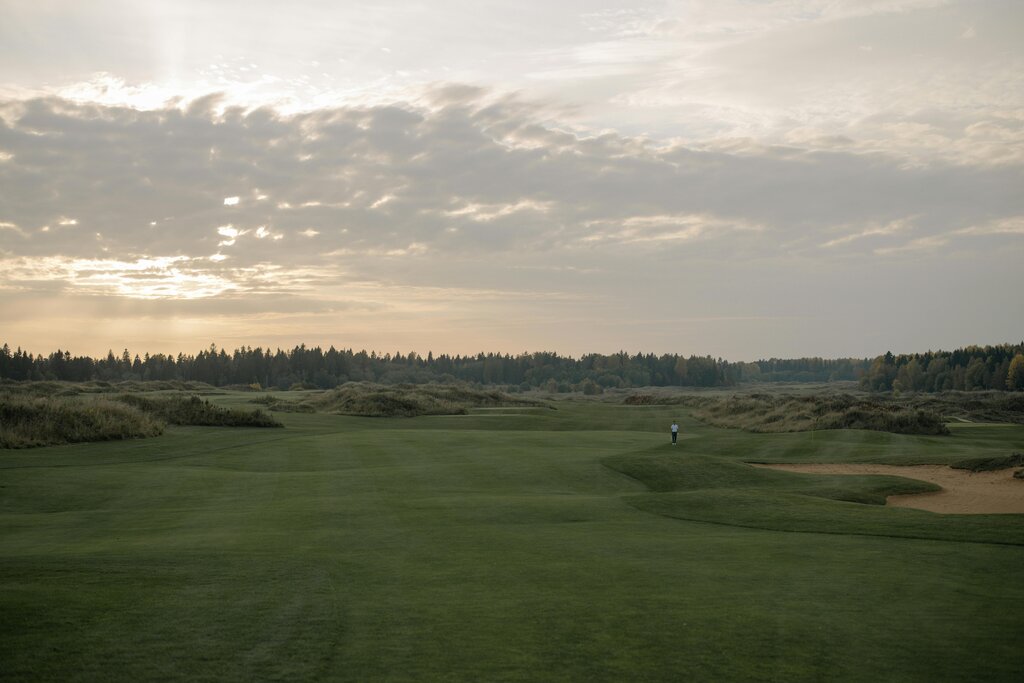
At its heart, golf is a simple game. You have a ball and a club, and your goal is to hit the ball into a series of holes on a course. The challenge is to do this in the fewest possible swings, or strokes. It's a game of precision, patience, and a little bit of luck, played on beautiful, sprawling landscapes.
Let's explore where this unique game came from and how it's played.
A Walk Through History
The version of golf we know today originated in 15th-century Scotland. It was likely a development of older stick-and-ball games played across Northern Europe, but the Scots were the first to formalize it with a key innovation: digging a hole in the ground and making that the target. The famous Old Course at St Andrews, a coastal town in Scotland, is considered the oldest golf course in the world.
The Goal of the Game
The objective of golf is straightforward: get your ball from a starting point into a hole in as few strokes as possible.
A round of golf usually consists of playing 18 holes. The person who completes all 18 holes with the lowest total number of strokes is the winner. It's a game of efficiency where a lower score is better.
stroke
noun
Any forward swing of a club made with the intention of hitting the golf ball.
Each hole has a target score called "par." This is the number of strokes an expert golfer is expected to take to complete the hole. If a hole is a "par 4," the goal is to get the ball in the hole in four strokes. Don't worry about the details of scoring just yet, just remember that the main goal is to keep your stroke count as low as you can.
The Playing Field
A golf course is not just an open field; it's a carefully designed landscape with distinct areas. Each hole has its own unique layout, but they all share common features.
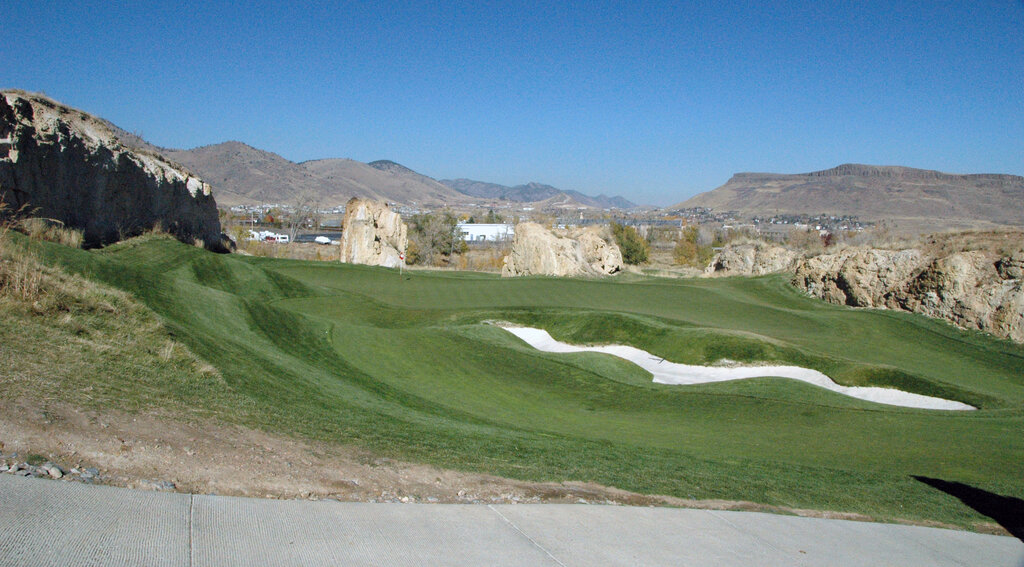
A hole generally consists of these five parts:
- Teeing Ground: This is where you start. It's a flat, rectangular area where you take your first shot for each hole.
- Fairway: The ideal path between the teeing ground and the green. The grass here is short and well-maintained, making it easier to hit the ball.
- Rough: The areas outside the fairway. The grass is longer and thicker, which makes shots more difficult.
- Hazards: These are obstacles designed to challenge players. The most common are sand-filled pits called bunkers and bodies of water like ponds or streams.
- Green: The destination. This is an area with extremely short, smooth grass where the hole and flagstick are located.
Now that you know the basics of the game and the course, let's see what you've learned.
The modern version of golf, with a hole in the ground as the target, originated in which country?
In golf, what is the primary objective?
Understanding these fundamentals gives you a solid base for learning the finer points of the game.