Gold: The Element Au
Introduction to Gold
Gold's Atomic Identity
Every element has a unique spot on the periodic table, and gold is no exception. Its chemical symbol is Au, which comes from its Latin name, aurum, meaning "shining dawn." Look for gold in period 6 and group 11 of the table.
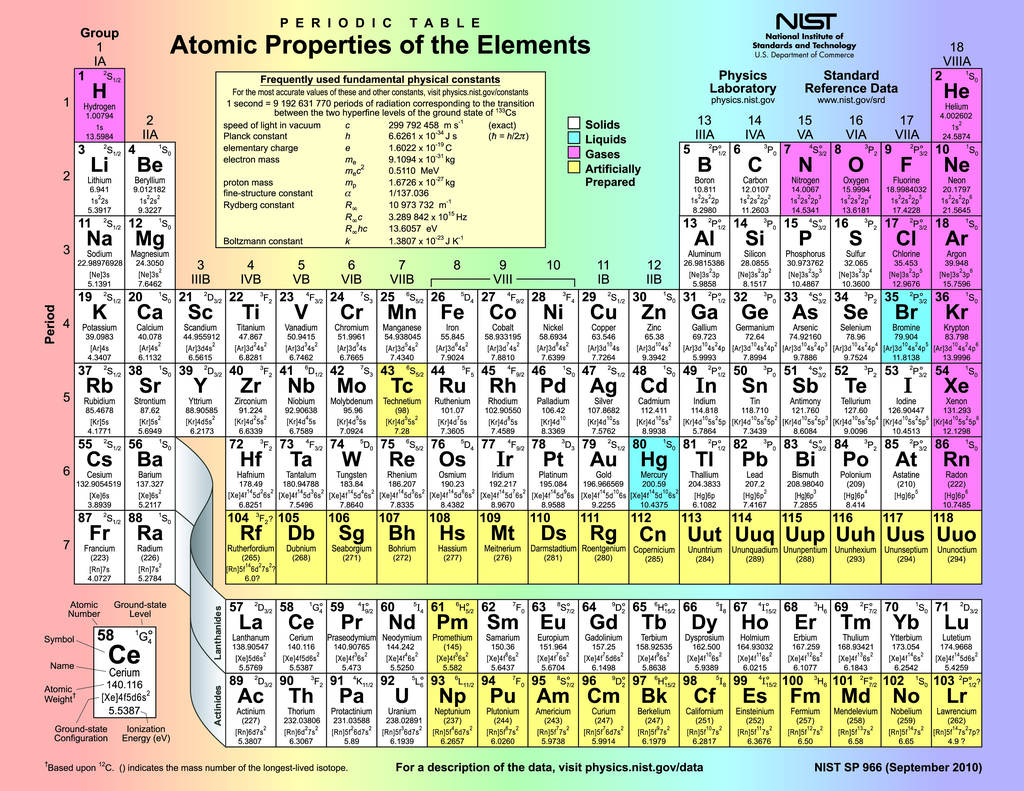
Gold's atomic number is 79. This number is fundamental, as it tells us that every gold atom contains exactly 79 protons in its nucleus. The number of protons defines the element. If an atom had 78 protons, it would be platinum; with 80, it would be mercury.
Atomic Number
noun
The number of protons in the nucleus of an atom, which determines the chemical properties of an element and its place in the periodic table.
While the proton count is fixed, the number of neutrons can vary, creating different isotopes of gold. However, when we consider its atomic mass, we're looking at a weighted average. Gold’s atomic mass is approximately 196.97 atomic mass units (amu). This reflects the combined mass of its protons and neutrons.
Inside the Atom
An atom's chemical behavior is largely dictated by its electrons, specifically how they are arranged in shells around the nucleus. For a neutral gold atom, there are 79 electrons to match its 79 protons. Their arrangement, or electron configuration, is a bit complex.
Let's break that down. The [Xe] is shorthand for the electron configuration of Xenon, a noble gas with 54 electrons. This notation simplifies things by showing that gold's inner electron shells are configured just like Xenon's. The interesting part is what comes after. The 4f and 5d orbitals are completely full, with 14 and 10 electrons, respectively. The outermost shell has a single electron in the 6s orbital.
This structure is key to understanding gold. The filled d orbital lends a great deal of stability to the atom, making gold resistant to reacting with other elements. That single, lonely electron in the 6s orbital is the one that gold will typically use when it does decide to form a chemical bond.
Physical Traits
When you think of gold, you probably picture its most obvious physical property: its color. It has a distinct, metallic yellow hue. This is unusual, as most metals are silvery-gray. Only copper comes close with its reddish-brown color.
Gold is also remarkably dense. Its density is 19.3 grams per cubic centimeter (). This means a block of gold is over 19 times heavier than an equivalent-sized block of water. This high density is why even a small gold coin feels surprisingly heavy in your hand.
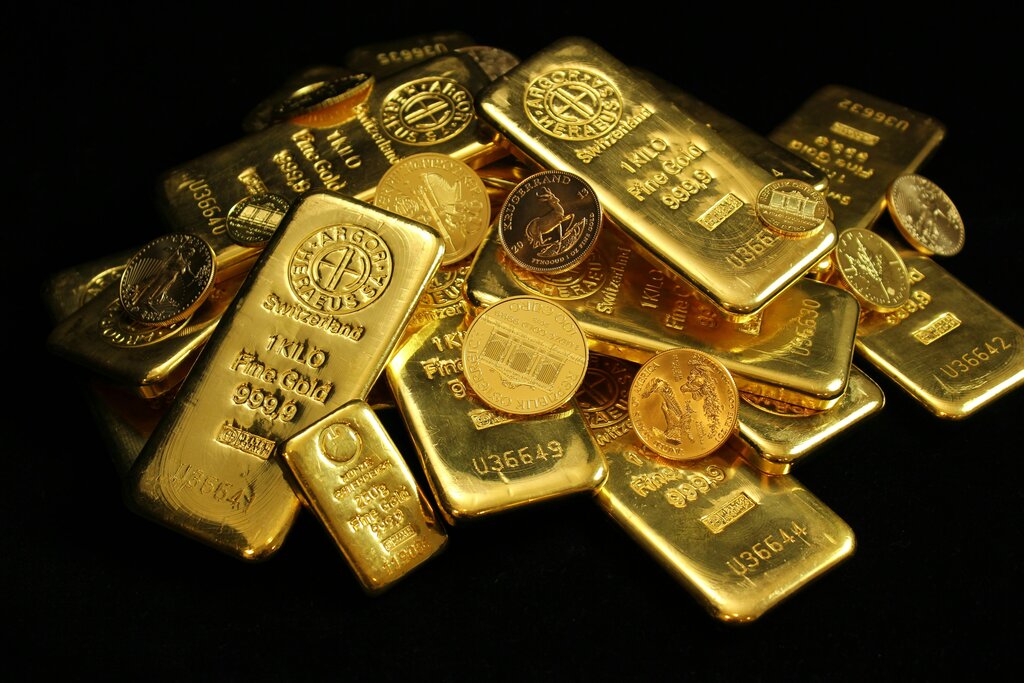
Like all metals, gold will melt if you heat it enough. Its melting point is 1064°C (1947°F). To turn it into a gas, you need to raise the temperature much higher, to its boiling point of 2856°C (5173°F). These high temperatures are a testament to the strong metallic bonds holding the gold atoms together.
| Property | Value |
|---|---|
| Color | Metallic yellow |
| Density | |
| Melting Point | 1064°C / 1947°F |
| Boiling Point | 2856°C / 5173°F |
Chemical Personality
Gold's most famous chemical property is its lack of one. It is extremely unreactive. This is why gold artifacts can survive for thousands of years without tarnishing or corroding. It doesn't react with oxygen in the air, nor does it react with water or most individual acids.
This inertness is a direct result of its stable electron configuration. The filled d orbitals hold onto their electrons tightly, making it difficult for other elements to steal them away in a chemical reaction.
Gold's resistance to corrosion and tarnish is why it's known as a "noble metal."
However, gold isn't completely inert. It can be dissolved by a potent mixture of nitric acid and hydrochloric acid known as aqua regia. When gold does react, it loses electrons to form positive ions. The state of this ion is called its oxidation state.
Gold most commonly exhibits two oxidation states: +1 and +3. The +1 state (Au⁺) occurs when it loses the single electron from its outermost 6s orbital. The +3 state (Au³⁺) is also common, where gold loses that 6s electron plus two electrons from its 5d orbital. The +3 state is generally the more stable of the two in aqueous solutions.
Ready to test your knowledge on the basics of gold?
What fundamental property determines that an atom is gold?
Gold is known for being extremely unreactive. This property is primarily due to its:
Understanding these core atomic and physical properties is the first step in appreciating why gold is such a unique and valued element.