Golang Fundamentals
Introduction to Go
Meet Go
Go is a programming language born at Google. It was designed to solve problems that emerged from building large-scale software. Think of it as a modern tool built for modern hardware.
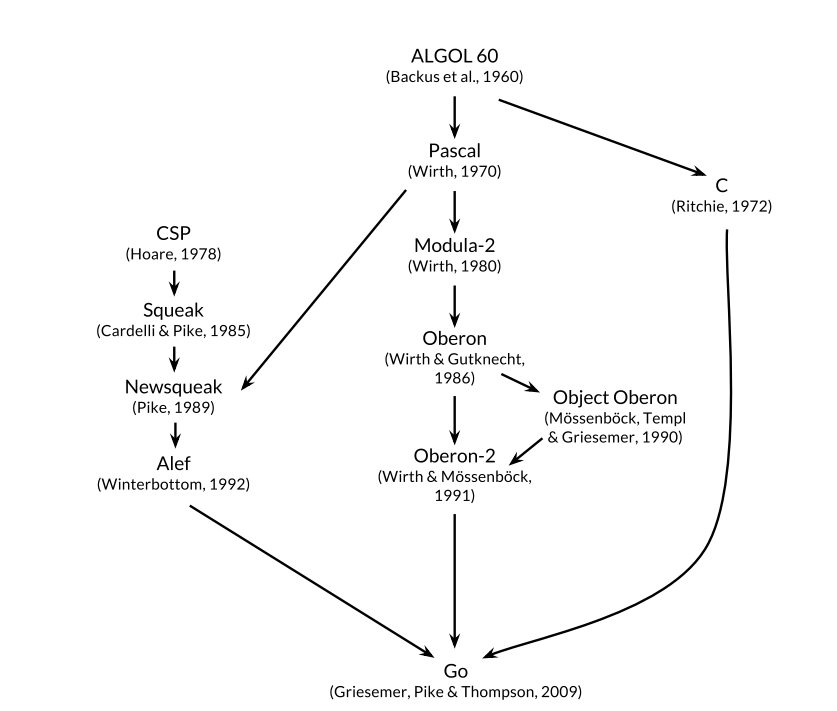
The language was officially announced in 2009. Its creators, Robert Griesemer, Rob Pike, and Ken Thompson, were seasoned engineers who had worked on foundational technologies like the C programming language, Unix, and the UTF-8 character encoding. They weren't just creating another language; they were trying to build a better way to work.
Why a New Language?
In the mid-2000s, programming at Google was hitting a wall. The codebases were massive, written in languages like C++ and Java. Compiling these huge projects took a very long time, slowing down development. A programmer might change one line of code and then wait up to an hour for the software to build.
At the same time, computer hardware was changing. Instead of single processors getting faster and faster, manufacturers started putting multiple processors, or "cores," into a single chip. Most existing languages weren't designed to easily take advantage of all this new processing power.
Go was created to address three main issues: slow compile times, difficulties in managing dependencies, and the challenge of writing concurrent programs that could run on multi-core machines.
Go's Core Ideas
From these challenges, a few key design principles emerged. These principles define what Go is and why so many developers enjoy using it.
Simplicity
noun
The language has a small, clean syntax with only 25 keywords. This makes it easy to learn, read, and maintain. A team of developers can quickly understand each other's code without getting lost in complex features.
Next is efficiency. Go is a compiled language, which means the code you write is translated directly into the machine code that a computer's processor understands. This makes Go programs run very fast. Just as important, the compiler itself is fast. Those hour-long waits were replaced by builds that take seconds.

Finally, and perhaps most importantly, is concurrency. Concurrency is the ability for a program to work on multiple tasks at the same time. Think of a barista making coffee. They might start steaming milk, then grind beans for another order while the milk heats up. Go was built from the ground up to make this kind of multitasking easy and safe for programmers. This allows Go applications to fully utilize modern multi-core processors.
Go's approach makes it simple to write programs that can handle thousands of tasks simultaneously without getting bogged down.
Here’s a look at what Go code looks like. This is the classic "Hello, World!" program:
package main

import "fmt"

func main() {
    fmt.Println("Hello, World!")
}
Even if you've never coded before, you can probably guess what this does. It defines a program that imports a formatting package (fmt) and uses it to print a line of text to the screen. It's clean, readable, and gets straight to the point, which is exactly what Go is all about.
Time to check what you've learned.
What were the primary challenges that led to the creation of the Go language?
The ability of a program to work on multiple tasks at the same time, a core feature of Go, is called __________.
This combination of simplicity, speed, and powerful concurrency makes Go a popular choice for building network services, cloud infrastructure, and command-line tools.