Gnosticism Unveiled
Introduction to Gnosticism
The Path of Knowing
Imagine you're trying to solve a puzzle. You could follow the instructions step-by-step, trusting they'll lead to the right answer. Or, you could have a sudden flash of insight where the entire solution becomes clear all at once. Gnosticism is about that flash of insight.
The movement gets its name from a Greek word: gnosis.
Gnosis
noun
A special, intuitive knowledge of spiritual mysteries, believed to be the key to salvation. It is direct, personal insight rather than knowledge gained from books or teachings.
This idea stood in contrast to the early Christian emphasis on pistis, or faith. For many early Christians, salvation came through faith in Jesus's death and resurrection. For Gnostics, salvation was about knowing the truth of your own divine nature and your origin in a spiritual realm beyond this flawed world. It was an internal, personal revelation.
A Flawed Creation
Gnostics wrestled with a profound question: If a perfect, good God created the world, why is it filled with so much suffering, decay, and ignorance? Their answer was radical. They proposed that the material world wasn't created by the highest, most transcendent God at all.
Instead, it was the work of a lesser, flawed being called the Demiurge. This creator god is often portrayed as ignorant or even malicious, trapping divine sparks of spirit within physical bodies. This leads to a core Gnostic belief: dualism. There is a sharp divide between the pure, good spiritual world and the corrupt, evil material one.
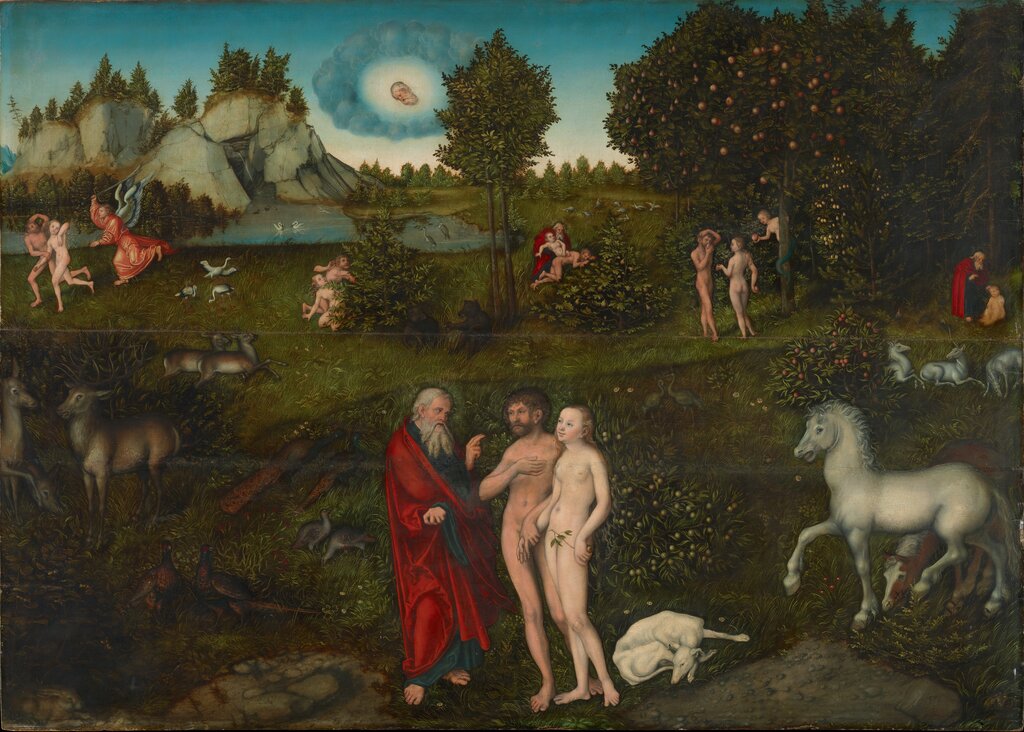
The true God, in this view, is completely transcendent and unknowable through conventional means. This God is beyond the Demiurge and the entire physical cosmos. The goal of a Gnostic was to awaken the divine spark within, escape the material prison created by the Demiurge, and return to the spiritual realm of the true God.
The Gnostic worldview can be summarized as: a divine spark from a transcendent realm is trapped in a flawed material world, and can only be freed through esoteric knowledge (gnosis).
A Shared History
Gnosticism didn't appear in a vacuum. It emerged around the 1st and 2nd centuries AD, the same period when early Christianity was taking shape. The two movements grew up alongside each other, borrowing ideas and often clashing.
Many Gnostics considered themselves Christians. They revered Jesus, but saw him differently than the proto-orthodox church did. To them, Jesus was not primarily a savior who died for humanity's sins, but a divine messenger who came to impart the secret gnosis needed for spiritual awakening and liberation.
This interpretation put Gnosticism at odds with early church fathers like Irenaeus, who saw their teachings as heresy. Irenaeus and others worked to establish a single, orthodox set of beliefs, a canon of scripture, and a clear church structure. Gnostic diversity and its emphasis on personal revelation over church authority posed a direct challenge to that project.
This blending of faith and reason, often seen as a hallmark of early Christian intellectual thought, was a profound challenge to other contemporary religious and philosophical movements, particularly Gnosticism.
As proto-orthodox Christianity became more organized and eventually aligned with the Roman state, Gnostic groups were suppressed. For centuries, most of what was known about them came from the critical writings of their opponents. Only with the discovery of a library of Gnostic texts at Nag Hammadi, Egypt, in 1945 did the Gnostics get to speak for themselves again.
Now, let's test your understanding of these foundational ideas.
The term "gnosis," from which Gnosticism gets its name, is best understood as:
According to Gnostic belief, why is the material world filled with suffering and ignorance?