Gnostic Insights of the Gospel of Thomas
Introduction to the Gospel of Thomas
A Different Kind of Gospel
In 1945, near the town of Nag Hammadi in Egypt, a local farmer stumbled upon a sealed jar containing a collection of ancient texts. This discovery unearthed a library of writings from the early Christian era that had been lost for centuries. Among them was a complete copy of a mysterious text: the Gospel of Thomas.
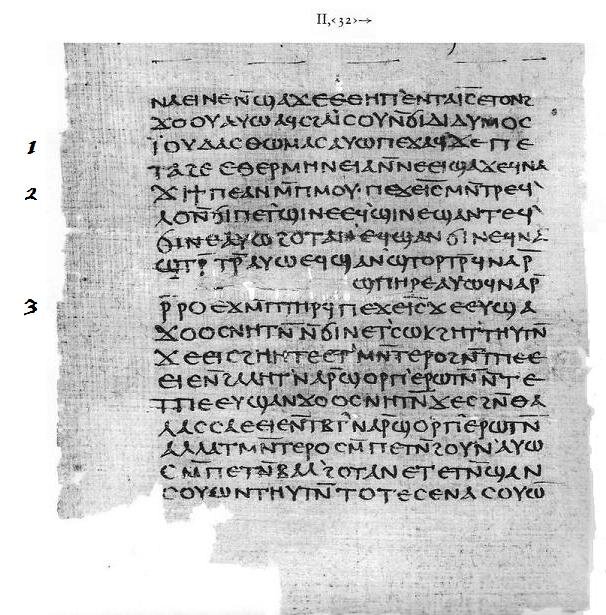
Unlike the four gospels in the New Testament—Matthew, Mark, Luke, and John—this book doesn't tell a story about Jesus's life. There is no birth narrative, no miracles, no crucifixion, and no resurrection. Instead, it's something else entirely.
A Collection of Sayings
The Gospel of Thomas is a collection of 114 sayings, or logia, attributed to Jesus. Some of these sayings are familiar, resembling verses found in the canonical gospels. Others are cryptic, strange, and new.
The opening lines immediately set a different tone: “These are the secret sayings which the living Jesus spoke and which Didymos Judas Thomas wrote down.
The text presents itself as a direct transmission of Jesus's hidden teachings. The introduction suggests that understanding these sayings leads to eternal life. This focus on secret knowledge, or gnosis, is a key feature that distinguishes it from other early Christian writings.
Who Wrote It and When?
The gospel is attributed to
Thomas the Twin
This name is a bit redundant, as both "Didymos" (Greek) and "Thomas" (Aramaic) mean "twin." While the text claims the apostle Thomas as its author, most scholars believe it was written by an anonymous author or community in the second century CE.
The Nag Hammadi manuscript itself dates to around 340 CE and is a Coptic translation of an earlier Greek original. Fragments of this Greek version, found separately, have been dated as early as 200 CE. This timeline places the Gospel of Thomas firmly within the dynamic and diverse world of early Christianity, when many different texts about Jesus were circulating.
The discovery of the Gospel of Thomas opened a new window into this period. It shows that in the first few centuries after Jesus's life, there wasn't just one way of understanding his message. Instead, there were many interpretations and traditions developing side by side.
If we admit that some of these fifty-two texts represents early forms of Christian teaching, we may have to recognize that early Christianity is far more diverse than nearly anyone expected before the Nag Hammadi discoveries.
The Gospel of Thomas is a vital piece of that puzzle. It challenges us to think more broadly about the origins of Christianity and the many forms it took before a single, unified canon was established.
Where was the collection of ancient texts that included a complete copy of the Gospel of Thomas discovered in 1945?
How does the Gospel of Thomas primarily differ in structure and content from the New Testament gospels of Matthew, Mark, Luke, and John?