Glucose Monitoring for Health and Longevity
Introduction to Continuous Glucose Monitoring
Beyond the Prick
For years, checking blood sugar meant a finger-prick test. This gives you a single number—a snapshot of your glucose at that exact moment. It’s useful, but it doesn't tell the whole story. What were your levels an hour ago? What will they be in an hour? Continuous Glucose Monitoring, or CGM, was developed to answer these questions.
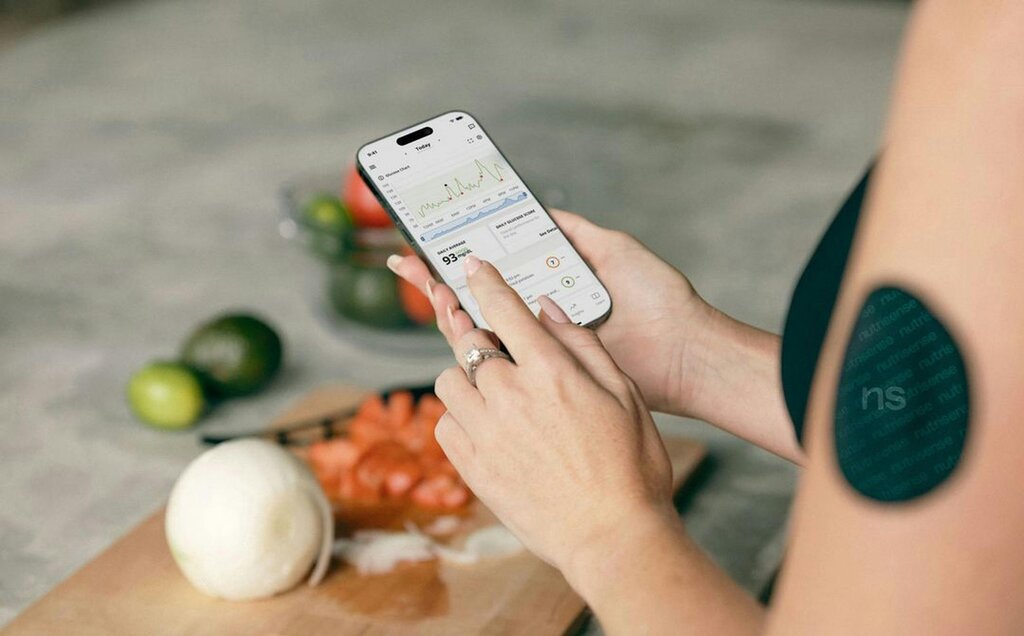
A CGM is a wearable device that tracks your glucose levels automatically, day and night. It gives you a continuous stream of data, revealing patterns and trends that a single finger-prick test could never show. Instead of a single photo, you get a full movie of your glucose activity.
How It Works
CGM systems have three main parts that work together to provide real-time glucose readings.
- The Sensor: A tiny, flexible filament is inserted just beneath your skin, usually on your arm or belly. It doesn’t measure glucose in your blood directly. Instead, it measures glucose in the interstitial fluid, the fluid that surrounds your cells.
- The Transmitter: This small device attaches to the top of the sensor. It wirelessly sends the glucose information from the sensor to a receiver.
- The Receiver: This can be a dedicated handheld device, an insulin pump, or an app on your smartphone. It displays your current glucose level, shows trend arrows indicating if your levels are rising or falling, and charts your glucose history.
The sensor takes a glucose reading every few minutes. This constant stream of data is what allows the system to build a detailed picture of your glucose levels over time.
A Clearer Picture
The biggest advantage of CGM is the sheer amount of information it provides. While a traditional meter gives you a few data points per day, a CGM provides hundreds. This rich data helps you and your doctor understand how things like food, exercise, stress, and medication affect your glucose levels in real time.
Many CGM systems can be set to alert you if your glucose levels are heading too high or too low, allowing you to take action before a problem occurs. This can be especially important overnight.
Here’s a quick comparison:
| Feature | Traditional Meter (BGM) | Continuous Monitor (CGM) |
|---|---|---|
| Data | A single point in time | Continuous stream, trends |
| Frequency | Manual, whenever you test | Automatic, every few minutes |
| Method | Blood drop from a finger | Sensor in interstitial fluid |
| Alerts | None | Customizable high/low alerts |
| Convenience | Requires stopping to test | Passive monitoring |
Limitations to Consider
While powerful, CGMs aren't perfect. One key thing to understand is lag time. Because the sensor measures glucose in the interstitial fluid, its readings are slightly delayed compared to the glucose level in your blood. This lag is typically 5 to 15 minutes.
This delay means that during times of rapid change—like after eating a meal or during intense exercise—your CGM reading might not reflect your real-time blood glucose level. For this reason, some situations may still require a confirmatory finger-prick test.
Additionally, some CGM models require periodic calibration. This involves using a traditional blood glucose meter to take a finger-prick reading and entering that value into the CGM system to ensure its accuracy. The sensor itself also needs to be replaced regularly, typically every 7 to 14 days.
What is the primary advantage of using a Continuous Glucose Monitor (CGM) compared to a traditional finger-prick test?
A CGM user has just finished an intense workout. Why might their CGM reading not accurately reflect their real-time blood glucose level at that exact moment?
CGM technology offers a dynamic and detailed view of glucose levels, moving beyond simple snapshots to provide a continuous story of how your body responds to daily life.