GLP-1 RAs in Kidney Disease Management
Introduction to GLP-1 Receptor Agonists
Meet a Hormone Helper
After you eat, your gut releases hormones called incretins. One of the most important is glucagon-like peptide-1, or GLP-1. This hormone is a key player in managing your blood sugar levels. It sends signals to your pancreas, telling it to release insulin, which helps your cells absorb glucose from your blood. At the same time, it tells the pancreas to hold back on glucagon, a hormone that raises blood sugar levels.
GLP-1 also affects your digestion and appetite. It slows down how quickly food leaves your stomach, which helps you feel full longer. It also sends signals to your brain that reduce your desire to eat. The problem is, your body’s natural GLP-1 doesn't last long. It’s broken down by an enzyme within minutes.
This is where a class of medications called GLP-1 receptor agonists (GLP-1 RAs) comes in. These drugs are designed to mimic the effects of your natural GLP-1 but are engineered to last much longer, from hours to a full week.
The GLP-1 RAs are medicines designed to work like the GLP-1 hormone your body naturally makes and help to amplify (increase) its effects.
Originally developed to help manage type 2 diabetes, their powerful effects on appetite and weight loss have made them a groundbreaking treatment for obesity as well.
The Four-Part Action Plan
GLP-1 RAs work by binding to and activating GLP-1 receptors found on cells in various parts of the body, including the pancreas, stomach, and brain. This triggers a cascade of beneficial effects for metabolic health.
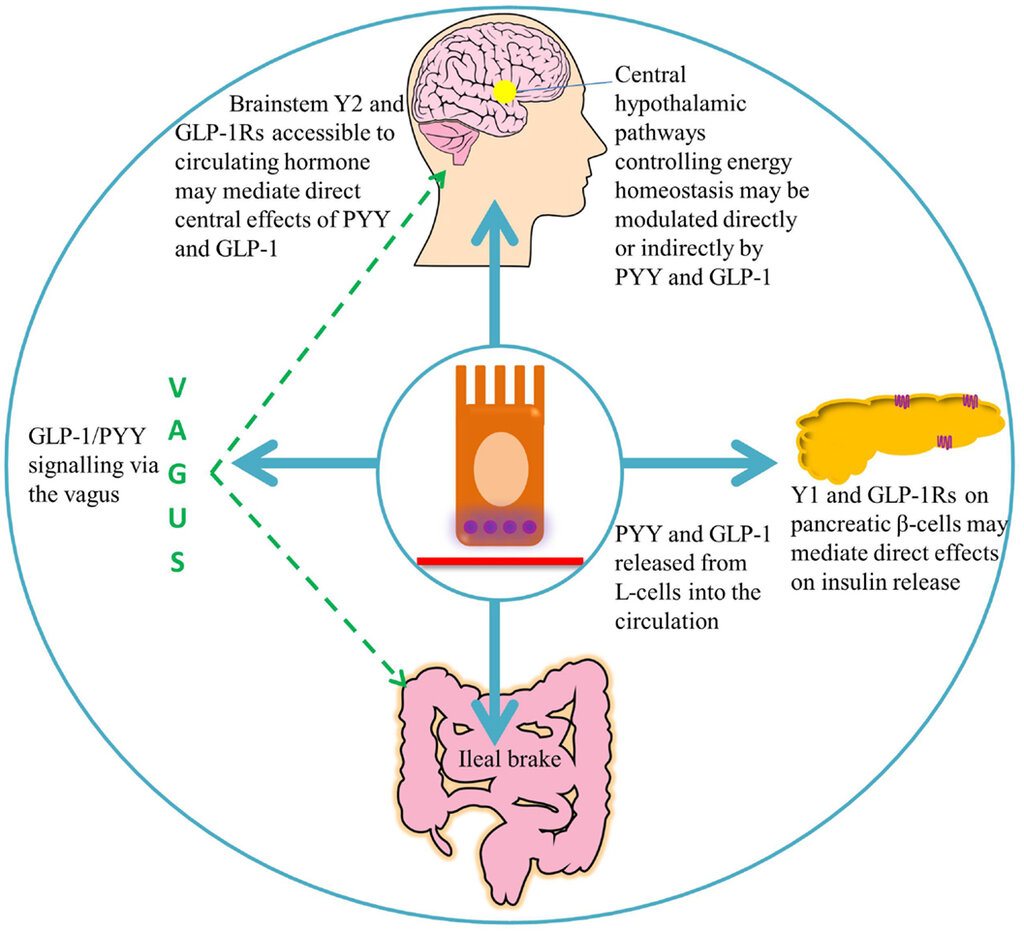
Here’s a breakdown of their primary actions:
-
They boost insulin secretion. When your blood sugar rises after a meal, GLP-1 RAs stimulate the beta cells in your pancreas to release insulin. This response is glucose-dependent, meaning the drug only prompts insulin release when blood sugar is high. This smart mechanism reduces the risk of hypoglycemia, or dangerously low blood sugar.
-
They suppress glucagon. These drugs also reduce the secretion of glucagon from the pancreas. Since glucagon signals the liver to release stored sugar into the bloodstream, suppressing it helps prevent blood glucose levels from climbing too high.
-
They slow stomach emptying. By delaying the passage of food from the stomach to the small intestine, GLP-1 RAs help flatten the spike in blood sugar that typically occurs after eating. This slower digestion also contributes to a prolonged feeling of fullness.
-
They reduce appetite. GLP-1 RAs act on appetite centers in the brain, decreasing hunger and increasing feelings of satiety. This can lead to a lower calorie intake and, consequently, weight loss.
From Shot to System
Understanding how a drug moves through and affects the body involves two key concepts: pharmacokinetics and pharmacodynamics.
- Pharmacokinetics is what the body does to the drug. It covers how the drug is absorbed, distributed to different tissues, metabolized, and finally eliminated.
- Pharmacodynamics is what the drug does to the body. This describes the drug's mechanism of action and its effects, both intended and unintended.
For GLP-1 RAs, these properties vary. Because they are peptides (small proteins), they would be broken down by stomach acid if taken orally. Therefore, most are administered as an injection under the skin, usually in the abdomen, thigh, or upper arm. From there, they are absorbed into the bloodstream.
Some newer formulations have overcome the oral delivery challenge. The first pill-form GLP-1 RA, for example, is combined with a substance that protects it from stomach acid and helps it get absorbed into the bloodstream.
The dosing schedule depends on how long the drug is designed to last in the body. They are generally categorized as either short-acting or long-acting.
- Short-acting agonists are typically taken once or twice a day. They have a more pronounced effect on slowing gastric emptying.
- Long-acting agonists are taken just once a week. They provide a more steady, continuous activation of GLP-1 receptors, leading to sustained effects on blood sugar and appetite.
| Frequency | Type | Primary Effect |
|---|---|---|
| Once or twice daily | Short-acting | Strong impact on gastric emptying |
| Once weekly | Long-acting | Sustained blood sugar and appetite control |
The choice between a short-acting and long-acting agent often depends on a person's specific health goals, lifestyle, and how they respond to the medication. The long-acting weekly injections have become more common due to their convenience.
What is the primary function of the natural hormone GLP-1 after a meal?
GLP-1 receptor agonists (RAs) help manage blood sugar by stimulating insulin release only when blood sugar is high. This 'smart' mechanism is called being...