Global Warming Explained
Introduction to Climate Science
The Climate System
Earth's climate isn't just about the air around us. It's a complex, interconnected system with five major players. Think of them as a team working together.
First is the atmosphere, the blanket of gases surrounding the planet. Next is the hydrosphere, which includes all of Earth's water, from oceans and lakes to rivers and groundwater. The cryosphere is all the frozen water, like glaciers, ice caps, and sea ice.
The lithosphere refers to the Earth's solid outer layer, including the crust and upper mantle. Finally, the biosphere is all living things, from the smallest microbes to the largest whales. These five components are constantly interacting, trading energy and matter in a dynamic dance that shapes our world's climate.
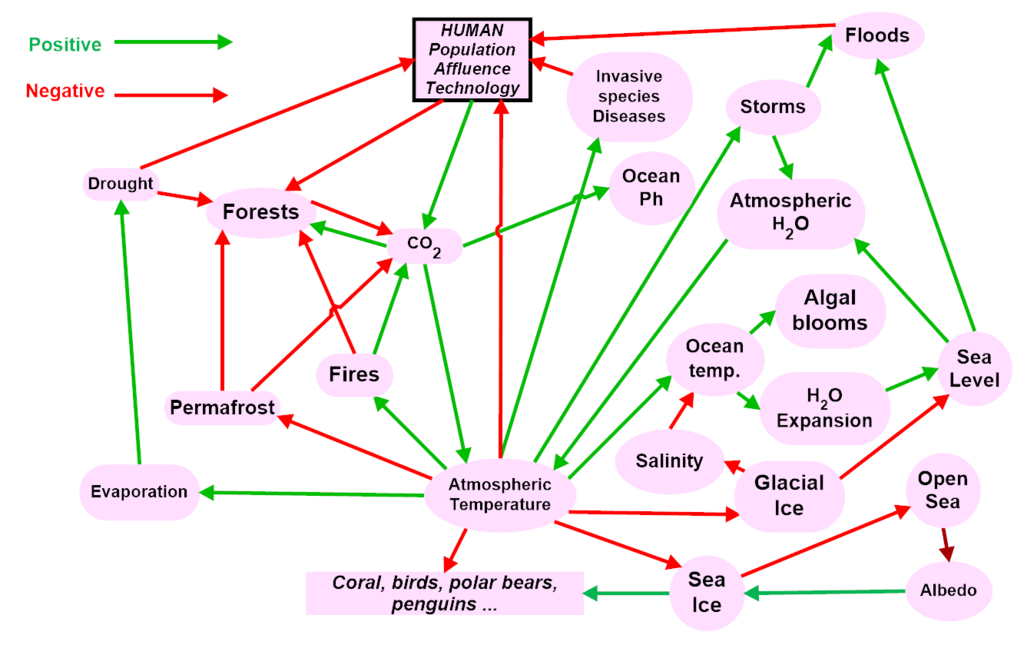
A change in one part of the system can cause ripple effects elsewhere. For example, melting glaciers (cryosphere) can add fresh water to the ocean (hydrosphere), affecting currents and, in turn, weather patterns (atmosphere).
Earth's Natural Blanket
Without a specific process called the greenhouse effect, Earth would be a frozen, inhospitable planet. It works like a natural insulating blanket, keeping the planet warm enough for life to thrive.
Energy from the sun, in the form of sunlight, passes through the atmosphere and warms the Earth's surface. The planet then radiates some of this energy back out toward space as heat. Certain gases in the atmosphere, known as greenhouse gases, trap some of this outgoing heat and re-radiate it in all directions, including back toward the surface. This keeps Earth's average temperature much warmer than it would otherwise be.
The most important greenhouse gases are water vapor (), carbon dioxide (), methane (), and nitrous oxide (). These gases exist naturally and are essential for maintaining a livable temperature on Earth. The greenhouse effect itself is not a problem; it's a vital feature of our planet.
Climate's Natural Rhythms
Earth's climate has never been static. It has changed throughout geologic history due to natural causes. These changes happen over various timescales, from decades to hundreds of thousands of years.
One major driver of long-term climate change are Milankovitch cycles. These are predictable, cyclical changes in Earth's orbit, tilt, and wobble. Over long periods, these cycles alter the amount and distribution of solar energy reaching the planet, pushing the climate in and out of ice ages.
Shorter-term natural changes can also occur. Large volcanic eruptions, for instance, can blast huge amounts of ash and sulfur dioxide into the stratosphere. These particles can reflect sunlight back to space, leading to a temporary cooling effect on a global scale. Variations in the sun's energy output, though small, can also influence Earth's climate.
Reading the Past
To understand climate, scientists need to look at both the present and the past. They use a variety of clever methods, called "proxy data," to reconstruct past climate conditions.
Ice cores, drilled from glaciers and ice sheets in Antarctica and Greenland, are like time capsules. Tiny air bubbles trapped in the ice preserve samples of the ancient atmosphere, allowing scientists to measure past concentrations of greenhouse gases. The layers of ice itself can reveal information about past temperatures and snowfall.
Tree rings also tell a story. The width of a tree's annual growth rings can indicate what the climate was like during that year. Wider rings often suggest good growing conditions, with plenty of warmth and moisture. Sediment cores from lake bottoms and ocean floors contain pollen, chemical isotopes, and tiny fossils that provide clues about past vegetation, temperature, and ocean conditions.
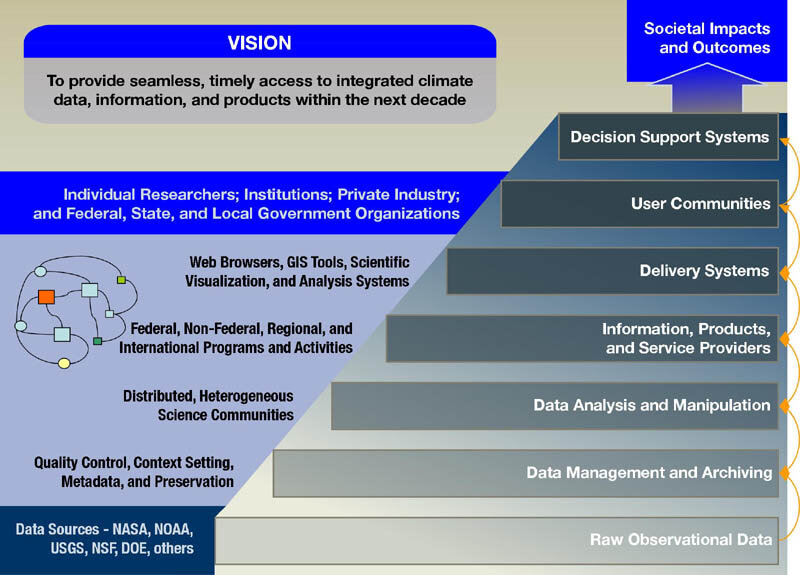
For studying the present-day climate, scientists rely on a global network of instruments. Weather stations, ocean buoys, and weather balloons collect real-time data on temperature, precipitation, wind, and humidity. Satellites orbiting Earth provide a comprehensive view, monitoring everything from sea surface temperatures and ice sheet thickness to atmospheric gas concentrations. By combining historical proxy data with modern instrumental records, scientists can build a detailed picture of how our climate functions and how it has changed over time.
Which of the following lists correctly identifies the five major components of Earth's climate system?
True or false: The greenhouse effect is a natural process that is essential for keeping Earth warm enough to support life.