Global Voices and Literary Traditions
East Asian Aesthetic Principles
Beyond the Plot
Western literature often builds itself around a clear structure: a problem is introduced, tension rises, it reaches a climax, and then resolves. It's a satisfying arc we've come to expect. But much of East Asian literature operates on a different set of principles, prioritising mood, suggestion, and an appreciation for the transient over a straightforward plot.
These narratives don't just tell a story; they evoke a feeling. They are guided by aesthetic values deeply rooted in philosophy, spirituality, and a unique way of seeing the world. To appreciate them, we need to look beyond the sequence of events and learn to read the spaces in between.
The Beauty of the Fleeting Moment
A central idea in Japanese aesthetics is mono no aware, a gentle, bittersweet awareness of the impermanence of all things. It’s the feeling you get watching cherry blossoms fall, knowing their beauty is inseparable from the fact that they won't last. This isn't a tragic sadness, but a deep, quiet appreciation for the fleeting nature of life, beauty, and joy.
The classic 11th-century novel The Tale of Genji is steeped in this sensibility. The story follows the life and loves of a prince, but its emotional core isn't in dramatic confrontations. It's in the quiet moments: a glance exchanged through a screen, the scent of a lover's robes lingering after they've departed, or the changing seasons that mirror the characters' fading youth. The narrative understands that every beautiful moment is already a memory in the making.
This same spirit animates the haiku of poets like Matsuo Bashō. His poems don't tell grand stories; they capture a single, resonant instant.
An old silent pond... A frog jumps into the pond— splash! Silence again.
The poem's power lies in what is left unsaid. The splash briefly breaks the silence, highlighting the quiet that came before and the quiet that follows. It's a perfect expression of mono no aware: a momentary event that makes the surrounding stillness more profound.
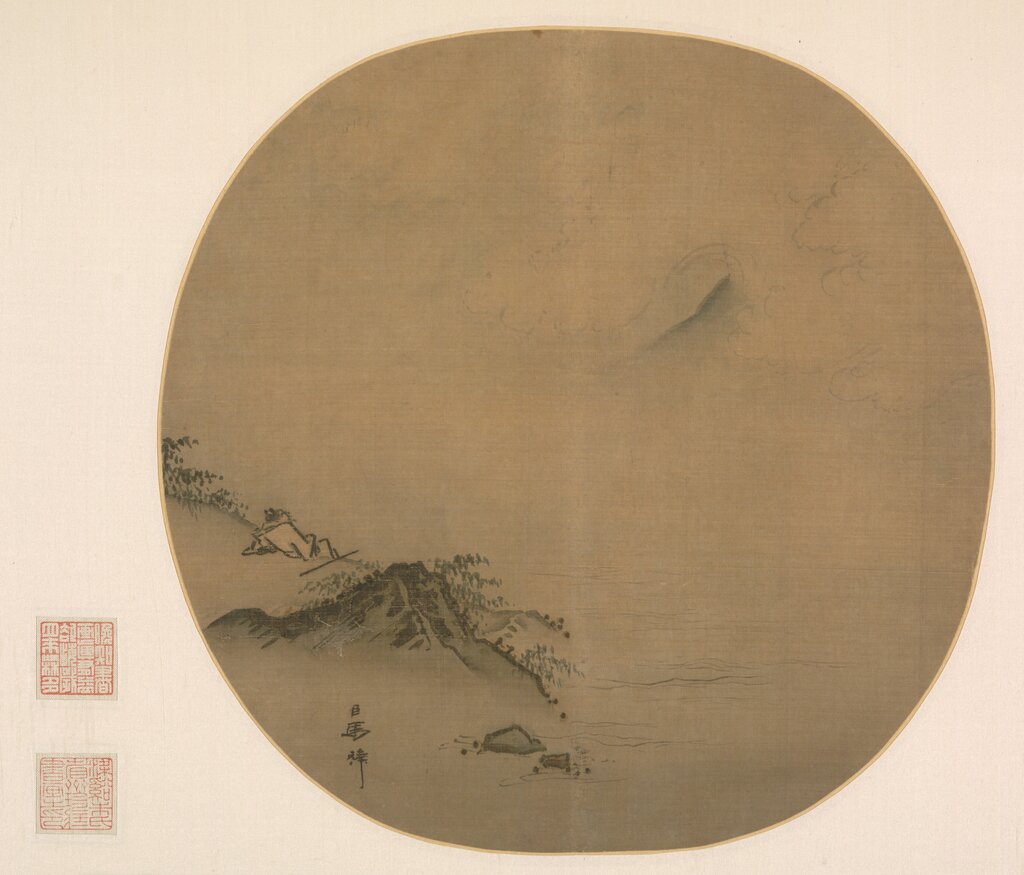
Two other key principles, often intertwined, are yūgen and wabi-sabi. Yūgen points to a profound, subtle grace or a mysterious depth. It’s not about something hidden that can be discovered, but rather an awareness of a reality that cannot be fully described in words. Think of watching geese fly and disappear into the evening mist, or the feeling evoked by the spare, powerful gestures of a Noh theatre performance. It suggests a vastness just beyond our grasp.
Wabi-sabi, on the other hand, is the art of finding beauty in imperfection and impermanence. It celebrates the rustic, the weathered, and the simple. An old, moss-covered stone lantern is more beautiful than a new, perfectly symmetrical one. A handmade ceramic bowl with a slight asymmetry is valued for its unique character. This aesthetic, heavily influenced by Zen Buddhism, rejects polish and ornament in favour of authenticity and the quiet dignity of age.
These values create a different kind of narrative. Instead of a linear plot driven by conflict, classical Japanese tales, or monogatari, often have an episodic structure. The Tale of the Heike, an epic account of a war between two clans, doesn't focus on a single hero's journey. Instead, it drifts between different characters and scenes, creating a broad, melancholic tapestry of glory, loss, and the inevitable downfall of the mighty. The structure itself reinforces the Buddhist theme that all worldly power is fleeting.
Spirit and Spontaneity
In Chinese literature and art, a parallel concept is xieyi (寫意), which translates roughly to "writing the idea" or "capturing the spirit." In painting, this means favouring dynamic brushstrokes that convey the essence of a bamboo stalk over a photorealistic depiction. In literature, it means using evocative imagery and suggestion to capture the emotional or spiritual truth of a moment rather than detailing its every physical aspect.
A single line of classical Chinese poetry can conjure a vast landscape or a deep feeling by hinting at it, trusting the reader to fill in the rest. This approach values resonance and implication above all.
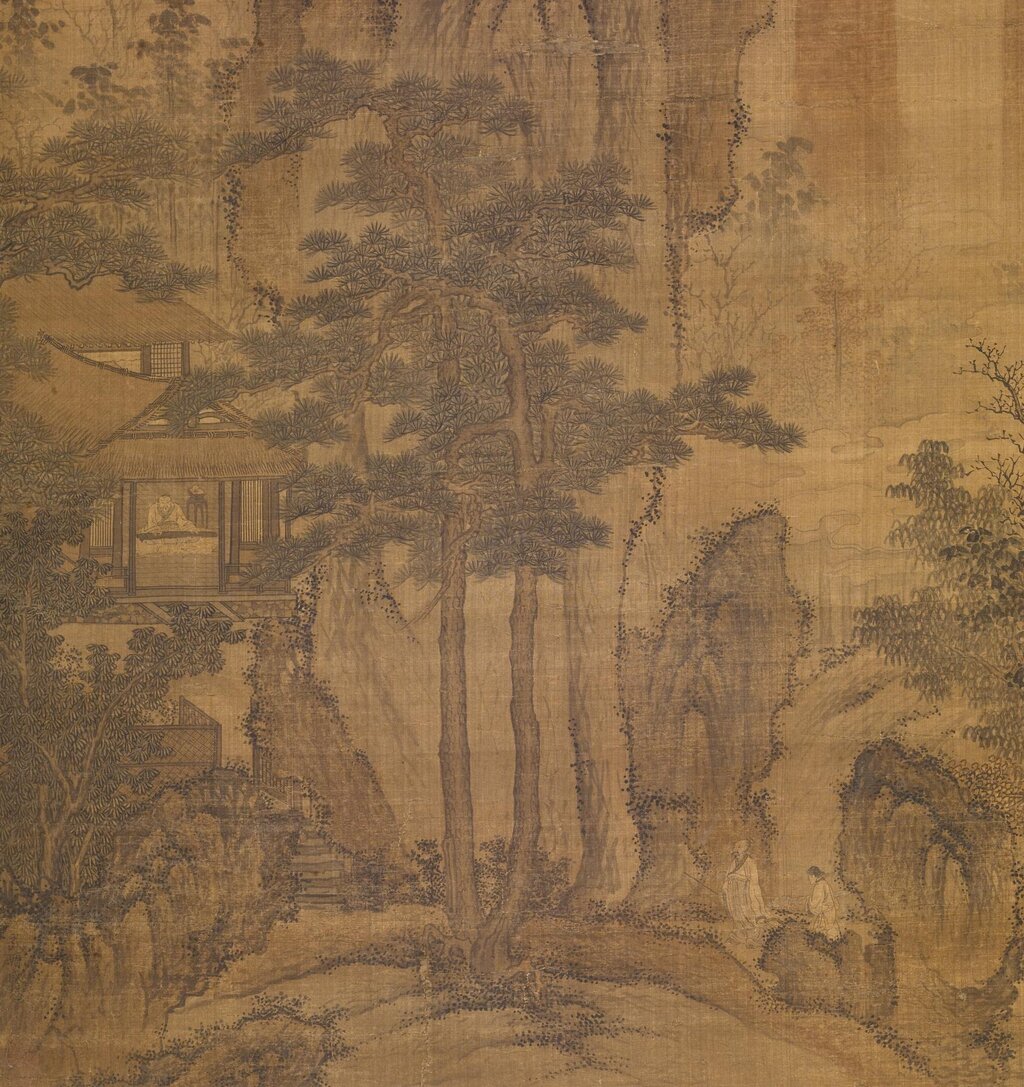
This literary aesthetic is shaped by a long-standing philosophical tension between Confucianism and Taoism. Confucianism emphasizes order, social harmony, duty, and propriety. It provides a structure for society and for narratives that explore moral and social responsibilities.
Taoism, in contrast, champions spontaneity, freedom, and harmony with the Tao—the natural, underlying flow of the universe. It encourages a retreat from societal constraints to find authenticity in nature. This creates a fascinating dynamic in Chinese literature, where characters are often torn between their Confucian obligations to family and state and a Taoist desire for personal freedom and connection to the natural world.
This internal conflict often provides the story's core tension, replacing the external, plot-driven conflicts common in Western narratives. The drama is not about whether the hero will win the battle, but whether they can reconcile the demands of society with the calling of their own spirit.
Let's check your understanding of these core concepts.
What is the core idea behind the Japanese aesthetic principle of mono no aware?
Which of the following scenarios best exemplifies the principle of wabi-sabi?
By understanding these aesthetic principles, we can approach East Asian literature not as a puzzle to be solved, but as an experience to be absorbed. The focus shifts from 'what happens next?' to 'what does this moment feel like?'