Global Transformation and the Great War
Industrialized War Strategy
The Cult of the Offensive
In the summer of 1914, Europe’s generals were in love with a dangerous idea: the attack. They believed that victory belonged to the army with the most spirit, the most aggression, the most élan vital. This was the 'Cult of the Offensive', a doctrine that held defence as a sign of weakness and glorified the charge.
France’s strategy, Plan XVII, was the purest expression of this belief. It called for an all-out assault into the lost provinces of Alsace and Lorraine, driven by pure fighting spirit. The plan was less a detailed tactical map and more a statement of intent. It assumed French soldiers, burning with a desire to reclaim lost land, could overwhelm German defences through sheer will.
Germany's Schlieffen Plan was also deeply offensive, but it was a plan of manoeuvre rather than just momentum. It aimed for a vast, wheeling envelopment of the French armies by swinging through neutral Belgium. While the goal was aggressive, its success depended on precise timing and logistics, not just morale. Both plans, however, shared a fatal assumption: that the war would be a swift, decisive affair, over in a matter of weeks.
Plans on Paper vs. Reality on Rails
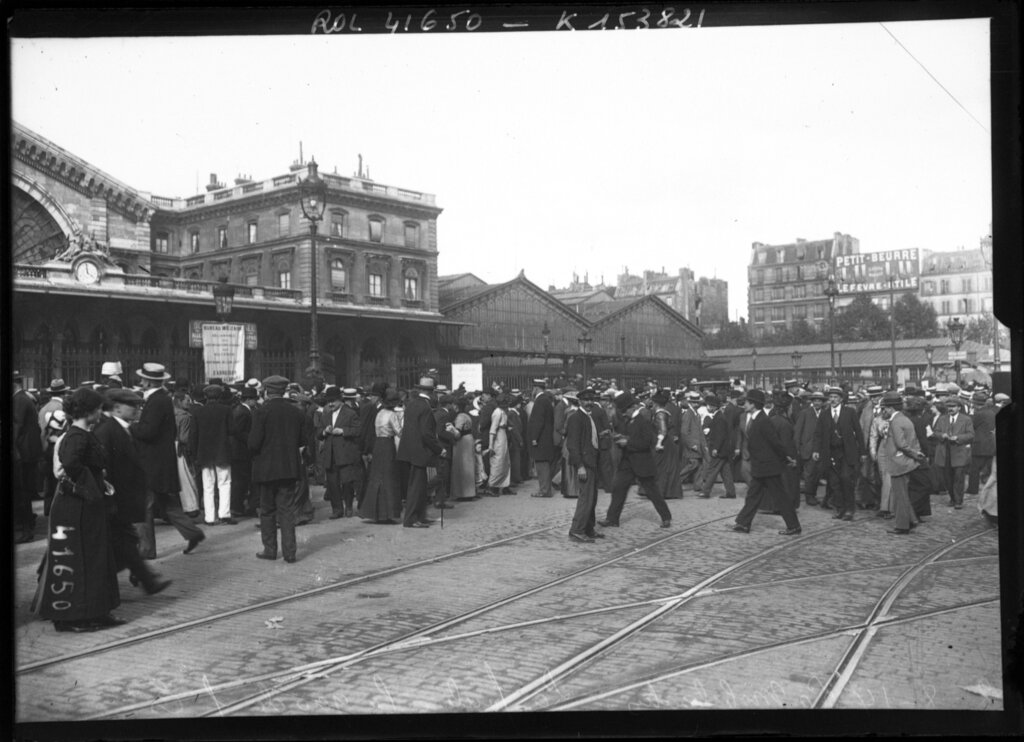
Mobilisation in 1914 happened at an astonishing speed, thanks to one piece of 19th-century technology: the railway. Intricate timetables, planned years in advance, sent millions of men and countless tons of equipment to the frontiers. Germany, for instance, had to run 11,000 trains to deploy its armies to the west. This vast logistical effort created a powerful illusion of modern, industrialised speed.
The illusion shattered the moment soldiers stepped off the train. Once the armies left the railheads, their supply lines stretched thin. Food, ammunition, and reinforcements had to be moved by horse-drawn wagons and by marching men. The further an army advanced, the more tenuous its connection to its source of strength became.
This was the critical flaw in the Schlieffen Plan. The German right wing, tasked with the massive encircling move, quickly outpaced its ability to be supplied. The soldiers grew exhausted from constant marching, their momentum bleeding away with every mile they moved from the nearest railway station. The industrial-age assembly of the army gave way to a pre-industrial pace of advance and supply.
The Tactical Dead Zone
The generals who championed the Cult of the Offensive were thinking in Napoleonic terms, imagining colourful charges across open fields. But the technology of 1914 had created a battlefield Napoleon would not have recognised. Bolt-action rifles, machine guns, and quick-firing artillery had fundamentally changed the balance between attack and defence.
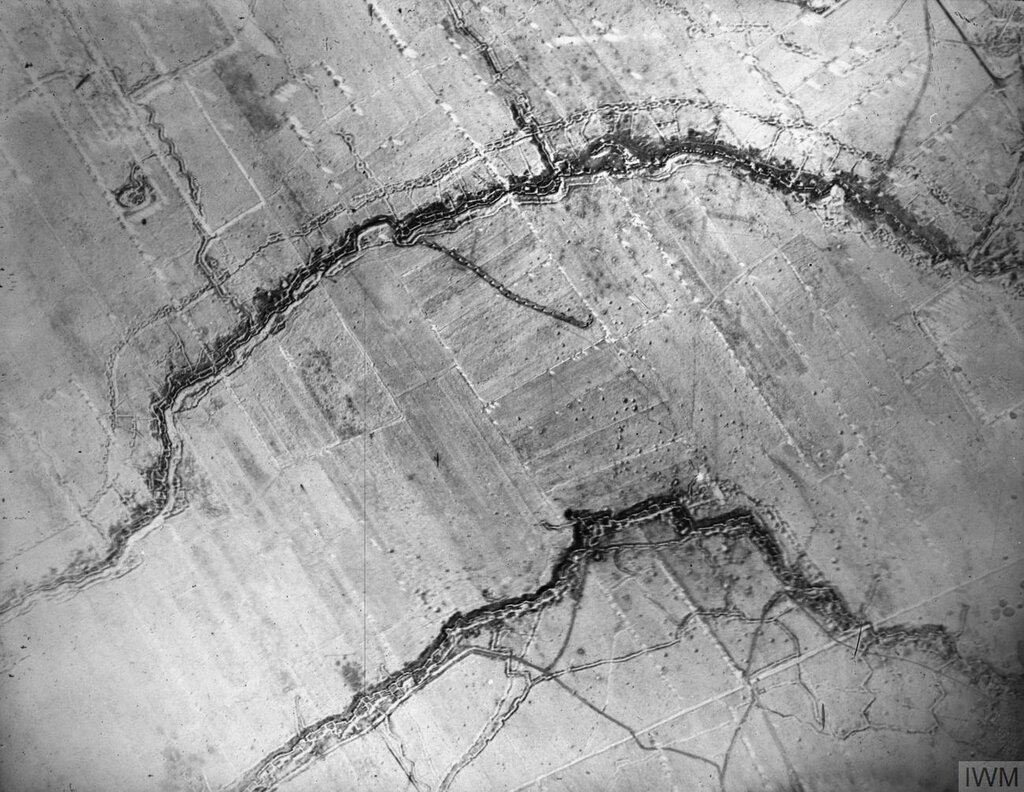
The open ground between two armies—what historians now call the 'tactical dead zone'—had become a killing field. An attacking force advancing in the open was systematically cut down by entrenched defenders armed with weapons that could fire hundreds of rounds per minute with lethal accuracy over great distances. The élan of the French infantry was no match for the mathematics of machine-gun fire. Plan XVII collapsed in bloody failure within weeks.
The same fate awaited the Germans. As their advance slowed and their soldiers tired, they met determined French and British resistance. The attackers became bogged down, and the defensive power of modern weapons asserted itself. Both sides discovered that the only way to survive was to dig into the earth.
The war of movement, which both sides had planned for, ground to a halt. The spade became as important as the rifle as soldiers dug trenches for protection, marking the beginning of siege warfare on a continental scale.
The Race to the Sea
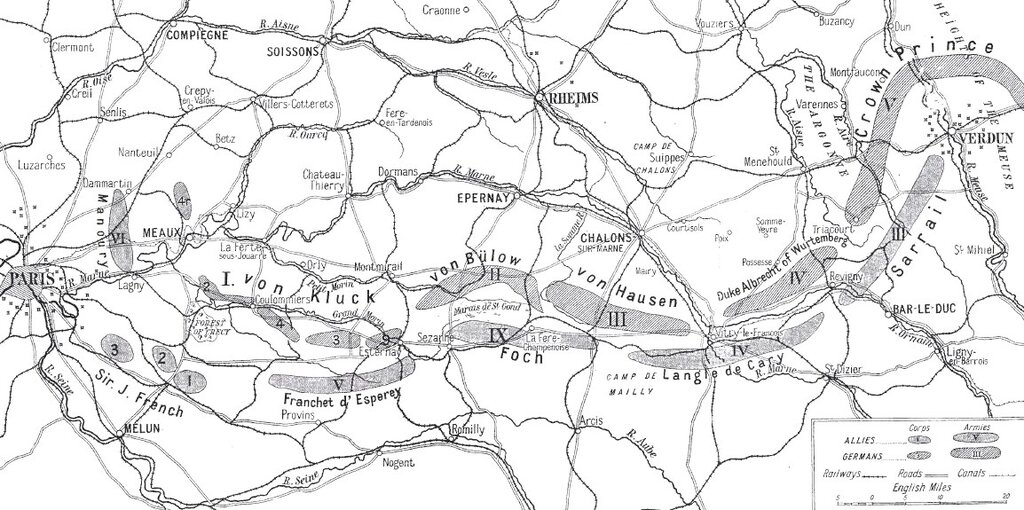
With the main advances stopped after the Battle of the Marne in September 1914, a new phase of the war began. The front was not yet a continuous line from Switzerland to the English Channel. A gap existed in the north, and both the Allied and German armies saw an opportunity.
What followed was not a literal race to reach the coastline, but a series of attempts to outflank, or get around the side of, the enemy's army. Each time one side tried to move around the other's northern flank, they were blocked by forces moving to counter them. After each failed flanking manoeuvre, both sides would dig in.
This sequence of flanking attempts, counter-moves, and entrenchment repeated itself, extending the line of trenches further and further north. By November, the line had reached the North Sea coast in Belgium. The 'open' phase of the war was over. A static, unbroken front of trenches now stretched for 475 miles, and the deadly stalemate of the Western Front had begun.
What was the central belief of the military doctrine known as the 'Cult of the Offensive' prominent in Europe before 1914?
What critical 19th-century technology enabled the rapid mobilisation of millions of soldiers in 1914, but ultimately created a severe logistical problem once they left the stations?
The early failures of 1914 demonstrated a painful gap between strategic ambition and tactical reality. The doctrines of the 19th century were shattered against the defensive firepower of the 20th, setting the stage for years of brutal, attritional warfare.