Global Trade Essentials
Introduction to International Trade
What Is International Trade?
At its core, international trade is simply the exchange of goods and services between countries. It's the reason you can drink coffee from Colombia, wear a shirt made in Vietnam, or drive a car assembled in Japan.
When a country sells goods to another country, it's called an export. When a country buys goods from another, it's an import. Think of it like a giant, global marketplace. A farmer in Brazil grows coffee beans (an export) and sells them to a coffee shop in Italy (an import). This simple transaction, repeated millions of times a day with countless different products, is what powers the global economy.
export
verb
To send goods or services to another country for sale.
Conversely, the country on the receiving end is importing.
import
verb
To bring goods or services into a country from abroad for sale.
Why Trade Matters
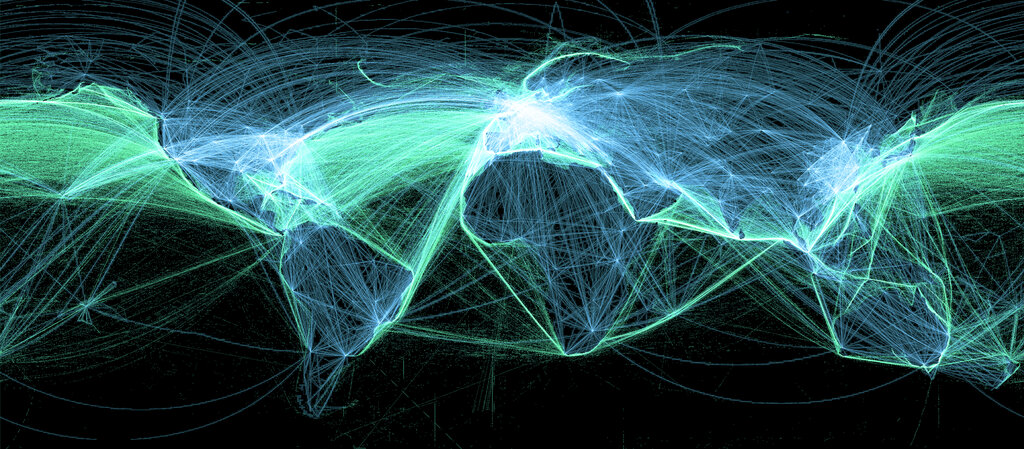
International trade allows countries to specialize. Instead of every country trying to produce everything it needs, each one can focus on what it produces most efficiently. Canada has vast forests, so it exports lumber. Saudi Arabia has immense oil reserves, so it exports crude oil. This specialization leads to greater efficiency, lower costs, and more innovation as companies compete in a global market.
For consumers, the benefits are clear. Trade brings greater variety, better quality, and lower prices. Without it, your choices would be limited to what could be made or grown in your own country. It also fuels economic growth, creating jobs in sectors like manufacturing, logistics, and technology that serve customers around the world.
This principle, known as comparative advantage, is a cornerstone of international trade theory. It means that even if one country can produce everything more efficiently than another, it still benefits both to specialize and trade.
The Basics of a Transaction
So how does a cross-border transaction actually work? While the details can get complex, the basic steps are straightforward. It starts with a buyer in one country and a seller in another agreeing on a sale.
The seller then prepares the goods for shipment. This involves packaging, labeling, and creating documentation that will be required by both the exporting and importing countries. The goods are transported by ship, plane, train, or truck to the border.
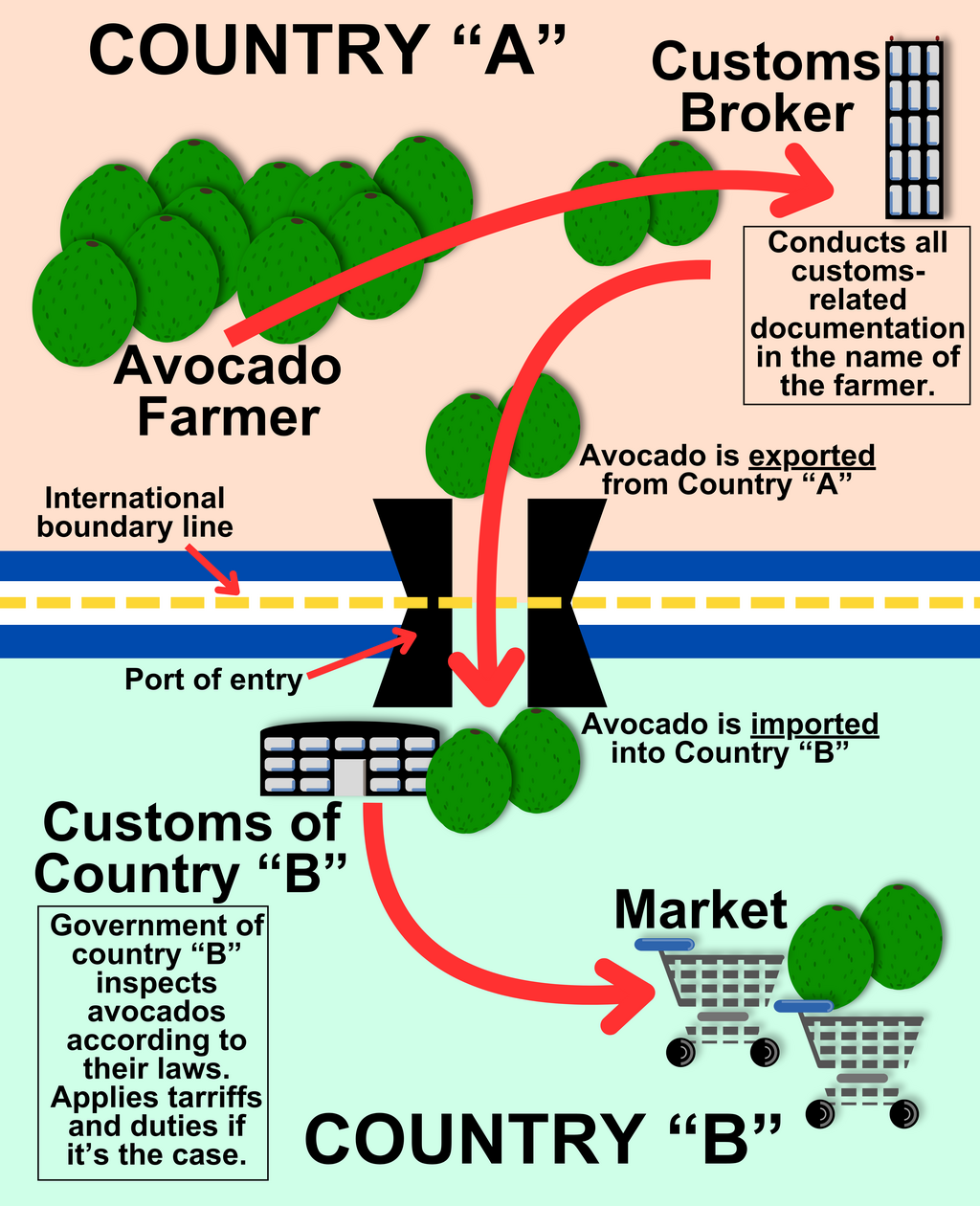
At the border, the goods must pass through customs. This is the government agency responsible for controlling the flow of goods into and out of a country. Customs officials check the shipment's paperwork to ensure it complies with regulations and calculate any applicable taxes or fees, known as tariffs or duties. Once cleared, the goods are delivered to the buyer, and the seller receives payment.
At its heart, an international transaction is like any other sale. The key difference is the border, which introduces a new set of rules, paperwork, and players like customs brokers and freight forwarders.
Let's review some of the key terms we've covered.
Now, let's test your understanding of these fundamental concepts.
When a country sells goods and services to another country, this is known as a(n) ____.
True or False: The principle of comparative advantage suggests that it's beneficial for countries to specialize and trade, even if one country can produce everything more efficiently than another.
Understanding these basics of importing, exporting, and the role of customs provides the foundation for exploring the more intricate aspects of global commerce.