Global Success for the Classical Virtuoso
Mainstream Classical Composition
Composing for Modern Ears
Classical music doesn't have to live in the concert hall. The goal of crossover composition is to write acoustically-driven music that connects with a global audience on streaming platforms and radio, without losing its artistic integrity. This means adapting classical forms to the expectations of the modern listener. It’s less about simplification and more about strategic arrangement and focusing on immediate emotional impact.
Think of it as translating the depth of a novel into the sharp focus of a short story. The core ideas remain, but the delivery is more direct.
Structuring for the Stream
The sprawling sonata form won't hold a listener's attention on a Spotify playlist. Mainstream success often hinges on structure and duration. The typical track length hovers around three to four minutes, which means your composition needs to state its case quickly. The introduction should be brief, establishing a mood or a melodic hook within the first 15-20 seconds to prevent listeners from skipping.
Instead of a lengthy development section, crossover pieces often rely on layering and texture to build interest. Repetition is key, but it must be dynamic. A recurring theme might be re-orchestrated on its second appearance, perhaps by adding a counter-melody on a different instrument or shifting the harmonic context slightly. This creates a sense of familiarity and progression simultaneously.
| Feature | Traditional Form (e.g., Symphony Mvt.) | Crossover Structure |
|---|---|---|
| Duration | 8–20+ minutes | 2.5–4 minutes |
| Introduction | Often gradual, establishing key centers | Short, immediate (under 20 seconds) |
| Main Theme | Appears after exposition | Presented upfront as a hook |
| Development | Complex, exploratory, modulates widely | Builds through layering and texture |
| Repetition | Formal and structural (e.g., recapitulation) | Frequent, used for memorability |
| Climax | Often a full orchestral tutti | A focused, emotionally intense peak |
Many successful crossover pieces borrow from cinematic and minimalist traditions. Composers like use simple, repeating piano arpeggios and soaring string lines to build powerful emotional arcs. This approach prioritizes atmosphere and a clear melodic journey over complex harmonic theory, making it highly accessible.
The High-Fidelity Acoustic Sound
Writing for streaming doesn't mean your music should sound small. Today’s listeners expect pristine, high-fidelity audio, even from entirely acoustic productions. This requires a studio-centric approach to recording. Every instrument needs to be captured with clarity and depth, which means thinking carefully about microphone selection, placement, and the acoustic properties of the recording space.
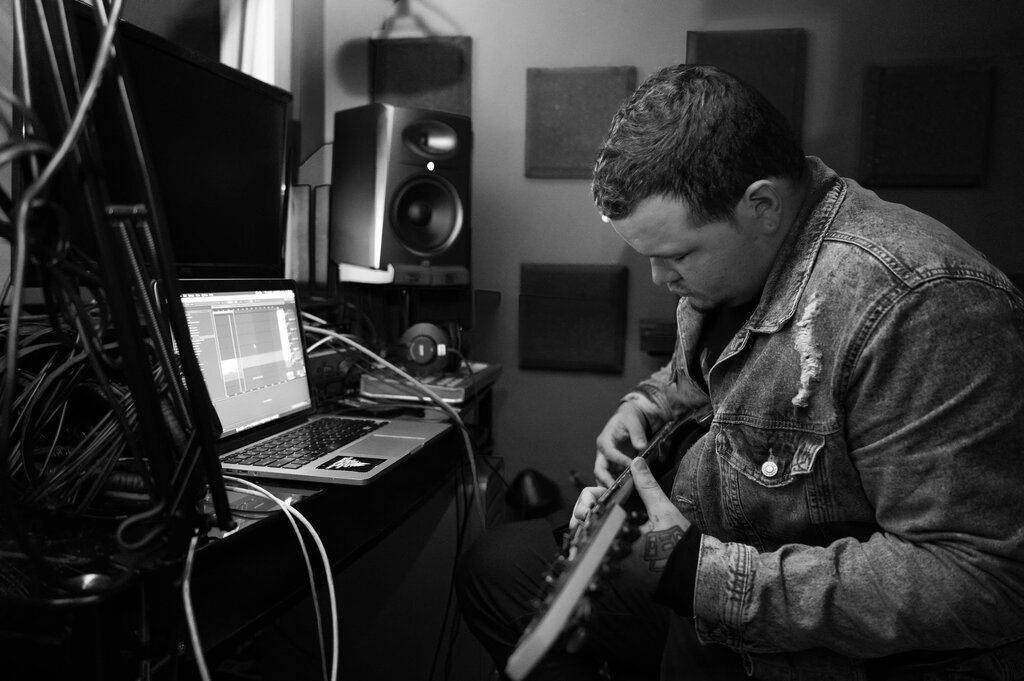
For the solo composer who plays multiple instruments, this is where layering becomes a powerful tool. You can build an entire virtual orchestra one track at a time. Start with a foundational element, like a piano chord progression or a cello ostinato. Then, layer melodies and counter-melodies on top with instruments like the violin or clarinet. Each layer should have its own space in the mix, creating a sound that is both rich and transparent.
This technique often involves close miking individual instruments to capture an intimate, detailed sound that places the listener right in the room with the musician. This contrasts sharply with traditional orchestral recording, which uses distant microphones to capture the blended sound of the entire ensemble in a large hall.
By combining strong, hook-based composition with modern, high-fidelity recording techniques, you can create acoustic music that respects its classical roots while speaking a language the whole world can understand.
What is the primary goal of classical crossover composition?
To capture a listener's attention on a streaming platform, a crossover track's introduction should ideally establish a mood or melodic hook within the first...