Global SME Digital Expansion Strategy
Cross-Border Market Research
Beyond Your Borders
Expanding internationally is more than just translating your website. It's about finding a new commercial home where your product or service resonates with local needs. The common mistake is to target large, familiar markets like the US or Germany without asking a crucial question: is this the right market for us?
Success often lies in less obvious places. Rapid growth in the global middle class across Asia, Africa, and Latin America is creating new, hungry markets for specialised products. These consumers have disposable income and are actively seeking new solutions. The key is to replace guesswork with data, finding the specific regions where demand for what you offer is already budding.
Before you take your ecommerce business global, it’s critical to conduct comprehensive market research to understand the unique needs, preferences, and behaviors of potential customers in your target international markets.
Finding Your Next Market
Instead of getting lost in complex academic frameworks, a pragmatic approach for SMEs involves layering different types of data to build a compelling case for a new market. Start with high-level economic indicators and then drill down into specific digital behaviours.
Tools designed for this purpose can save you immense time and resources. ’s Market Finder, for instance, can offer a customised shortlist of promising new markets based on your product category and web traffic. It suggests countries where people are already searching for what you sell, providing a direct signal of potential demand.
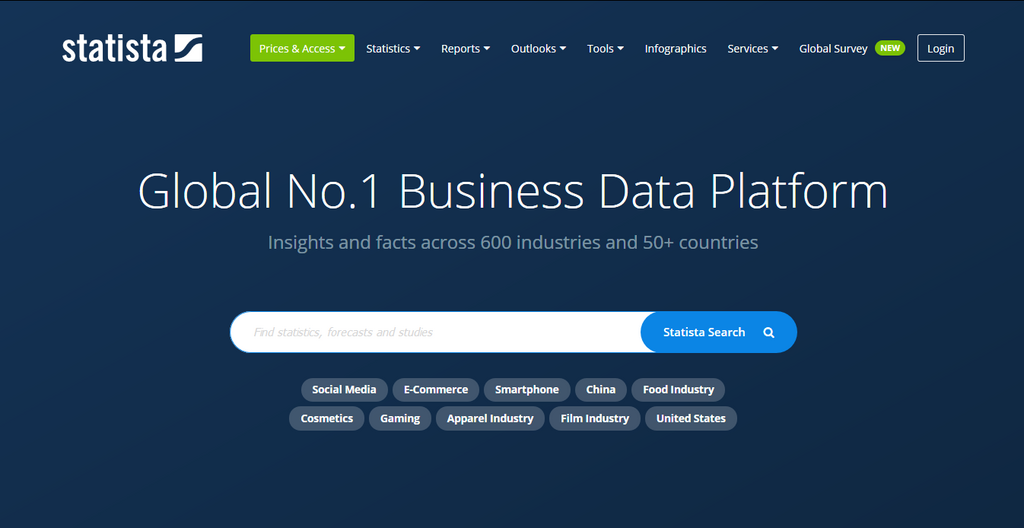
Platforms like Statista offer a deeper dive. You can analyse consumer spending habits, internet penetration rates, and the growth of e-commerce in specific sectors. The goal is to move past simple demographics. It's less about how many people live in a country and more about how many people are online, searching for your keywords, and using platforms where you can reach them.
Combine broad market data with specific digital signals. A country with a high GDP is interesting; a country where people are actively searching for your solution is an opportunity.
Mapping the Local Landscape
Once you have a shortlist of potential markets, the next step is to understand the local digital environment. Who are your real competitors? It might not be who you think. Your biggest rival in a new market could be a local brand with a fiercely loyal following that you’ve never heard of.
Use tools like Semrush or Ahrefs to perform a digital footprint analysis. Identify the top-ranking websites for your keywords in your target country. Look at their traffic sources, their most popular content, and their social media presence. This reveals their strategy and the level of investment required to compete.
Beyond direct competitors, you need to identify the of the market. These are the platforms and influencers that control access to your target audience. In some countries, a specific social media platform, a popular blogger, or a dominant online marketplace might be more influential than Google.
It's also vital to recognise that the internet is not a monolith. While Google dominates many parts of the world, it's a minor player in others. Entering a market without understanding its primary search engine is like setting up shop on a street with no foot traffic.
| Country | Dominant Search Engine | Approx. Market Share |
|---|---|---|
| China | Baidu | ~70% |
| Russia | Yandex | ~60% |
| South Korea | Naver | ~55% |
| Czechia | Seznam | ~10-15% |
| Global (excl. China) | ~90%+ |
Tuning In to Culture
Data can tell you what people are doing, but it often struggles to explain why. Understanding cultural sentiment is the final piece of the puzzle. Traditionally, this required expensive focus groups and in-country experts. Today, can give SMEs a powerful and affordable alternative.
Platforms like Brandwatch or Talkwalker use AI to analyse millions of online conversations from social media, forums, and blogs in your target market. They can identify trending topics, measure sentiment (positive, negative, neutral) towards certain products or brands, and uncover the unique slang and cultural references people use.
This isn't about spying. It's about listening at scale. By analysing this data, you can learn how people talk about the problems your product solves. You might discover that your key selling point in the UK is irrelevant in Japan, but a secondary feature is exactly what Japanese consumers are looking for. This insight allows you to tailor your messaging and positioning before spending a single pound on advertising.
Effective cross-border research is a process of narrowing down. You start with the whole world, use data to find a handful of promising countries, analyse their digital ecosystems, and finally, listen to their cultural conversations. This methodical approach turns the daunting task of global expansion into a series of manageable, data-informed steps.
What is the primary mistake companies often make when choosing a new international market?
An SME wants to understand the cultural sentiment and online conversations about a product category in a potential new market. Which type of tool would be most suitable for this task?