Global Mobility Explained
Introduction to Global Mobility
What Is Global Mobility?
Humans have always been on the move. From our earliest ancestors venturing out of Africa to modern-day professionals relocating for work, movement is a fundamental part of our story. Global mobility is the term we use to describe the way people move across international borders to live, work, study, or seek refuge.
This isn't just about tourism or a short vacation. It's about relocating for a significant period, often with the intention to settle permanently or for several years. The reasons are as varied as the people themselves. Someone might move for a job opportunity in a new country, another might pursue higher education at a foreign university, and others might be forced to leave their homes due to conflict or persecution.
Global mobility encompasses a wide range of movements, from voluntary relocation for economic or educational reasons to forced displacement due to crisis.
A Brief History of Human Movement
International migration is not a new phenomenon. The story of humanity is a story of migration. Tens of thousands of years ago, modern humans began spreading from Africa to populate every corner of the globe. These early movements were driven by the search for resources, a changing climate, and simple curiosity.
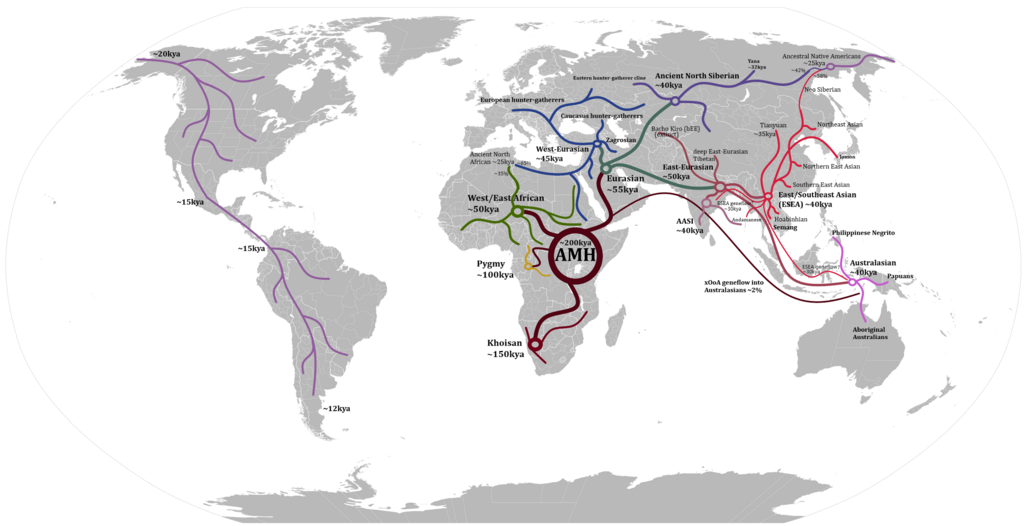
Over centuries, the patterns and drivers of migration evolved. The age of exploration and colonialism created new, vast, and often brutal systems of movement. Millions of enslaved Africans were forcibly transported across the Atlantic in one of the largest forced migrations in history. At the same time, European settlers moved to colonize the Americas, Africa, and Asia, fundamentally reshaping global populations.
The 19th and 20th centuries saw another surge in migration, fueled by industrialization, new transportation technologies like the steamship, and the promise of economic opportunity in growing nations like the United States.
Why People Move
What makes someone decide to leave their home country and start over in a new one? The reasons are complex, but they can often be sorted into two categories: push factors and pull factors. Push factors are reasons that drive people to leave their home country, while pull factors are what attract them to a new one.
Push and pull factors are those factors which either forcefully push people into migration or attract them.
Push factors often relate to negative conditions at home. These can include:
- Economic issues: Lack of jobs, low wages, or widespread poverty.
- Political instability: War, civil unrest, persecution, or a lack of political freedom.
- Environmental problems: Natural disasters like hurricanes and earthquakes, famine, or the long-term effects of climate change.
Pull factors, on the other hand, are the positive attributes of the destination country. They represent the promise of a better life and might include:
- Economic opportunities: The availability of jobs, higher wages, or a better standard of living.
- Political stability: Safety, security, and greater personal freedom.
- Family connections: The desire to join relatives who have already migrated.
- Educational opportunities: Access to high-quality universities and schools.
Most decisions to migrate involve a combination of these push and pull factors, a calculation of risks and rewards that is unique to each individual's circumstances.
Globalization's Impact
In recent decades, globalization has dramatically changed the landscape of global mobility. The world is more interconnected than ever before, a process accelerated by advances in communication and transportation technology.
Globalization is the process by which countries become interconnected through the movement of goods, services, technology, and—most importantly for our topic—people.
Cheaper and faster air travel has made long-distance moves more accessible. The internet allows potential migrants to research opportunities abroad, connect with employers, and stay in touch with family back home. This flow of information makes the prospect of moving less daunting than it was a century ago.
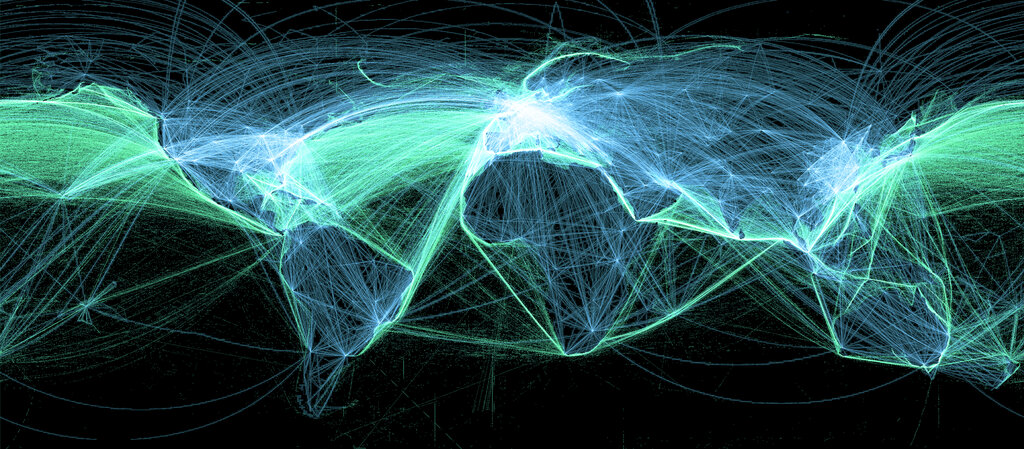
The integration of global economies also plays a major role. Multinational corporations move employees between countries, creating a class of highly skilled global professionals. At the same time, economic disparities between countries, which are often highlighted by global media, continue to be a powerful driver for labor migration. Understanding these dynamics is the first step to grasping the complex picture of modern human movement.
Now, let's test your understanding of these core concepts.
Which statement best defines 'global mobility' in the context of human migration?
A software developer leaves her home country due to political instability and moves to a new country that offers greater personal freedom and numerous high-paying tech jobs. This is an example of a combination of which factors?