Global CV Strategies for Canada and EU
Understanding CV Basics
What is a CV?
A Curriculum Vitae, or CV, is a detailed document that outlines your entire academic and professional history. Unlike a resume, which is a brief summary, a CV is a comprehensive record of your achievements.
Curriculum Vitae
noun
A Latin phrase meaning "course of life." It's a detailed document highlighting your academic and professional accomplishments.
Think of it as the long-form story of your career. It's most often used in academia, research, and medicine, where a deep dive into your background is necessary. The goal is to give a full picture of your qualifications, from your education and publications to any awards you've received.
CV vs. Resume
The biggest point of confusion for many is the difference between a CV and a resume. While both are used in job applications, they serve different purposes and are not interchangeable. The main distinction comes down to length, content, and purpose.
| Feature | Curriculum Vitae (CV) | Resume |
|---|---|---|
| Length | Comprehensive; can be 2+ pages | Concise; typically 1 page |
| Purpose | To provide a full history | To provide a targeted summary |
| Content | Detailed list of education, research, publications, presentations, etc. | Summary of relevant skills and work experience for a specific job |
| Used For | Academic, scientific, research, and medical roles | Most business, tech, and non-profit jobs |
A resume is a marketing document tailored to a specific job, highlighting only the most relevant skills and experiences. A CV, on the other hand, is a record. It grows with you throughout your career, and you add new accomplishments as they happen.
Key Components of a CV
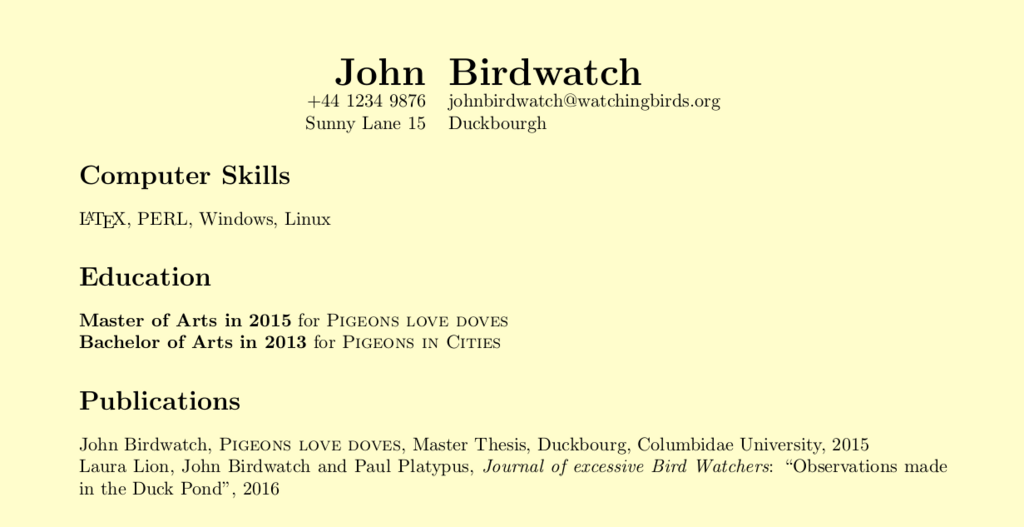
While the order might change depending on the role, most CVs include the same core sections. Here are the building blocks you’ll need:
- Contact Information: Full name, address, phone number, and email address.
- Education: List your degrees in reverse chronological order (most recent first). Include the institution, degree, and graduation date.
- Professional Experience: Detail your relevant work history, also in reverse chronological order. This can include academic appointments, research positions, and other jobs.
- Publications: If you've published articles, book chapters, or books, list them here in a standard citation format.
- Presentations and Conferences: Include any talks, posters, or panels you've presented at academic or professional conferences.
- Awards and Honors: List any scholarships, fellowships, grants, or other recognitions you have received.
- Skills: Note any relevant skills, such as language proficiency, lab techniques, or software expertise.
- References: You can either list your references directly or state that they are "available upon request."
Formatting Your CV
How your CV looks is almost as important as what it says. The goal is clarity and professionalism. A cluttered or inconsistent CV is hard to read and makes a poor impression.
Keep your formatting simple. Use a standard, legible font like Times New Roman, Arial, or Calibri in a 10 to 12-point size. Use bolding and italics sparingly to emphasize section headings or job titles. Most importantly, be consistent. If you list one date as "May 2023," format all other dates the same way.
Always proofread your CV multiple times. Typos and grammatical errors can undermine your credibility. It's a good idea to have a friend or colleague look it over, too.
Finally, while a CV is a comprehensive document, it should still be tailored for each application. This doesn't mean deleting experiences, but rather reordering sections to emphasize what's most relevant for the specific role you're applying for.
Tailor your CV for each position…and develop a flexible framework so that you can easily edit it for a range of positions
Let's review these core concepts.
Now, check your understanding of these key ideas.
What is the primary purpose of a Curriculum Vitae (CV)?
True or False: A CV should be completely static and never altered for different job applications.
Understanding these basics is the first step to creating a powerful CV that accurately reflects your academic and professional journey.