GitHub Copilot Explained
Introduction to GitHub Copilot
Your AI Pair Programmer
GitHub Copilot is an AI-powered tool that acts like an assistant while you code. Imagine you're writing a program, and someone is looking over your shoulder, offering suggestions for the next line of code or even completing entire functions for you. That's Copilot in a nutshell.
GitHub Copilot is an AI coding assistant that helps you write code faster and with less effort, allowing you to focus more energy on problem solving and collaboration.
It integrates directly into your code editor, so it feels like a natural part of your workflow. Instead of just checking your syntax for errors, it actively helps you build.
How It Works
Copilot analyzes the code you've already written in your file, including comments and function names, to understand your intent. Based on this context, it provides real-time suggestions.
Its core functionalities include:
- Code Completion: It suggests individual lines or entire blocks of code as you type.
- Multi-language Support: Copilot isn't tied to one language. It works with dozens, including Python, JavaScript, TypeScript, Ruby, Go, and C++.
- Context Awareness: Its suggestions are not random. They are tailored to the context of your project, matching your coding style and patterns.
For example, you could write a comment describing what you want a function to do, and Copilot will attempt to write the function for you.
# function to calculate the factorial of a number
def factorial(n):
  if n == 0:
    return 1
  else:
    return n * factorial(n-1)
The Brains Behind It
GitHub Copilot is powered by large language models developed by OpenAI. The original version was built on a model called Codex, which was specifically trained on a massive dataset of public source code from GitHub and other sources. This training allows it to understand programming patterns, idioms, and syntax across many languages.
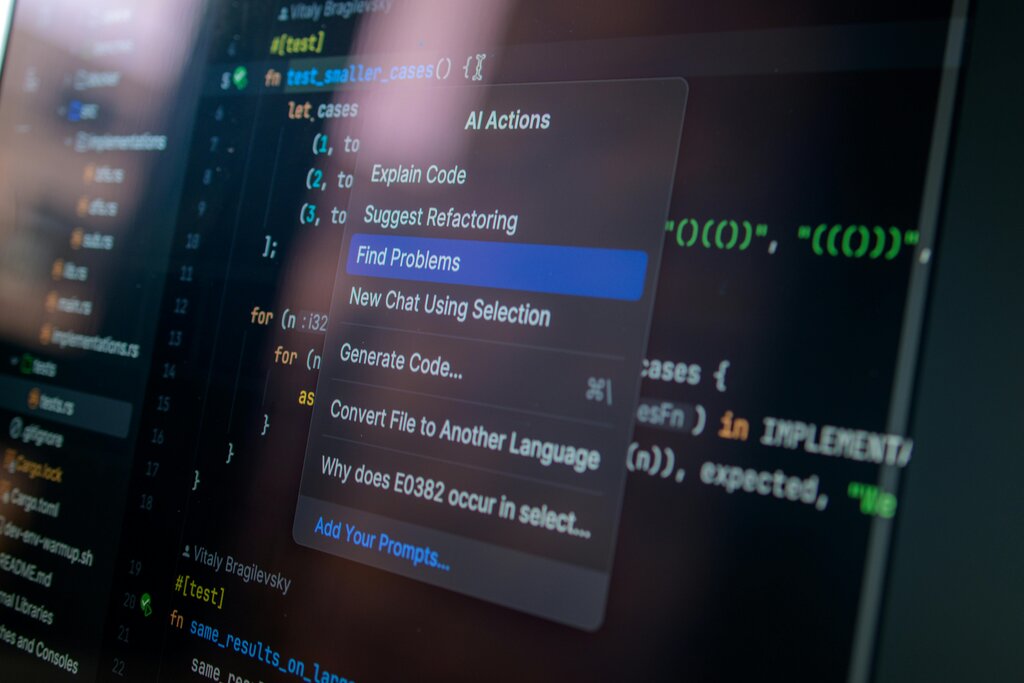
More recent versions of Copilot leverage newer, more powerful models like GPT-4. These advanced models have an even broader understanding of both natural language and code, making their suggestions more accurate and sophisticated. They can grasp complex logic and generate more nuanced code, effectively turning your comments and existing code into a conversation with the AI.
Benefits and Limitations
Using an AI assistant for coding comes with significant advantages. The most obvious benefit is speed. By automating repetitive tasks and generating boilerplate code, Copilot can dramatically increase a developer's productivity. It can also be a valuable learning tool, suggesting new approaches or libraries you might not have known about.
AI-powered code generators, such as GitHub Copilot, simplify the coding process by suggesting code snippets and automating code generation.
However, it's not a magic wand. The suggestions are not always perfect. The code it generates might be inefficient, contain subtle bugs, or even have security vulnerabilities. The model was trained on a vast amount of existing code, and it can sometimes replicate outdated or suboptimal patterns from that data.
Think of GitHub Copilot like a junior developer — the clearer your instructions, the better the output.
Ultimately, the developer is still in charge. You must review, test, and understand any code that Copilot suggests before accepting it. It's a powerful assistant, but it's not a replacement for your own expertise and judgment.
What is the primary function of GitHub Copilot?
How does GitHub Copilot understand the developer's intent to provide relevant code suggestions?