Git and GitHub Essentials for Beginners
Introduction to Version Control
Keeping Track of Changes
Software development is a process of constant change. You write some code, it works. Then you add a new feature, and suddenly, the old code breaks. Or maybe a teammate rewrites a section you were working on, and your changes are lost. Without a system to manage these edits, projects can quickly become a chaotic mess.
Imagine writing a large document with a team. How do you handle everyone’s edits? People might save files with names like report_final.doc, report_final_v2.doc, and report_REALLY_final_I_swear.doc. It's confusing, and it's easy to lose important work or write over someone else's contributions.
This is the core problem that version control solves. It's a system that records changes to a file or set of files over time so that you can recall specific versions later.
version control
noun
A system that records changes to a file or set of files over time so that you can recall specific versions later. It allows you to revert files back to a previous state, revert the entire project back to a previous state, compare changes over time, see who last modified something that might be causing a problem, and more.
Think of it like an unlimited "undo" button, not just for your last action, but for every change ever made to a project. It’s also a time machine, letting you travel back to see exactly what a project looked like on any given day. This system provides a safety net, making developers more confident to experiment and make changes, knowing they can always go back if something goes wrong.
Working Together
Version control is crucial for teamwork. When multiple people work on the same project, it’s easy to step on each other’s toes. One person might accidentally delete a file another person needs, or two people might edit the same line of code in different ways.
A version control system (VCS) provides a centralized place where all changes are stored and tracked. It allows developers to work on their own copies of the project and then merge their changes back into the main project. The system is smart enough to handle these merges, often automatically. When it can't figure out how to combine two conflicting changes, it flags the conflict for a human to resolve.
Version control systems like Git are essential for collaborative development projects.
This structured process prevents chaos. Everyone on the team can see a complete history of the project: who made what change, when, and why. This transparency makes collaboration smoother and helps integrate new team members, as they can get up to speed by reviewing the project's history.
Benefits at a Glance
So, why is version control indispensable in modern software development? It boils down to a few key advantages that address common challenges.
| Challenge Without VCS | How Version Control Helps |
|---|---|
| Overwriting a teammate's work | Manages merges and flags conflicts. |
| Losing a file or previous version | Keeps a complete history of every change. |
| Not knowing who changed what | Logs every modification with author and time. |
| Breaking existing features | Allows you to revert to a working version easily. |
| Difficulty working simultaneously | Enables parallel development on separate copies. |
By creating a single source of truth, version control systems provide the structure needed for teams to build complex software efficiently. They allow for both individual creativity and collective harmony.
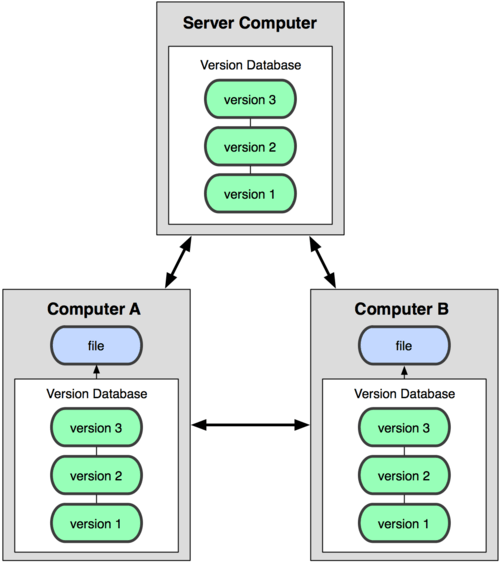
This structured approach is not just for large teams. Even solo developers benefit immensely. It acts as a personal project diary, allowing you to experiment freely with new ideas. If an idea doesn't pan out, you can simply discard the changes and return to a stable point.
Ready to check your understanding?
What is the primary problem that a Version Control System (VCS) is designed to solve in software development?
The text describes a VCS using the analogy of a "time machine." What does this highlight about its functionality?
Understanding these core ideas is the first step. Next, you'll learn about Git, the most popular version control system in the world.