German Workshop Vocabulary and Simple Sentences
Simple Sentences
Building a German Sentence
Think of a sentence like a project you build in a workshop. You need the right parts, and you need to put them in the right order. In German, the most basic sentences are built with three core components: a subject, a verb, and an object.
Subjekt
noun
The person or thing performing the action. It answers the question 'Who?' or 'What?' is doing something.
Verb
noun
The action word in the sentence. It describes what the subject is doing.
Objekt
noun
The person or thing that receives the action of the verb.
For simple statements, German follows the same basic order as English: Subject-Verb-Object, or SVO. This is the blueprint for your first sentences.
Der Mann (Subject) + hat (Verb) + den Hammer (Object).
Making Statements
To make a simple, affirmative statement, you just follow the SVO pattern. The most important rule to remember is that in a basic German statement, the verb always takes the second position. The subject comes first, then the verb, then everything else.
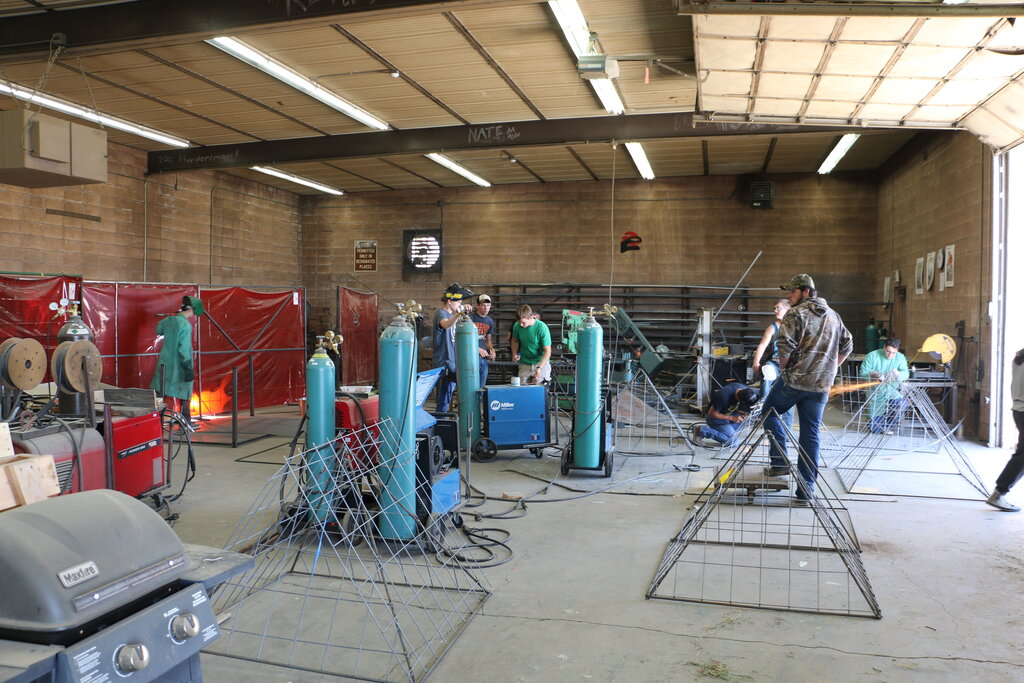
Let's look at a few examples using tools you might find in a workshop.
| Subjekt | Verb (Position 2) | Objekt |
|---|---|---|
| Ich | habe | den Schraubenzieher. |
| I | have | the screwdriver. |
| Du | siehst | die Zange. |
| You | see | the pliers. |
| Er | braucht | das Werkzeug. |
| He | needs | the tool. |
Asking Simple Questions
What if you want to ask a question that can be answered with a simple 'yes' or 'no'? It's easy. You just swap the positions of the subject and the verb. The verb moves from the second position to the very front of the sentence. The sentence structure becomes Verb-Subject-Object (VSO).
Statement: Du hast den Hammer. (You have the hammer.) Question: Hast du den Hammer? (Do you have the hammer?)
This inversion is the signal that you're asking a yes/no question. Here’s another example:
Statement: Er braucht die Säge. (He needs the saw.) Question: Braucht er die Säge? (Does he need the saw?)
For questions that require more than a yes or no answer, you use a question word, often called a "W-Wort" because many of them start with 'W' in German. Words like Wer? (Who?), Was? (What?), and Wo? (Where?).
The question word comes first, but the verb still holds its second position. The subject then follows the verb.
| W-Wort (Position 1) | Verb (Position 2) | Subjekt (Position 3) | English |
|---|---|---|---|
| Was | hast | du? | What do you have? |
| Wer | hat | den Hammer? | Who has the hammer? |
| Wo | ist | die Zange? | Where are the pliers? |
Now, let's test your understanding of these basic sentence structures.
What is the standard word order for a simple, declarative German sentence?
In a simple German statement, which position must the conjugated verb always occupy?
With these patterns, you can now build a wide variety of simple statements and questions.