German Language Fundamentals
German Alphabet and Pronunciation
The German Alphabet
The German alphabet looks very familiar. It uses the same 26 letters as English, but it adds four special characters to the mix. These are the three "Umlauts"—Ä, Ö, and Ü—and a unique consonant called the Eszett or "scharfes S" (sharp S), which looks like this: ß.
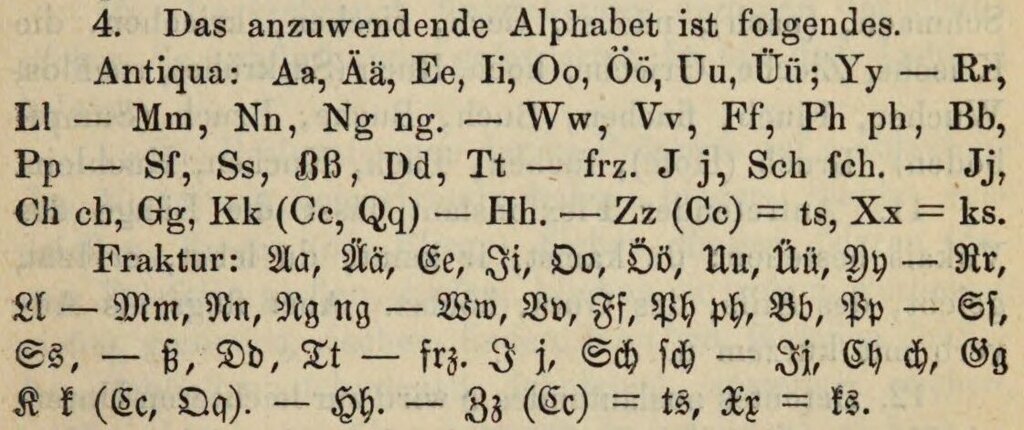
The Eszett (ß) is only used as a lowercase letter. If you need to capitalize it, or if you're using a keyboard without the ß key, you simply replace it with a double S (SS). For example, the word Straße (street) becomes STRASSE in all caps.
Vowels and Umlauts
German vowels can be either long or short, and this changes the pronunciation. The rules are quite consistent. A vowel is usually long if it's followed by a single consonant (gut), if it's doubled (Boot), or if it's followed by an 'h' (Bahn). It's typically short if it's followed by two or more consonants (Bett).
| Vowel | Short Sound (like in...) | Long Sound (like in...) |
|---|---|---|
| a | Apfel (apple) - like 'a' in "cat" | Vater (father) - like 'a' in "father" |
| e | Bett (bed) - like 'e' in "bet" | See (lake) - like 'ay' in "say" |
| i | ist (is) - like 'i' in "is" | Igel (hedgehog) - like 'ee' in "see" |
| o | Gott (God) - like 'o' in "hot" | Boot (boat) - like 'o' in "boat" |
| u | und (and) - like 'oo' in "book" | gut (good) - like 'oo' in "moon" |
The umlauts—ä, ö, and ü—represent sounds that don't have perfect English equivalents. They are modified vowel sounds.
To pronounce ö, form your lips as if you're about to say "oh," but instead say the sound "eh." To pronounce ü, form your lips for an "oo" sound, but say "ee" instead. The sound of ä is much simpler; it sounds just like the short 'e' in "bet".
Tricky Consonants
While most German consonants sound like their English counterparts, a few have distinct pronunciations you need to learn. Getting these right is a big step toward sounding more natural.
| Letter(s) | Pronunciation Guide |
|---|---|
| ch | After a, o, u, it's a harsh sound from the back of your throat, like the 'ch' in Scottish "loch." After other letters, it's a softer 'h' sound made by pushing air through your teeth. |
| j | Always sounds like the 'y' in "yes." Ja (yes) is pronounced "yah." |
| s | At the start of a word or between vowels, it's a soft 'z' sound, like in "zoo." Otherwise, it's a sharp 's' like in "see." |
| v | Usually sounds like an 'f', as in Vater (father). |
| w | Always sounds like the English 'v', as in Wasser (water). |
| z | Always a sharp 'ts' sound, like at the end of "cats." |
| qu | Pronounced 'kv', like in Qualle (jellyfish). |
| sp / st | At the beginning of a word or syllable, the 's' is pronounced 'sh'. Sport sounds like "shport" and Stein sounds like "shtine." |
Putting It Together
Let's look at some common letter combinations, known as diphthongs. These pairings create a single, new vowel sound.
| Diphthong | Sound (like in...) | German Example |
|---|---|---|
| ie | 'ee' in "see" | die (the) |
| ei | 'i' in "ice" | mein (my) |
| au | 'ow' in "cow" | Haus (house) |
| eu / äu | 'oy' in "boy" | neu (new), Häuser (houses) |
The pronunciation of German is very consistent. Once you learn these rules, you can reliably sound out almost any word you see. Unlike in English, there are very few exceptions.
The pronunciation of German sounds is predictable.
Time to check what you've learned.
How is the German letter 'ß' (Eszett) typically written when a word needs to be capitalized?
According to German pronunciation rules, a vowel is typically short if it is...