German Language Fundamentals
German Alphabet and Pronunciation
The German Alphabet
The good news is that the German alphabet uses the same 26 letters as English. This gives you a huge head start. For the most part, the letters sound similar, but there are some key differences in pronunciation you'll need to learn.
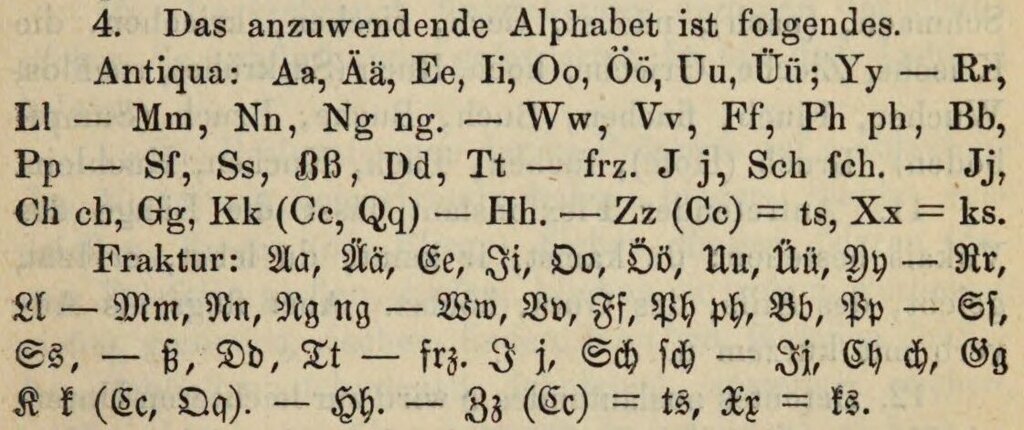
Most consonants are pronounced similarly to their English counterparts. However, a few have distinct sounds. For example, the German 'W' sounds like the English 'V' (as in Wasser, water). The German 'V' sounds like the English 'F' (as in Vater, father). 'J' is pronounced like an English 'Y' (as in ja, yes), and 'Z' has a sharp 'ts' sound, like in 'cats' (as in Zeit, time).
Unique Characters
Beyond the standard 26 letters, German has four special characters: three vowels with dots above them, called umlauts, and a unique consonant.
Umlaut
noun
A mark (¨) placed over a vowel in German to indicate a change in sound.
These characters are essential for correct spelling and pronunciation. Here’s a breakdown of each one.
| Character | Name | Sounds Like... | Example Word |
|---|---|---|---|
| ä | A-Umlaut | The 'e' in "bet" | Männer (men) |
| ö | O-Umlaut | The 'u' in "fur" (with rounded lips) | schön (beautiful) |
| ü | U-Umlaut | The 'ee' in "see" (with rounded lips) | für (for) |
| ß | Eszett | A sharp 'ss' sound | Straße (street) |
For the 'ö' and 'ü' sounds, try saying the English sound first, then say it again without moving your tongue, but while rounding your lips as if you were about to whistle. That will get you very close.
The Eszett (ß), also called the "sharp S," is used after long vowels or diphthongs. If the vowel is short, you use 'ss' instead. For example, Fluss (river) has a short 'u' sound, so it uses 'ss'.
Common Letter Combinations
Like in English, certain letter combinations in German create unique, consistent sounds. Learning these patterns is a shortcut to better pronunciation.
One of the best things about German is its phonetic consistency. Once you learn the rules, you can reliably pronounce words you've never seen before.
Here are some of the most important combinations to know.
| Combination | Pronunciation | Example |
|---|---|---|
| ei | Sounds like 'eye' | mein (my) |
| ie | Sounds like 'ee' in "see" | wie (how) |
| eu / äu | Sounds like 'oy' in "boy" | neu (new) / Häuser (houses) |
| sch | Sounds like 'sh' in "shoe" | Schule (school) |
| ch | A soft, breathy sound from the back of the throat after a, o, u | Buch (book) |
| ch | A hissing sound, like a cat, after i, e, ö, ü | ich (I) |
| sp / st | 'shp' / 'sht' at the start of a word or syllable | sprechen (to speak), Stadt (city) |
The two 'ch' sounds can be tricky. The first one is a deeper, throaty sound, while the second is made closer to the front of your mouth. Listening to native speakers is the best way to get a feel for the difference.
Now, let's test your understanding of these new sounds.
The German word 'Wasser' (water) begins with a sound most similar to which English letter?
How is the German letter 'Z' pronounced, as in the word 'Zeit' (time)?