German Language Basics
German Alphabet and Pronunciation
The German Alphabet
The German alphabet looks very familiar. It uses the same 26 letters as English, but it adds four special characters. For the most part, the letters sound similar to their English counterparts, but there are some key differences in pronunciation that we'll cover.
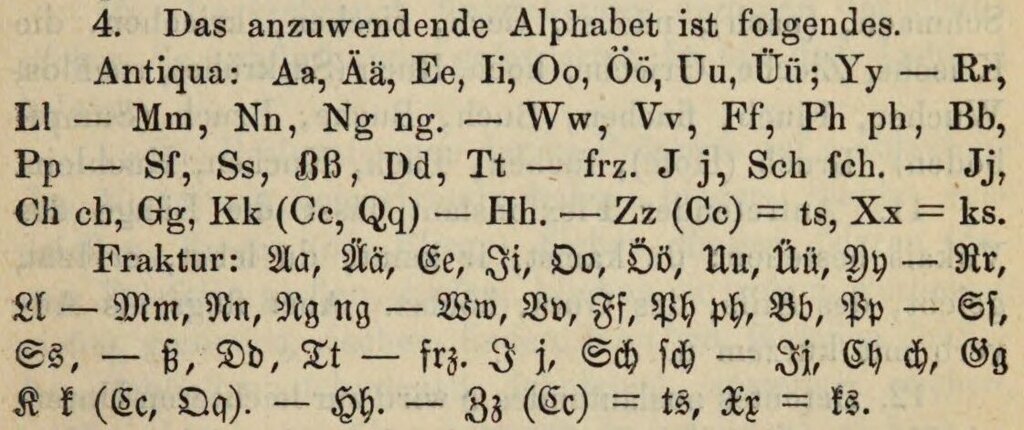
Let's start with the basics. The 26 standard letters are pronounced as follows, with the sound in parenthesis:
A (ah), B (bay), C (tsay), D (day), E (ay), F (eff), G (gay), H (hah), I (ee), J (yot), K (kah), L (ell), M (em), N (en), O (oh), P (pay), Q (koo), R (err), S (ess), T (tay), U (oo), V (fow), W (vay), X (iks), Y (ipsilon), Z (tset).
Notice that many German letter names are pronounced with a hard ending, unlike the softer fade-out in English. For example, 'G' is a sharp "gay," not a drawn-out "jee."
The Four Special Letters
German adds four unique characters to the standard alphabet. Three of these are vowels with an umlaut, which looks like two dots above the letter. The fourth is a special kind of 's'.
Umlaut
noun
A mark (¨) placed over a vowel in German to indicate a change in sound.
Ä / ä: This sounds like the 'e' in "bet." It's a short, open sound.
girl
Ö / ö: This sound has no direct English equivalent. To make it, form your lips like you're about to say "oh," but instead say "ee."
beautiful
Ü / ü: This is another sound not found in English. Form your lips as if you're whistling or saying "oo," but say "ee" instead.
for
ß: This letter is called the Eszett or scharfes S (sharp S). It simply represents a voiceless 's' sound, like the 'ss' in "hiss." It typically follows a long vowel or a diphthong (a combination of two vowel sounds).
You will never see the ß at the beginning of a word. If a word needing an Eszett is capitalized, it is written as SS. For example, Straße (street) becomes STRASSE in all caps.
hot
Vowels and Consonants
Beyond the special characters, some standard letters and combinations have specific pronunciations you need to know. German pronunciation is very consistent, so once you learn the rules, you can reliably sound out new words.
| Combination | Sound | Example |
|---|---|---|
| ie | Sounds like 'ee' in "see" | die (the) |
| ei | Sounds like 'i' in "ice" | mein (my) |
| eu / äu | Sounds like 'oy' in "toy" | neu (new) / Häuser (houses) |
| ch | After a, o, u: a hard, throaty sound like in Scottish "loch" | Buch (book) |
| ch | After e, i, ä, ö, ü: a soft hissing sound, like a cat | ich (I) |
| sp / st | At the start of a word, the 's' is pronounced 'sh' | sprechen (to speak), Stadt (city) |
A few consonants also change their sound completely from what an English speaker would expect.
| Letter | German Sound | Example |
|---|---|---|
| J | 'y' as in "yes" | ja (yes) |
| V | 'f' as in "fan" | Vater (father) |
| W | 'v' as in "vine" | Wasser (water) |
| Z | 'ts' as in "cats" | Zeit (time) |
Now let's review these new sounds.
Ready to test your knowledge?
How is the German letter 'W' pronounced?
What is the name of the German letter 'ß'?
Learning these foundational sounds is the most important first step. With practice, they will become second nature.