German Language Basics
German Alphabet
The German Alphabet
Getting started with German is easier than you might think. The German alphabet uses the same 26 letters as the English alphabet, so you already have a huge head start. The key difference isn't the letters themselves, but how you pronounce them.
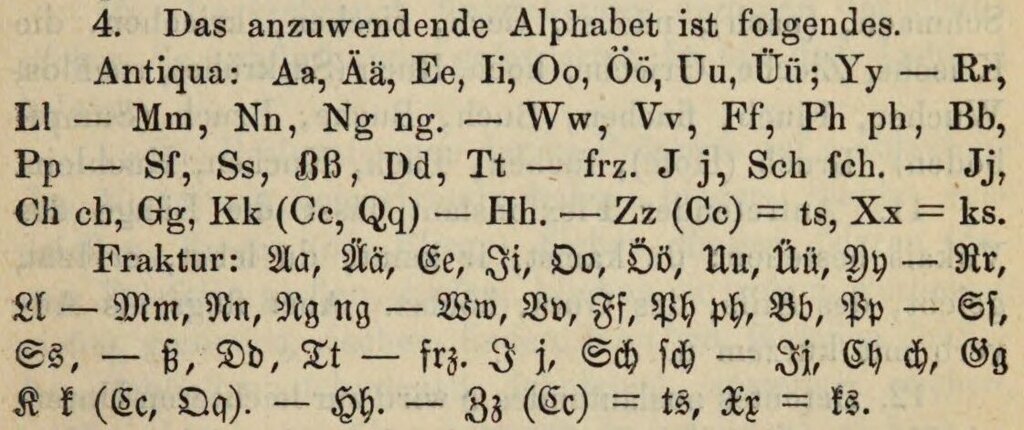
Beyond those 26 letters, German has four special characters of its own. Let's walk through the sounds, starting with the familiar letters that have a German twist.
Familiar Letters, New Sounds
Many German letters sound just like they do in English, especially consonants like B, D, F, K, L, M, N, P, and T. The vowels (A, E, I, O, U) are also similar, but they are typically pronounced more crisply and without the glide you often hear in English.
The letters below are the ones you'll want to pay special attention to, as their sounds are quite different.
| Letter | Pronunciation of its name | Sounds like... |
|---|---|---|
| C | tsay | The 'ts' sound in 'cats' before e, i, ä, ö. Otherwise, it sounds like 'k'. |
| G | gay | A hard 'g' sound, as in 'go'. Never a soft 'j' sound as in 'gentle'. |
| J | yot | The 'y' sound in 'yes'. |
| V | fow | The 'f' sound in 'fan'. |
| W | vay | The 'v' sound in 'violin'. This is a common mix-up for English speakers. |
| Z | tset | The 'ts' sound in 'cats'. |
A good rule of thumb: German pronunciation is very consistent. Once you learn the sound for a letter or letter combination, it rarely changes. What you see is usually what you say.
The Special Characters
Now for the four characters you won't find in the English alphabet. Three of these are vowels with an umlaut—the two dots you see above them. The umlaut changes the vowel's sound. The fourth is a unique consonant.
Ä / ä (A-umlaut) This sounds like the 'e' in "bet" or the 'a' in "cat." It's a short, flat sound. Example: Männer (men)
Ö / ö (O-umlaut) This sound doesn't exist in English. To make it, try saying "err" as in "learn," but keep your lips rounded as if you were about to say "oh." Example: schön (beautiful)
Ü / ü (U-umlaut) This is another sound that's new for English speakers. Say the sound "ee" as in "see," but tightly round your lips like you're about to whistle. Example: fünf (five)
ß (Eszett) This character is called an Eszett or scharfes S ("sharp S"). It simply makes a sharp "ss" sound, like in the word "hiss." You'll typically find it after a long vowel. Example: Straße (street)
If you can't type the umlauts or the ß, you can substitute them: ae for ä, oe for ö, ue for ü, and ss for ß.
Now you've seen every letter in the German alphabet. Let's practice matching them to their sounds.
True or False: The German alphabet uses a completely different set of letters than the English alphabet.
The German character 'ß' is called an Eszett. What sound does it represent?