German Language Basics
German Alphabet and Pronunciation
The German Alphabet
The German alphabet looks a lot like the English one, which gives you a head start. It has the same 26 standard letters. The main difference is how some of them are pronounced. Plus, there are four special characters you won't find in English.
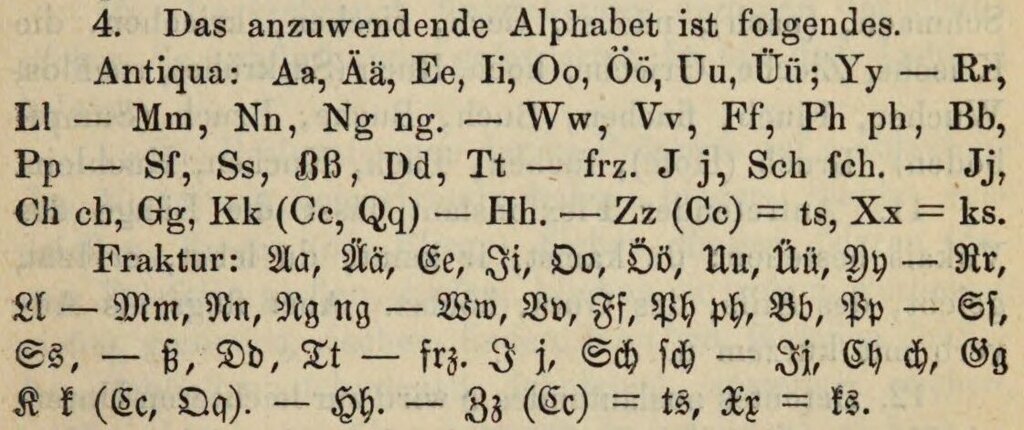
Let's look at the letters and their German names. Knowing the names is helpful, especially when you need to spell something out.
| Letter | German Name | Pronunciation of Name |
|---|---|---|
| A a | Ah | /aː/ |
| B b | Beh | /beː/ |
| C c | Tseh | /tseː/ |
| D d | Deh | /deː/ |
| E e | Eh | /eː/ |
| F f | Eff | /ɛf/ |
| G g | Geh | /ɡeː/ |
| H h | Hah | /haː/ |
| I i | Ih | /iː/ |
| J j | Yot | /jɔt/ |
| K k | Kah | /kaː/ |
| L l | Ell | /ɛl/ |
| M m | Emm | /ɛm/ |
| N n | Enn | /ɛn/ |
| O o | Oh | /oː/ |
| P p | Peh | /peː/ |
| Q q | Kuh | /kuː/ |
| R r | Err | /ɛʁ/ |
| S s | Ess | /ɛs/ |
| T t | Teh | /teː/ |
| U u | Uh | /uː/ |
| V v | Fau | /faʊ̯/ |
| W w | Veh | /veː/ |
| X x | Iks | /iks/ |
| Y y | Ypsilon | /ˈʏpsilɔn/ |
| Z z | Tzett | /t͡sɛt/ |
The four special characters are the umlauts Ä/ä, Ö/ö, Ü/ü, and the ß, which is called an Eszett or "scharfes S" (sharp S).
Vowels and Umlauts
German vowels can be short or long, which changes a word's meaning. For now, let's focus on their basic sounds. The standard vowels A, E, I, O, U are generally pronounced more crisply than in English.
Then we have the umlauts. An umlaut isn't just a vowel with two dots on top; it's a completely different sound.
Think of umlauts as distinct letters, not variations.
Let's break them down.
Ä / ä often sounds like the "e" in "bed."
men
Ö / ö has no direct English equivalent. To make this sound, say the English letter "E" but round your lips as if you're about to whistle.
beautiful
Ü / ü is also unique. Try saying the English word "see," but again, round your lips tightly.
for
Tricky Consonants
Most German consonants sound similar to their English counterparts, but a few key players behave differently. Getting these right will make your pronunciation much clearer.
| Letter | Sound in German | Example Word | Meaning |
|---|---|---|---|
| J j | Like the 'y' in "yes" | ja | yes |
| V v | Like the 'f' in "fan" | der Vogel | the bird |
| W w | Like the 'v' in "van" | Wasser | water |
| Z z | Like 'ts' in "cats" | die Zeit | the time |
Another special character is the Eszett (ß). It represents a sharp "s" sound, like the 'ss' in "hiss." You'll only ever see it in the middle or at the end of a word, never at the beginning. It typically follows a long vowel or a diphthong (a combination of two vowel sounds).
For example, the word Straße (street) uses 'ß' because the 'a' is a long vowel. In Switzerland and Liechtenstein, they don't use the 'ß' at all; they just write 'ss' instead.
Common Letter Blends
German often combines letters to create specific sounds. Learning these combinations is a shortcut to reading words you've never seen before. Here are some of the most important ones.
| Combination | Sound | Example |
|---|---|---|
| ei | Like the word "eye" | mein (my) |
| ie | Like the 'ee' in "see" | sie (she/they) |
| eu / äu | Like the 'oy' in "toy" | neu (new), Häuser (houses) |
| sch | Like the 'sh' in "shoe" | die Schule (the school) |
| ch | A soft, airy sound after i, e, ä, ö, ü | ich (I), sprechen (to speak) |
| ch | A hard, throaty sound after a, o, u, au | das Buch (the book) |
| sp / st | At the start of a word, sounds like 'shp' / 'sht' | sprechen (to speak), die Straße (the street) |
The two sounds for "ch" can be tricky. The soft sound is made in the front of your mouth, almost like a hiss. The hard sound comes from the back of your throat, like the sound in the Scottish word "loch."
The key to German pronunciation is consistency. Unlike English, once you learn the rules, there are very few exceptions.
Let's review these new sounds and letters.
Ready to test your knowledge?
How many special characters does the German alphabet have in addition to the 26 standard letters?
The German umlaut 'Ä / ä' typically sounds like the vowel in which English word?
Mastering these sounds is your first big step. With practice, they'll become second nature.