German Foundations from Scratch
Phonetics and Script
The German Phonetic System
Think of a language's writing system as an encoding scheme. English uses a complex, lossy encoding. The letters 'ough' can map to wildly different sounds in words like 'through', 'though', 'tough', and 'cough'. German, by contrast, is a much more 'transparent' orthography. The mapping from grapheme (the written letter) to phoneme (the sound) is highly consistent. Once you learn the rules, you can accurately decode and pronounce almost any word you see. It’s a predictable system, which is great for processing.
The German alphabet uses the same 26 letters as English, but adds four special characters: three vowels with an umlaut (ä, ö, ü) and a unique consonant called the Eszett or 'sharp S' (ß).
| Character | Name | Pronunciation (IPA) |
|---|---|---|
| Ä, ä | A-Umlaut | /ɛ/ or /eː/ |
| Ö, ö | O-Umlaut | /œ/ or /øː/ |
| Ü, ü | U-Umlaut | /ʏ/ or /yː/ |
| ß | Eszett | /s/ |
Vowels and Umlaute
German vowels have 'long' and 'short' versions. The length is usually determined by the consonants that follow. A single consonant often means a long vowel, while two or more consonants signal a short one. For example, Wahl (election) has a long 'a' sound, like the 'a' in 'father', while Wall (rampart) has a short 'a', closer to the 'a' in 'cat'.
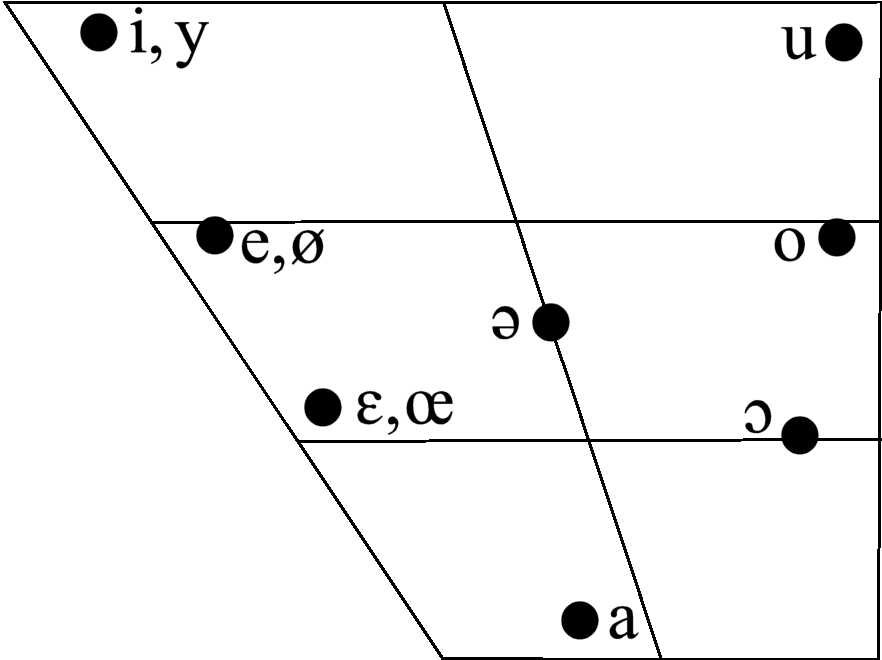
The (ä, ö, ü) represent distinct vowel sounds not found in English. They are not simply variations of a, o, and u; they are entirely new phonemes created by shifting the tongue's position forward in the mouth, a process called fronting.
Here’s a breakdown of how to produce these sounds:
- ä: The short 'ä' is like the 'e' in 'bet' (Männer, men). The long 'ä' is like the 'ai' in 'air' (spät, late).
- ö: To make this sound, form your lips to say 'oh', but instead try to say 'ee'. The sound is in words like können (can) and schön (beautiful).
- ü: This is the trickiest for English speakers. Form your lips into a tight 'ooh' sound (as in 'blue'), but try to say 'ee'. You'll find it in fünf (five) and müde (tired).
Consonants and Clusters
Most German consonants map cleanly to their English counterparts, but a few require special attention. The Eszett (ß) is simply a sharp, unvoiced 's' sound, like the 's' in 'see'. It typically appears after long vowels or diphthongs, as in Straße (street) or heiß (hot). Note that it has no capital form; if a word starts with it in an all-caps setting, it's written as 'SS'.
German also features consonant clusters, where multiple letters combine to create a single, predictable phoneme. Think of these as built-in functions in the phonetic code.
| Cluster | Pronunciation Guide | Example Word |
|---|---|---|
| ch | After a, o, u: a hard, throaty sound from the back of the throat like in Scottish 'loch'. | Buch (book) |
| ch | After i, e, ä, ö, ü: a softer 'hissing' sound from the front of the mouth. | ich (I) |
| sch | Exactly like 'sh' in English. | Schule (school) |
| sp / st | At the beginning of a word/syllable, pronounced 'shp' / 'sht'. | sprechen (to speak), Stein (stone) |
| qu | Pronounced 'kv'. | Quelle (source) |
| th | Pronounced like a simple 't'. The 'h' is silent. | Theater (theater) |
Stress and Intonation
The final piece of the phonetic model is syllable stress. Like in English, getting the stress right is crucial for being understood. The general rule for German is simple: stress the first syllable. This holds true for most native German words.
- AU-to (car)
- SPRE-chen (to speak)
- KÖ-ni-gin (queen)
However, this rule has important exceptions. For verbs with inseparable prefixes (like be-, ge-, er-, ver-, zer-), the stress falls on the root syllable, not the prefix. For example, verstehen (to understand) is pronounced ver-STE-hen. Words borrowed from other languages, particularly French and English, often retain their original stress patterns, like Ho-TEL or Com-PU-ter. Recognizing these patterns allows you to predict the pronunciation of new words with high accuracy.
Let's test your decoding ability.
Why is the German writing system considered more 'transparent' or predictable than English?
In German pronunciation, what typically determines whether a vowel is long or short?
With these rules, you have the foundational 'hardware' to parse and pronounce German. The mapping is largely one-to-one, making it an efficient system to learn.