German Foundations Breakthrough A1
Pronunciation and Greetings
The German Sound System
The German alphabet uses the same 26 letters as English, but many have their own distinct sounds. You'll pick them up quickly with a bit of practice. The biggest changes are with vowels and a few key consonants. In addition, German has four special characters you won't find in the English alphabet: ä, ö, ü, and ß.
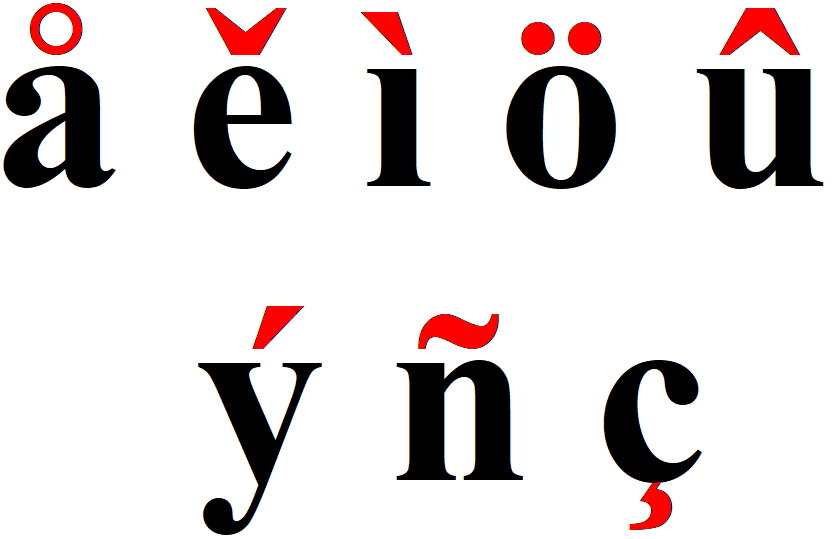
Let's start with the special characters, as they have the most unique sounds.
Umlaut
noun
A mark (¨) placed over a vowel (a, o, or u) to indicate a change in its sound. It represents a fronting of the vowel sound, meaning the sound is produced further forward in the mouth.
Think of the umlaut as a signal to change your mouth shape.
- ä (A-Umlaut) sounds like the 'e' in "bed".
- ö (O-Umlaut) has no direct English equivalent. To make the sound, form your lips like you're saying "ooh," but try to say "ee" instead.
- ü (U-Umlaut) is also tricky. Form your lips into a tight "ooh" circle, but say a sharp "ee" sound from the front of your mouth.
The final special character is the ß, called the Eszett or scharfes S (sharp S). It simply represents a double 's' sound (ss) and typically follows long vowels or diphthongs.
For example, the word Straße (street) is pronounced with a long 'a' sound followed by a sharp 's' sound. The word Masse (mass), with a short 'a', is spelled with 'ss'.
A few other sounds to watch for:
- ch: This has two sounds. After a, o, u, or au, it's a hard, throaty sound from the back of your throat, like in the Scottish "loch". This is the ach-Laut. After any other vowel or a consonant, it's a soft, hissing sound made at the front of the mouth, like in "huge". This is the ich-Laut.
- v: Usually pronounced like an 'f', as in Vater (father).
- w: Pronounced like an English 'v', as in Wasser (water).
- z: Pronounced like 'ts', as in Zeit (time).
Hello and Goodbye
In German, as in many languages, greetings depend on the time of day and how well you know the person. The most important distinction is between formal and informal address.
| Phrase | Pronunciation | Context |
|---|---|---|
| Hallo | HAH-low | Informal "hello", used anytime. |
| Guten Morgen | GOO-ten MOR-gen | "Good morning", until about noon. |
| Guten Tag | GOO-ten TAHK | "Good day", from noon until 6 PM. |
| Guten Abend | GOO-ten AH-bent | "Good evening", from 6 PM onwards. |
| Tschüss | CHUUS | Informal "bye", very common. |
| Auf Wiedersehen | owf VEE-der-zayn | Formal "goodbye", literally "until we see again". |
When speaking to someone, you must choose between the informal "you" (du) and the formal "you" (Sie). This is a crucial part of German social etiquette.
- Du: Use with family, friends, children, and people your own age in casual settings. It signals familiarity and closeness.
- Sie: Use with strangers, officials, in business contexts, and with anyone you would address by their last name (e.g., Herr Schmidt, Frau Meier). It shows respect. The pronoun Sie is always capitalized.
When in doubt, always start with the formal Sie. It's better to be too polite than too familiar. If someone wants you to use du, they will offer it, often by saying, "Wir können uns duzen" (We can use 'du' with each other).
Making Introductions
Now you can combine your pronunciation skills with some basic phrases to introduce yourself.
My name is...
This is the most common way to state your name. You can also say "Mein Name ist..." (My name is...). To ask someone their name, you can use the formal or informal version:
// Formal
Wie heißen Sie?

// Informal
Wie heißt du?
After names, people often ask where you're from.
I come from...
And the corresponding questions:
// Formal
Woher kommen Sie?

// Informal
Woher kommst du?
Let's see how a simple introduction might look.
Guten Tag. Mein Name ist Anna. Ich komme aus den USA. Wie heißen Sie?
With these building blocks, you can handle the first few moments of any German conversation.
How is the German letter "ä" (A-Umlaut) typically pronounced?
In the German word "Wasser" (water), how is the "w" pronounced?