German Exam Preparation
Basic German Vocabulary
First Words
Let's start with the basics. Knowing how to say hello and goodbye is your entry ticket to any conversation. In German, like in English, some greetings are more formal than others.
For a simple, all-purpose greeting, you can always use Hallo.
Hello
If you want to be a bit more formal, you can greet people based on the time of day.
| German | English |
|---|---|
| Guten Morgen | Good morning |
| Guten Tag | Good day |
| Guten Abend | Good evening |
When it's time to leave, you also have a couple of options. Tschüss is a common, informal way to say bye. If you want to be more formal, especially when you expect to see the person again, you'd use Auf Wiedersehen.
Bye
Goodbye (literally: until we see again)
Nouns and Genders
In German, every noun has a gender: masculine, feminine, or neuter. This might seem strange at first, but it's a core part of the language. The gender determines which article, or "the" word, you use.
It's best to learn the article along with the noun. Think of them as a single unit.
| Article | Gender |
|---|---|
| der | masculine |
| die | feminine |
| das | neuter |
The gender of a noun isn't always logical. A table (der Tisch) is masculine, but a girl (das Mädchen) is neuter. Let's look at some common nouns, starting with family.
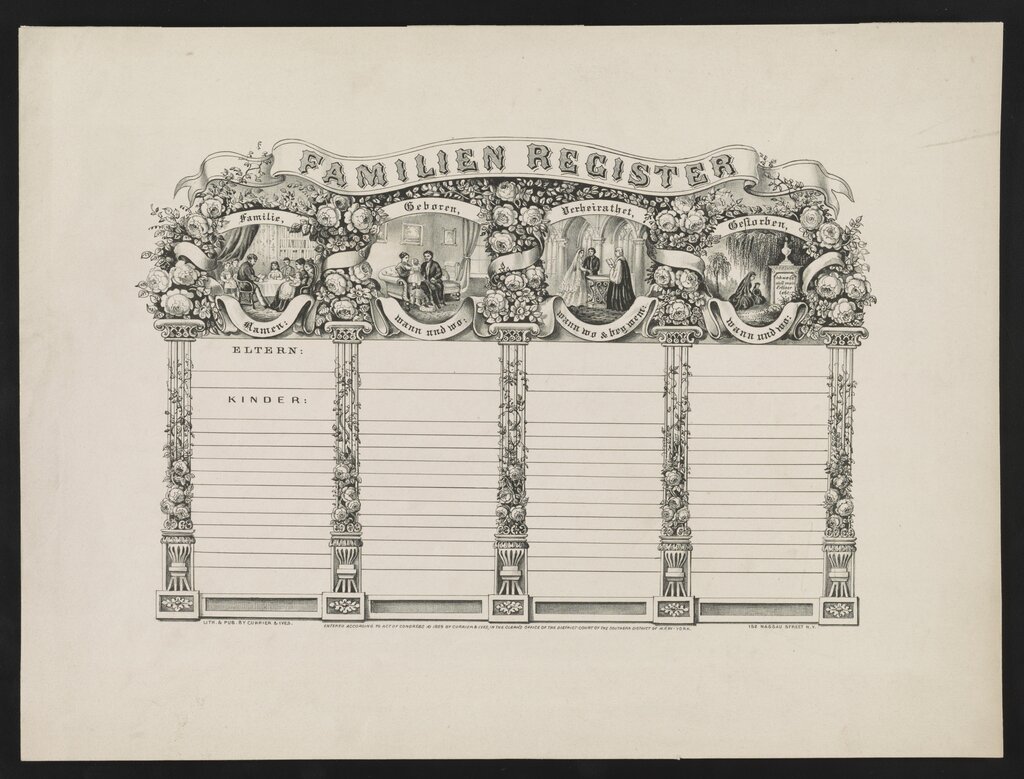
| German | English |
|---|---|
| der Vater | the father |
| die Mutter | the mother |
| der Sohn | the son |
| die Tochter | the daughter |
| der Bruder | the brother |
| die Schwester | the sister |
Here are a few more common objects you might encounter every day.
| German | English |
|---|---|
| das Haus | the house |
| die Straße | the street |
| das Auto | the car |
| der Stuhl | the chair |
| das Buch | the book |
Action Words and Descriptions
Now that we have some nouns, we need verbs to make things happen. Two of the most important verbs are sein (to be) and haben (to have). Just like in English, they change depending on who is doing the action.
sein
verb
To be.
Here is the present tense conjugation for sein:
| German | English |
|---|---|
| ich bin | I am |
| du bist | you are (informal) |
| er/sie/es ist | he/she/it is |
| wir sind | we are |
| ihr seid | you are (plural, informal) |
| sie/Sie sind | they/you are (formal) |
To add detail, we use adjectives. These words describe nouns. A great thing about simple German sentences is that the adjective doesn't change.
Let's also learn some numbers and colors.
| German | English | German | English |
|---|---|---|---|
| Adjectives | Numbers 1-5 | ||
| groß | big, tall | eins | one |
| klein | small, short | zwei | two |
| gut | good | drei | three |
| schlecht | bad | vier | four |
| schön | beautiful | fünf | five |
| Colors | Numbers 6-10 | ||
| rot | red | sechs | six |
| blau | blue | sieben | seven |
| grün | green | acht | eight |
| schwarz | black | neun | nine |
| weiß | white | zehn | ten |
Now we can form a simple descriptive sentence.
Das Auto ist rot. (The car is red.) Mein Bruder ist groß. (My brother is tall.) Ich habe zwei Schwestern. (I have two sisters.)
Let's review the words we've learned.
Ready to test your knowledge?
You are formally greeting someone in the morning. What is the most appropriate thing to say?
Which article correctly completes the phrase: '___ Tisch' (the table)?
Learning these core words is the first major step toward speaking German. Keep practicing them, and they'll soon become second nature.