German A1 Fundamentals
German Alphabet and Pronunciation
The German Alphabet
The German alphabet uses the same 26 letters as English, but it adds four special characters. Mastering their sounds is the first step to speaking and reading German confidently.
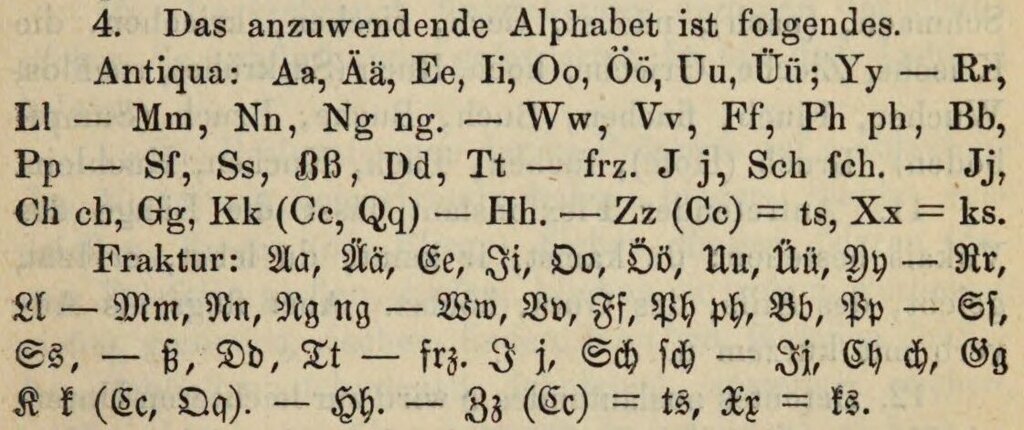
Most letters sound similar to their English counterparts, but the letter names are different. Here they are, along with the four extra characters.
| Letter | Name | Letter | Name | Letter | Name |
|---|---|---|---|---|---|
| A | Ah | J | Yot | S | Ess |
| B | Bay | K | Kah | T | Tay |
| C | Tsay | L | El | U | Ooh |
| D | Day | M | Em | V | Fow |
| E | Ay | N | En | W | Vay |
| F | Eff | O | Oh | X | Iks |
| G | Gay | P | Pay | Y | Upsilon |
| H | Hah | Q | Koo | Z | Tset |
| I | Ee | R | Err | Ä | Ay-umlat |
| Ö | O-umlat | ||||
| Ü | U-umlat | ||||
| ẞ | Eszett |
Umlauts and the Eszett
The four special characters in German are ä, ö, ü, and ß. The first three are called Umlauts. The two dots change the vowel's sound, making it sharper and more front-of-the-mouth.
Think of the umlaut as a signal to change your mouth shape slightly. For example, to make the ö sound, form your lips like you're saying "ooh" but try to say "ee" instead.
Here's a breakdown of how they sound:
- ä (Ä) sounds like the "e" in bed.
- ö (Ö) has no direct English equivalent. It's similar to the "u" in burn, but with rounded lips.
- ü (Ü) also has no direct English equivalent. To pronounce it, say "ee" but round your lips as if you were whistling.
The fourth special letter, ß, is called the Eszett or "sharp s." It simply represents a double-s sound, like in the word miss. It's only used after long vowels or diphthongs.
street
Vowels and Diphthongs
German vowel sounds are very consistent. They can be either long or short. A vowel is typically long if it's followed by a single consonant (or an h). It's short if it's followed by two or more consonants.
Consider the word Bahn (train), where the 'a' is long, versus Bann (ban), where it's short and clipped. This distinction can change a word's meaning entirely.
German also has several common vowel pairs called diphthongs, which create a single, gliding sound.
| Diphthong | Sounds Like | Example (German) | Example (English) |
|---|---|---|---|
| ei / ai | "eye" | nein (no) | eye |
| au | "ow" | Haus (house) | now |
| eu / äu | "oy" | neu (new) | toy |
Key Consonant Sounds
Many German consonants sound just like they do in English, but a few have their own distinct pronunciation. Getting these right is key to sounding authentic.
| Letter(s) | German Sound | Example |
|---|---|---|
| w | Sounds like an English v | Wasser (water) |
| v | Sounds like an English f | Vater (father) |
| z | Sounds like ts | Zeit (time) |
| j | Sounds like an English y | ja (yes) |
| s | Sounds like z at the start of a word | Sonne (sun) |
| ch | A soft, airy sound like hissing after i, e, ä, ö, ü | ich (I) |
| ch | A hard, throaty sound like clearing your throat after a, o, u, au | Bach (brook) |
| sp / st | Sounds like shp / sht at the beginning of a word | sprechen (to speak) |
With these rules, you have a solid foundation for pronouncing German words. Remember, the key is consistency. Unlike English, German pronunciation rarely has surprise exceptions.
Let's test your knowledge of these new sounds.
Which set of characters are the German 'Umlauts'?
The German special character 'ä' sounds most like the 'e' in which English word?