German A1 Beginner Level
German Alphabet and Pronunciation
The German Alphabet
The good news is that the German alphabet uses the same 26 letters as English. This gives you a huge head start. The main difference lies in how each letter is named and pronounced.
For the most part, German is a phonetic language. This means words are pronounced as they are written, which makes reading and speaking much more straightforward once you learn the rules.
| Letter | German Name | Pronunciation Tip (similar to English) |
|---|---|---|
| A a | Ah | 'a' in "father" |
| B b | Beh | 'b' in "bed" |
| C c | Tseh | 'ts' in "cats" |
| D d | Deh | 'd' in "dog" |
| E e | Eh | 'e' in "bed" |
| F f | Eff | 'f' in "fish" |
| G g | Geh | 'g' in "go" |
| H h | Hah | 'h' in "house" |
| I i | Ih | 'i' in "igloo" |
| J j | Yot | 'y' in "yes" |
| K k | Kah | 'k' in "kitten" |
| L l | Ell | 'l' in "love" |
| M m | Emm | 'm' in "mother" |
| N n | Enn | 'n' in "no" |
| O o | Oh | 'o' in "open" |
| P p | Peh | 'p' in "pig" |
| Q q | Kuh | 'kv' sound, like "quack" |
| R r | Err | Guttural sound, from the back of the throat |
| S s | Ess | 's' in "sun" or 'z' in "zoo" |
| T t | Teh | 't' in "top" |
| U u | Uh | 'oo' in "moon" |
| V v | Fau | 'f' in "fan" |
| W w | Veh | 'v' in "van" |
| X x | Iks | 'x' in "box" |
| Y y | Ypsilon | 'ü' sound (see below) |
| Z z | Tzett | 'ts' in "cats" |
The Special Characters
Beyond the standard alphabet, German has four special characters you need to know. Three of these are called Umlauts, which are vowels with two dots above them. The dots change the sound of the vowel.
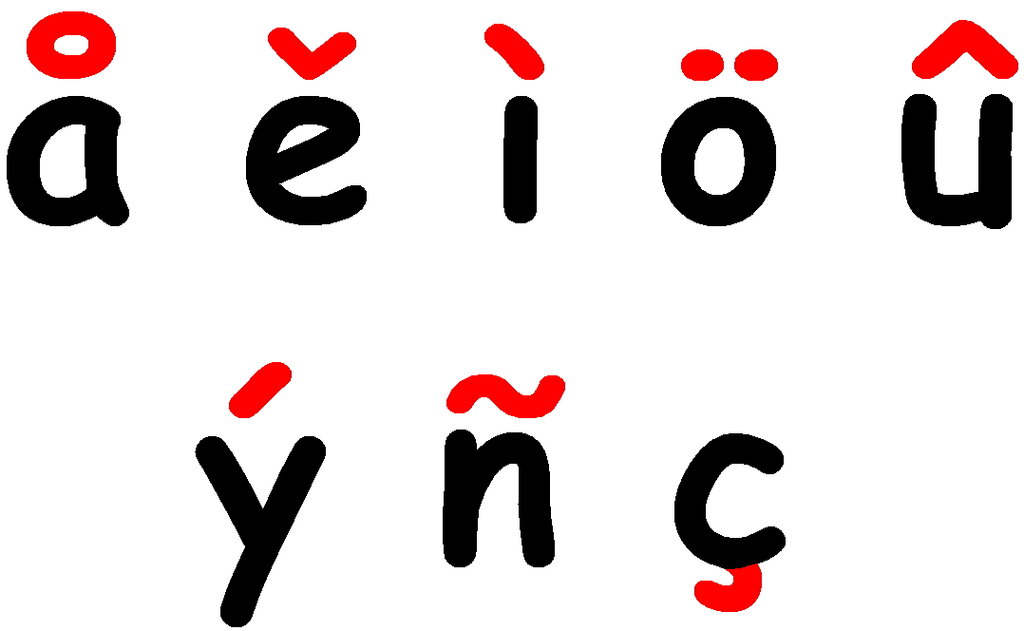
ä (A-Umlaut): This sounds like the 'e' in "bed" or sometimes the 'a' in "late."
ö (O-Umlaut): This sound doesn't exist in English. To make it, say "ay" as in "say," but round your lips as if you were about to whistle. Try it with the word schön (beautiful).
ü (U-Umlaut): This is another sound without a direct English equivalent. Say a long "ee" sound as in "see," but again, round your lips tightly. Practice with the word für (for).
The final special character is the ß, called the Eszett or scharfes S (sharp S). It simply represents a sharp "ss" sound. You'll find it after long vowels or diphthongs, like in the word Straße (street).
Common Letter Combinations
Certain letter combinations in German create consistent, predictable sounds. Learning these patterns will make reading and pronunciation much easier.
Vowel Combinations
- ie sounds like a long 'e', as in "see". Example: die (the).
- ei sounds like the word "eye". Example: mein (my).
- eu and äu both sound like "oy" in "boy". Examples: neu (new), Häuser (houses).
Consonant Combinations
- ch has two sounds. After 'a', 'o', or 'u', it's a hard, throaty sound from the back of the mouth, like in the Scottish word "loch". Example: Buch (book). After any other letter, it's a soft, airy sound made by pushing air through the top of your mouth. Example: ich (I).
- sch is pronounced just like "sh" in "shoe". Example: Schule (school).
- sp and st at the beginning of a word sound like "shp" and "sht". Examples: sprechen (to speak), Stadt (city).
A key difference from English: the letter 'W' in German is always pronounced like the English 'V', and the German 'V' is usually pronounced like the English 'F'.
The People's Car
Think of the car brand. In German, it's not "Volks-wag-en," but "Folks-va-gen." This is a perfect example of the W and V sounds in action.
Now, let's test what you've learned about these fundamental sounds.
Which of the following sets contains the three German Umlauts?
The German character 'ß', known as the Eszett, represents which sound?
Getting these sounds right from the start is a big step. With a solid grasp of the alphabet and these pronunciation rules, you're ready to start building your vocabulary.