Geopolitics Explained
Introduction to Geopolitics
Where Maps Meet Power
Why do some countries have so much influence while others have so little? Why do conflicts flare up in certain regions over and over again? The answers often lie in geopolitics, the study of how geography shapes politics and relationships between nations.
Geopolitics refers to the study or analysis of the influence of geography (physical features, location, resources, etc.) on political decisions, international relations, and global power dynamics.
Think of it this way: a country’s location, climate, terrain, and natural resources are like the hand of cards it's dealt. These factors don't determine everything, but they create opportunities and challenges that leaders must navigate. A nation with a long coastline and natural harbors has a different set of options than a landlocked country surrounded by mountains.
Geopolitics looks at the big picture. It examines how control over strategic locations, like shipping lanes or mountain passes, translates into economic and military power. It also considers the role of non-state actors, such as multinational corporations and international organizations, which can wield significant influence in today's interconnected world.
Ideas that Shaped the World
The idea that geography influences destiny is ancient, but geopolitics as a formal field of study emerged in the late 19th and early 20th centuries. Early thinkers tried to create grand theories to explain global power dynamics.
One of the most influential was Sir Halford Mackinder, a British geographer. He argued that history was a long struggle between land-based and sea-based powers. Mackinder identified a massive area in the center of Eurasia he called the "Heartland." He believed that whoever controlled this resource-rich, difficult-to-invade region could dominate the "World-Island" (Eurasia and Africa) and, eventually, the entire globe.
Mackinder's famous warning was: "Who rules East Europe commands the Heartland; Who rules the Heartland commands the World-Island; Who rules the World-Island commands the world."
Around the same time, an American naval officer named Alfred Thayer Mahan offered a competing view. He argued that sea power was the key to global dominance. Mahan looked at the British Empire and concluded that its strength came from its powerful navy, which protected its trade routes and allowed it to project power across the globe. For Mahan, controlling the oceans was more important than controlling any single landmass.
These ideas weren't just academic. They heavily influenced the military and foreign policy strategies of major powers throughout the 20th century, including the Cold War rivalry between the land-based Soviet Union and the sea-based United States.
Geography as Opportunity and Constraint
A country's physical features create a unique set of strategic advantages and disadvantages. Mountains like the Himalayas have acted as a formidable natural barrier between China and India for centuries. Major rivers like the Nile and the Mississippi have been cradles of civilization and commerce. Access to the sea is a massive economic advantage, providing easier access to global trade.
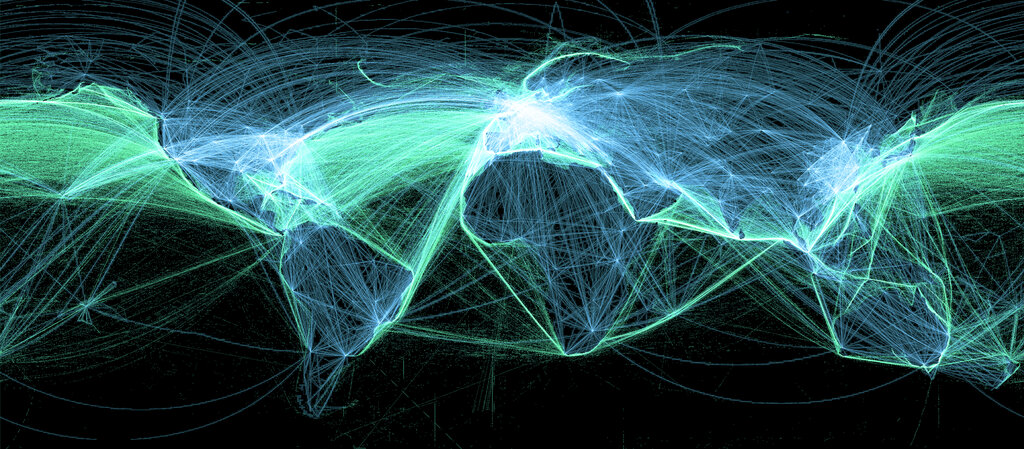
Natural resources are another critical piece of the puzzle. The location of oil, natural gas, minerals, and even freshwater profoundly impacts a nation's wealth and power. Countries rich in valuable resources can fund their economies and exert influence abroad. However, this wealth can also be a curse, making a country a target for foreign intervention or causing internal conflict over control of the resources.
Control over essential resources like oil, rare earth metals, or water can give a country significant leverage in international negotiations and conflicts.
In the 21st century, the definition of "geography" has expanded. It's not just about land and sea anymore. It also includes control over digital infrastructure, satellite orbits, and the flow of information. But the core principle remains the same: the physical and strategic landscape provides the stage on which global politics plays out.
Let's review some of the key terms we've covered.
Ready to test your knowledge?
What is the central idea of geopolitics?
According to Sir Halford Mackinder's Heartland Theory, control over which area was considered the key to global dominance?
Understanding these basic concepts is the first step to analyzing how and why nations interact the way they do on the world stage.