Geopolitical Risk and Investment Protection
Introduction to Geopolitical Risk
What Is Geopolitical Risk?
Geopolitical risk refers to the threat that political events, conflicts, or social changes in one part of the world pose to businesses, investments, and international relations. It’s the uncertainty that arises when the actions of governments or large groups of people create ripple effects that cross borders.
Think of it this way: a sudden policy change in a major oil-producing country can affect gas prices for drivers thousands of miles away. That's geopolitical risk in action.
At its core, it's about how geography and politics interact to influence the global landscape. These risks are not just about wars or elections. They can stem from trade disputes, civil unrest, or even the implementation of new environmental regulations. Any event with the potential to alter the political or economic stability of a region can be a source of geopolitical risk.
geopolitics
noun
The study of how geography and economics influence politics and the relations between countries.
Where Risks Come From
Geopolitical risks don't appear out of thin air. They are born from a wide range of events and trends that can be broadly categorized. The main sources are political shifts, economic instability, military actions, and social movements. Often, these factors are deeply intertwined, with a change in one area triggering consequences in another.
| Risk Source | Description | Example |
|---|---|---|
| Political | Changes in government, policy, or leadership. | A key election brings a new party to power with a different trade philosophy. |
| Economic | Financial crises, sanctions, or trade disputes. | One country imposes tariffs on goods from another, sparking a trade war. |
| Military | Armed conflicts, coups, or regional tensions. | A border dispute escalates, disrupting shipping routes in the area. |
| Social | Widespread protests, civil unrest, or demographic shifts. | Large-scale public demonstrations lead to economic shutdowns in major cities. |
These categories often overlap. For example, social unrest (social risk) can lead to a change in government (political risk), which might then alter economic policies (economic risk). This interconnectedness is what makes geopolitical risk so complex.
The Ripple Effect
The world is more connected than ever. Global supply chains, international finance, and instant communication mean that an event in one corner of the globe can have immediate and far-reaching consequences. This interconnectedness is a double-edged sword: while it fosters growth and collaboration, it also amplifies the impact of geopolitical risks.
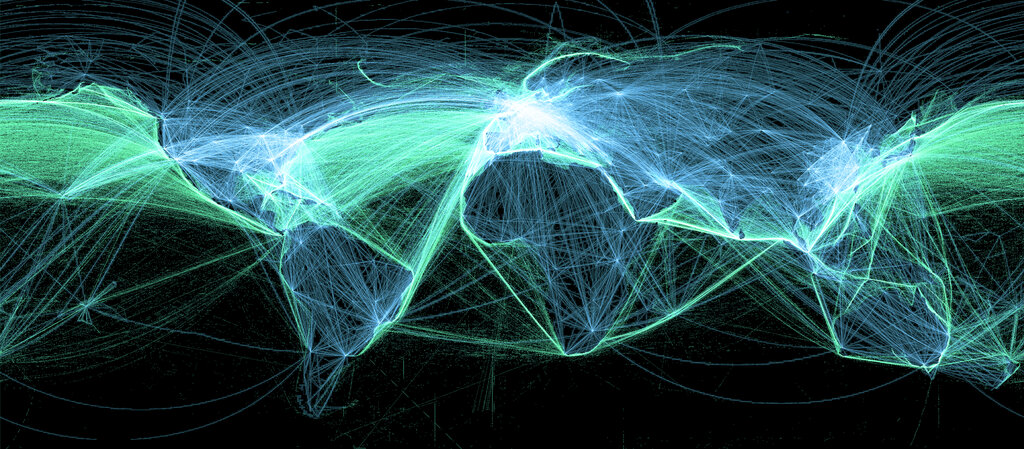
When a significant geopolitical event occurs, its first impact is often uncertainty. Businesses and investors hate uncertainty. It makes planning for the future difficult and risky. As a result, companies might delay investments, hire fewer people, or move their operations elsewhere. Consumers might spend less, fearing economic instability. This collective hesitation can slow down economic growth on a national or even global scale.
The challenge is that these risks are incredibly difficult to predict. The world is a complex system with countless moving parts. Predicting how a specific event will unfold, and what its secondary and tertiary effects will be, is a monumental task. Analysts use models and historical data to forecast potential outcomes, but unforeseen variables can always emerge, leading to surprising results. This inherent unpredictability is a core feature of geopolitical risk.
Which of the following best defines geopolitical risk?
True or False: According to the text, the interconnectedness of the global economy exclusively fosters growth and collaboration, reducing the impact of geopolitical risks.
Navigating the modern world means being aware of these complex, interconnected risks and understanding how they can shape our economic and political realities.